
外源性丁酸盐抑制产丁酸代谢并改变……中的毒力表型。
Exogenous butyrate inhibits butyrogenic metabolism and alters virulence phenotypes in .
作者信息
Pensinger Daniel A, Dobrila Horia A, Stevenson David M, Hryckowian Nicole D, Amador-Noguez Daniel, Hryckowian Andrew J
机构信息
Department of Medicine, Division of Gastroenterology and Hepatology, University of Wisconsin School of Medicine and Public Health, Madison, Wisconsin, USA.
Department of Medical Microbiology & Immunology, University of Wisconsin School of Medicine and Public Health, Madison, Wisconsin, USA.
出版信息
mBio. 2024 Mar 13;15(3):e0253523. doi: 10.1128/mbio.02535-23. Epub 2024 Jan 30.
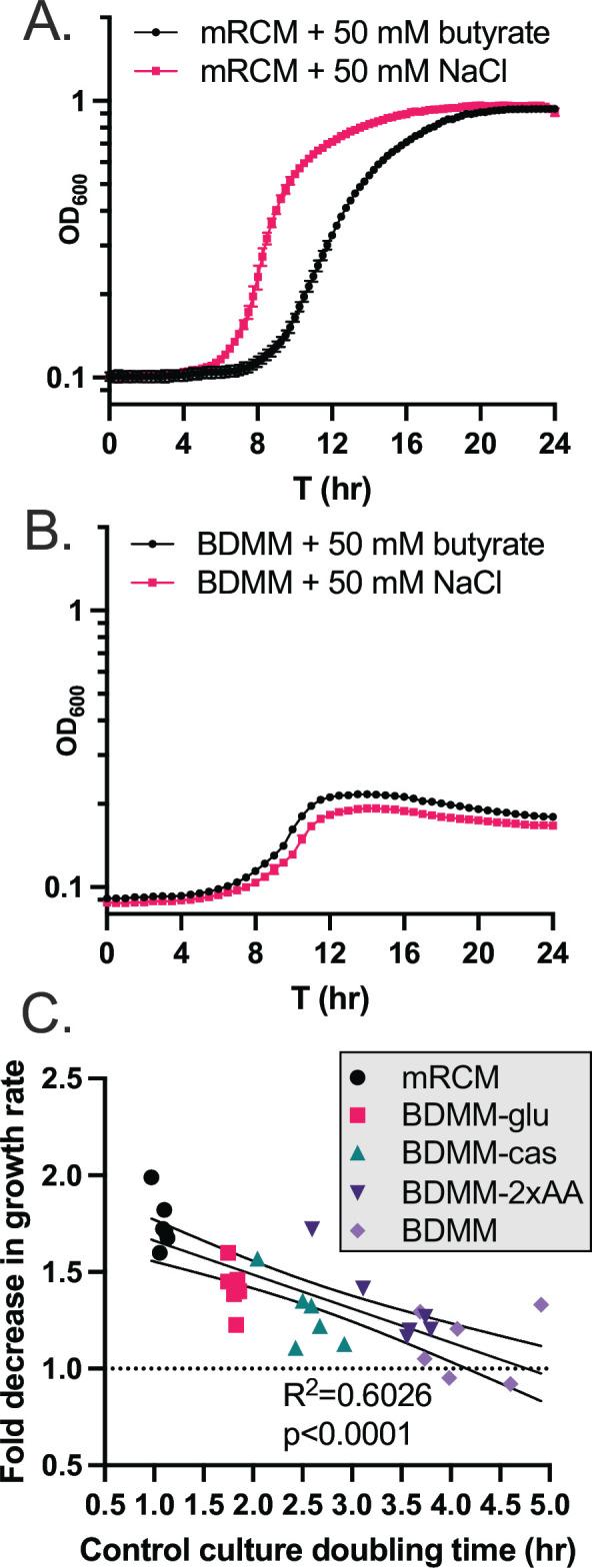
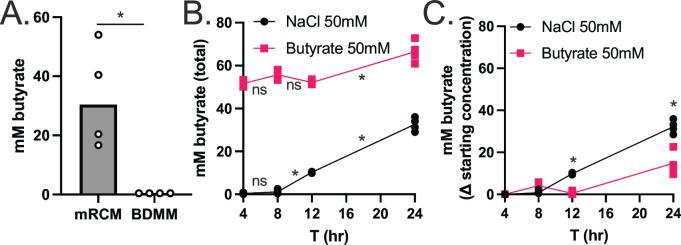
The gut microbiome engenders colonization resistance against the diarrheal pathogen but the molecular basis of this colonization resistance is incompletely understood. A prominent class of gut microbiome-produced metabolites important for colonization resistance against is short-chain fatty acids (SCFAs). In particular, one SCFA (butyrate) decreases the fitness of and is correlated with -inhospitable gut environments, both in mice and in humans. Here, we demonstrate that butyrate-dependent growth inhibition in occurs under conditions where also produces butyrate as a metabolic end product. Furthermore, we show that exogenous butyrate is internalized into cells and is incorporated into intracellular CoA pools where it is metabolized in a reverse (energetically unfavorable) direction to crotonyl-CoA and ()-3-hydroxybutyryl-CoA and/or 4-hydroxybutyryl-CoA. This internalization of butyrate and reverse metabolic flow of a butyrogenic pathway(s) in coincides with alterations in toxin release and sporulation. Together, this work highlights butyrate as a marker of a -inhospitable environment to which responds by releasing its diarrheagenic toxins and producing environmentally resistant spores necessary for transmission between hosts. These findings provide foundational data for understanding the molecular and genetic basis of how growth is inhibited by butyrate and how butyrate alters virulence in the face of a highly competitive and dynamic gut environment.IMPORTANCEThe gut microbiome engenders colonization resistance against the diarrheal pathogen but the molecular basis of this colonization resistance is incompletely understood, which hinders the development of novel therapeutic interventions for infection (CDI). We investigated how responds to butyrate, an end-product of gut microbiome community metabolism which inhibits growth. We show that exogenously produced butyrate is internalized into , which inhibits growth by interfering with its own butyrate production. This growth inhibition coincides with increased toxin release from cells and the production of environmentally resistant spores necessary for transmission between hosts. Future work to disentangle the molecular mechanisms underlying these growth and virulence phenotypes will likely lead to new strategies to restrict growth in the gut and minimize its pathogenesis during CDI.
肠道微生物群对腹泻病原体产生定植抗性,但其定植抗性的分子基础尚未完全明确。肠道微生物群产生的对定植抗性很重要的一类显著代谢产物是短链脂肪酸(SCFAs)。特别是,一种短链脂肪酸(丁酸盐)会降低该病原体的适应性,并且在小鼠和人类中均与不利于该病原体生存的肠道环境相关。在此,我们证明,在该病原体也将丁酸盐作为代谢终产物产生的条件下,会出现丁酸盐依赖性生长抑制。此外,我们表明,外源性丁酸盐被内化到该病原体细胞中,并被纳入细胞内辅酶A池,在其中它以反向(能量不利)方向代谢为巴豆酰辅酶A和()-3-羟基丁酰辅酶A和/或4-羟基丁酰辅酶A。丁酸盐的这种内化以及该病原体中丁酸盐生成途径的反向代谢流与毒素释放和孢子形成的改变相吻合。总之,这项工作突出了丁酸盐作为不利于该病原体生存环境的标志物,该病原体通过释放其致泻毒素并产生宿主间传播所需的环境抗性孢子来做出反应。这些发现为理解丁酸盐如何抑制该病原体生长以及丁酸盐如何在高度竞争和动态的肠道环境中改变该病原体毒力的分子和遗传基础提供了基础数据。重要性肠道微生物群对腹泻病原体产生定植抗性,但其定植抗性的分子基础尚未完全明确,这阻碍了针对艰难梭菌感染(CDI)的新型治疗干预措施的开发。我们研究了艰难梭菌如何对丁酸盐做出反应,丁酸盐是肠道微生物群群落代谢的终产物,可抑制艰难梭菌生长。我们表明,外源性产生的丁酸盐被内化到艰难梭菌中,通过干扰其自身的丁酸盐产生来抑制艰难梭菌生长。这种生长抑制与艰难梭菌细胞毒素释放增加以及宿主间传播所需的环境抗性孢子的产生相吻合。未来旨在解开这些生长和毒力表型背后分子机制的工作可能会带来限制肠道中艰难梭菌生长并将其在CDI期间的发病机制降至最低的新策略。


 Zotero 插件