
鉴定HSPD1作为垂体腺瘤中与线粒体自噬相关的新型侵袭性生物标志物。
Identification of HSPD1 as a novel invasive biomarker associated with mitophagy in pituitary adenomas.
作者信息
Zhang Yu, Ma Xin, Liu Congyu, Bie Zhixu, Liu Gemingtian, Liu Pinan, Yang Zhijun
机构信息
Department of Neurosurgery, Beijing Tiantan Hospital, Capital Medical University, Beijing, PR China.
School of Life Science, Tsinghua University, Beijing, PR China.
出版信息
Transl Oncol. 2024 Mar;41:101886. doi: 10.1016/j.tranon.2024.101886. Epub 2024 Jan 29.
BACKGROUND
The crucial role of mitophagy in tumor progression has been recognized. Therefore, our study aimed to investigate the potential correlation between pituitary adenoma invasiveness and the mitophagy processes.
METHODS
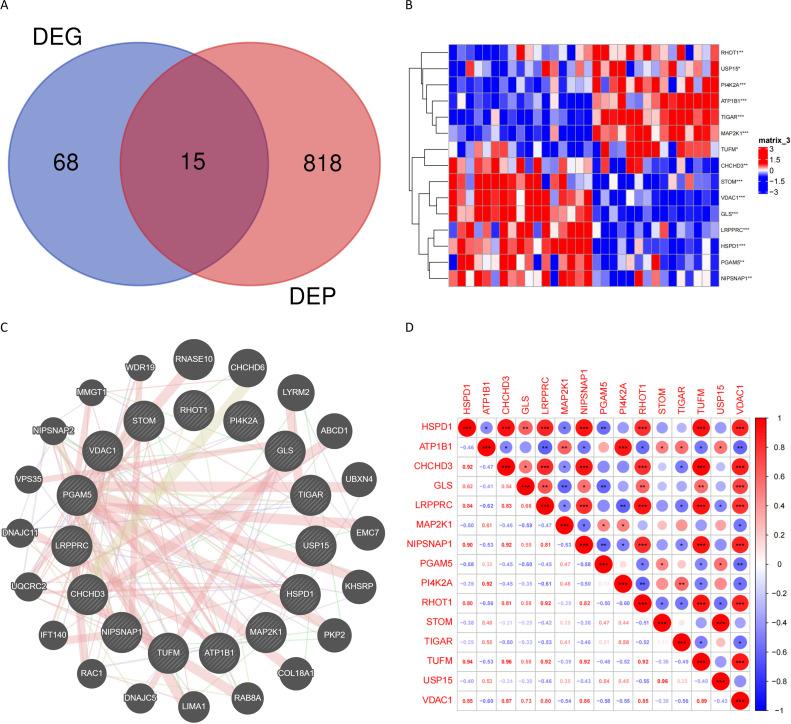
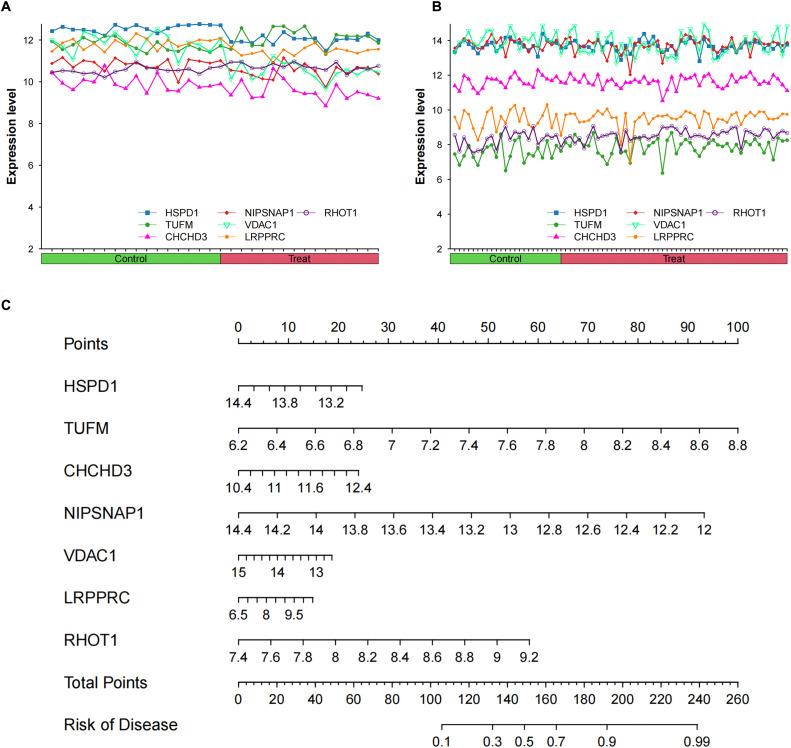
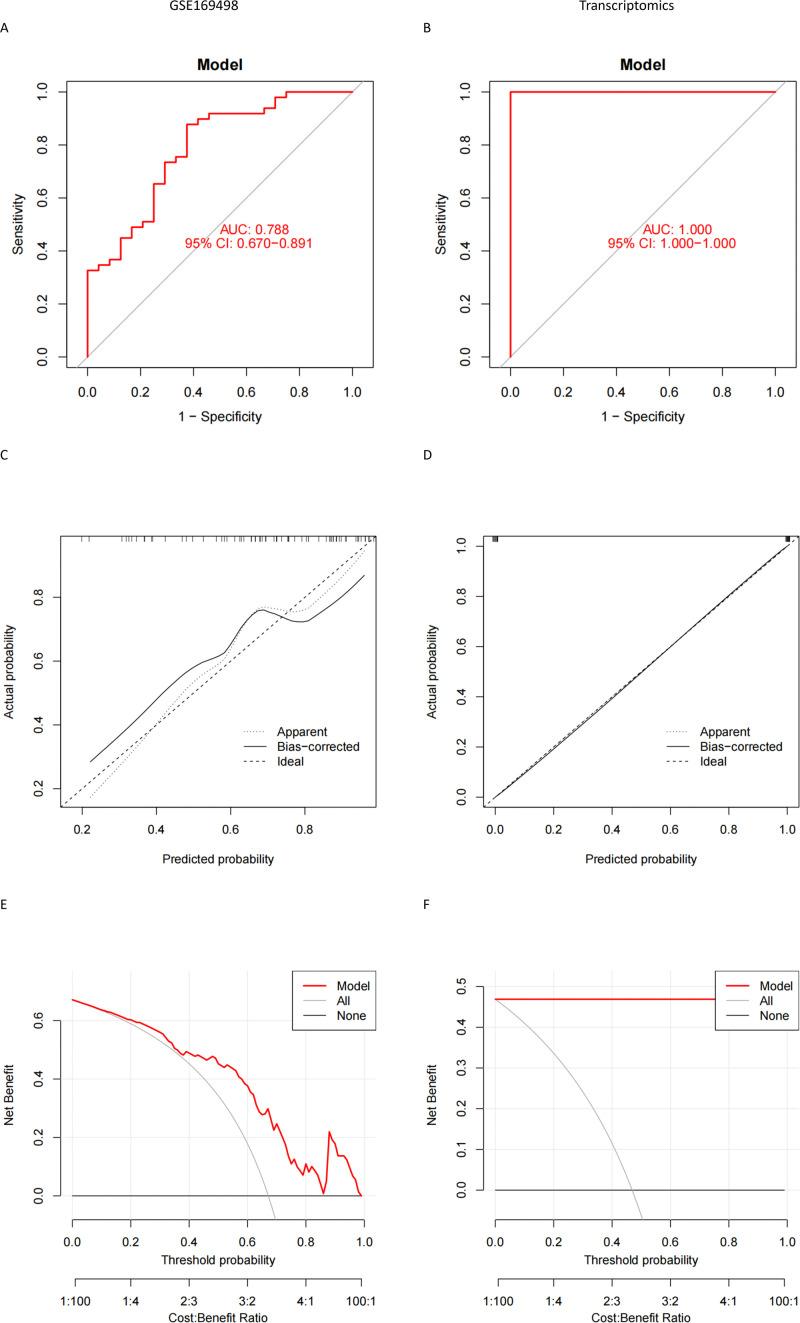
In this study, we used transcriptomics of postoperative tissue from 32 patients and quantitative proteomics of 19 patients to screen for mitophagy-related invasion genes in pituitary adenomas. The invasive predictive value of target genes was analyzed by Lasso regression model, CytoHubba plugin and expression validation. Co-expression correlation analysis was used to identify paired proteins for target genes, and a predictive model for pituitary adenoma invasiveness was constructed by target genes and paired proteins and assessed using ROC analysis, calibration curves and DCA. GO function, pathway (GSEA or GSVA) and immune cell analysis (ssGSEA or CIBERSORT) were further utilized to explore the action mechanism of target gene. Finally, immunohistochemistry and cell function experiments were used to detect the differential expression and key roles of the target genes in pituitary adenomas.
RESULTS
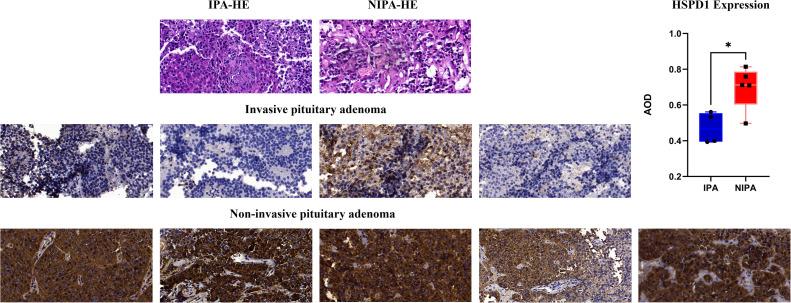
Finally, Heat shock protein family D member 1 (HSPD1) was identified as a target gene. The quality of a predictive model for pituitary adenoma invasiveness consisting of HSPD1 and its paired protein expression profiles was satisfactory. Moreover, the expression of HSPD1 was significantly lower in invasive pituitary adenomas than in non-invasive pituitary adenomas. Downregulation of HSPD1 may be significantly related to invasion process, mitochondria-related pathway and immune cell regulation in pituitary adenomas.
CONCLUSION
The downregulation of HSPD1 may serve as a predictive indicator for identifying invasive pituitary adenomas.
背景
线粒体自噬在肿瘤进展中的关键作用已得到认可。因此,我们的研究旨在探讨垂体腺瘤侵袭性与线粒体自噬过程之间的潜在关联。
方法
在本研究中,我们对32例患者的术后组织进行转录组学分析,并对19例患者进行定量蛋白质组学分析,以筛选垂体腺瘤中线粒体自噬相关的侵袭基因。通过套索回归模型、CytoHubba插件和表达验证分析目标基因的侵袭预测价值。采用共表达相关性分析来确定目标基因的配对蛋白,并通过目标基因和配对蛋白构建垂体腺瘤侵袭性预测模型,并使用ROC分析、校准曲线和决策曲线分析进行评估。进一步利用基因本体(GO)功能、通路(基因集富集分析或基因集变异分析)和免疫细胞分析(单样本基因集富集分析或CIBERSORT)来探索目标基因的作用机制。最后,通过免疫组织化学和细胞功能实验检测目标基因在垂体腺瘤中的差异表达和关键作用。
结果
最终,热休克蛋白家族D成员1(HSPD1)被确定为目标基因。由HSPD1及其配对蛋白表达谱组成的垂体腺瘤侵袭性预测模型质量良好。此外,HSPD1在侵袭性垂体腺瘤中的表达明显低于非侵袭性垂体腺瘤。HSPD1的下调可能与垂体腺瘤的侵袭过程、线粒体相关通路和免疫细胞调节显著相关。
结论
HSPD1的下调可能作为识别侵袭性垂体腺瘤的预测指标。





 Zotero 插件