
一项前瞻性随机试验,比较脂质体布比卡因与传统布比卡因在接受全膝关节置换术的内收肌管阻滞的成人患者中对疼痛控制和术后阿片类药物使用的影响。
A prospective, randomized trial of liposomal bupivacaine compared to conventional bupivacaine on pain control and postoperative opioid use in adults receiving adductor canal blocks for total knee arthroplasty.
作者信息
Quaye Aurora, McAllister Brian, Garcia Joseph R, Nohr Orion, Laduzenski Sarah J, Mack Lucy, Kerr Christine R, Kerr Danielle A, Razafindralay Charonne N, Richard Janelle M, Craig Wendy Y, Rodrigue Stephen
机构信息
Department of Anesthesiology, Northern Light Mercy Hospital, 175 Fore River Parkway, Portland, ME, 04102, USA.
Department of Anesthesiology and Perioperative Medicine, Maine Medical Center, 22 Bramhall St, Portland, ME, 04102, USA.
出版信息
Arthroplasty. 2024 Feb 1;6(1):6. doi: 10.1186/s42836-023-00226-y.
BACKGROUND
Total knee arthroplasty (TKA) is a commonly performed procedure to alleviate pain and improve functional limitations caused by end-stage joint damage. Effective management of postoperative pain following TKA is crucial to the prevention of complications and enhancement of recovery. Adductor canal blocks (ACB) with conventional bupivacaine (CB) provide adequate analgesia after TKA, but carry a risk of rebound pain following block resolution. Liposomal bupivacaine (LB) is an extended-release local anesthetic that can provide up to 72 h of pain relief. The objective of this study was to compare postoperative outcomes between ACBs using LB and CB after TKA.
METHODS
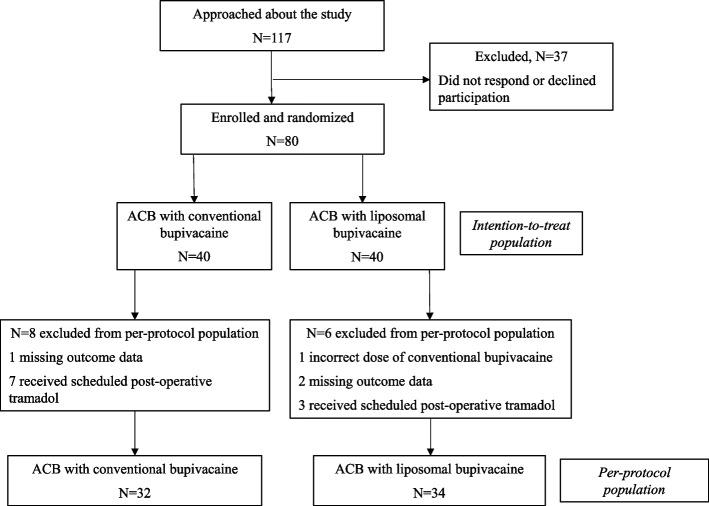
This single institution, prospective, randomized, clinical trial enrolled patients scheduled for TKA. Participants were randomized to receive ACB with either LB or CB. Pain scores up to 72 h postoperatively were assessed as the primary outcome. Opioid consumption and length of stay were evaluated as secondary outcomes.
RESULTS
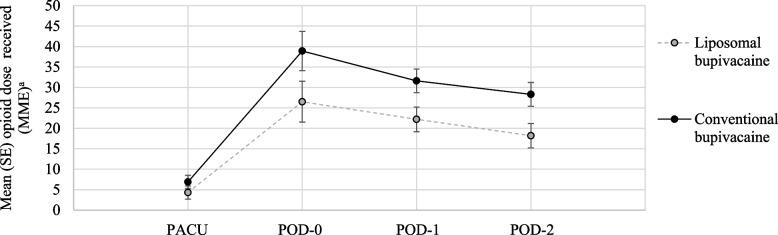
A total of 80 patients were enrolled. Demographic and clinical characteristics were similar between the two groups. LB group showed significantly lower cumulative opioid use during the 72 h evaluated (P = 0.016). There were no differences in pain scores or length of stay between the groups.
CONCLUSION
The study demonstrated that LB ACBs led to significantly lower opioid consumption in the days following TKA without affecting pain scores or length of stay. This finding has important implications for improving postoperative outcomes and reducing opioid use in TKA patients. Previous studies have reported inconsistent results regarding the benefits of LB, highlighting the need for further research.
TRIAL REGISTRATION
This project was retrospectively registered with clinicaltrials.gov ( NCT05635916 ) on 2 December 2022.
背景
全膝关节置换术(TKA)是一种常见的手术,用于缓解终末期关节损伤引起的疼痛并改善功能受限。TKA术后疼痛的有效管理对于预防并发症和促进恢复至关重要。传统布比卡因(CB)进行的收肌管阻滞(ACB)在TKA后可提供充分的镇痛效果,但在阻滞消退后存在反弹痛的风险。脂质体布比卡因(LB)是一种长效局麻药,可提供长达72小时的疼痛缓解。本研究的目的是比较TKA后使用LB和CB进行ACB的术后结果。
方法
本单机构、前瞻性、随机临床试验纳入计划进行TKA的患者。参与者被随机分配接受LB或CB的ACB。术后72小时内的疼痛评分作为主要结局进行评估。阿片类药物消耗量和住院时间作为次要结局进行评估。
结果
共纳入80例患者。两组的人口统计学和临床特征相似。LB组在评估的72小时内累计阿片类药物使用量显著更低(P = 0.016)。两组之间的疼痛评分或住院时间没有差异。
结论
该研究表明,LB ACB在TKA后的几天内导致阿片类药物消耗量显著降低,而不影响疼痛评分或住院时间。这一发现对于改善TKA患者的术后结果和减少阿片类药物使用具有重要意义。先前的研究报告了关于LB益处的不一致结果,突出了进一步研究的必要性。
试验注册
该项目于2022年12月2日在clinicaltrials.gov(NCT05635916)上进行了回顾性注册。
 Zotero 插件