
神经炎症老化:正常衰老与年龄相关性神经退行性疾病之间的紧密联系。
Neuroinflammaging: A Tight Line Between Normal Aging and Age-Related Neurodegenerative Disorders.
机构信息
Unit of Geriatric Medicine, Italian National Research Center of Aging (IRCCS INRCA), Cosenza, Italy.
Department of Pharmacy, Health and Nutritional Sciences, University of Calabria, Rende, Italy.
出版信息
Aging Dis. 2024 Aug 1;15(4):1726-1747. doi: 10.14336/AD.2023.1001.
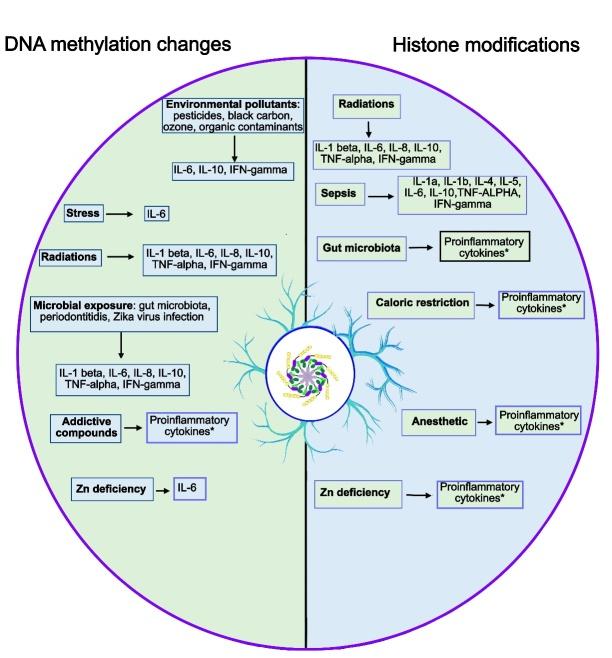
Aging in the healthy brain is characterized by a low-grade, chronic, and sterile inflammatory process known as neuroinflammaging. This condition, mainly consisting in an up-regulation of the inflammatory response at the brain level, contributes to the pathogenesis of age-related neurodegenerative disorders. Development of this proinflammatory state involves the interaction between genetic and environmental factors, able to induce age-related epigenetic modifications. Indeed, the exposure to environmental compounds, drugs, and infections, can contribute to epigenetic modifications of DNA methylome, histone fold proteins, and nucleosome positioning, leading to epigenetic modulation of neuroinflammatory responses. Furthermore, some epigenetic modifiers, which combine and interact during the life course, can contribute to modeling of epigenome dynamics to sustain, or dampen the neuroinflammatory phenotype. The aim of this review is to summarize current knowledge about neuroinflammaging with a particular focus on epigenetic mechanisms underlying the onset and progression of neuroinflammatory cascades in the central nervous system; furthermore, we describe some diagnostic biomarkers that may contribute to increase diagnostic accuracy and help tailor therapeutic strategies in patients with neurodegenerative diseases.
健康大脑的衰老表现为一种低度、慢性和无菌性炎症过程,称为神经炎症老化。这种情况主要表现为大脑水平炎症反应的上调,导致与年龄相关的神经退行性疾病的发病机制。这种促炎状态的发展涉及遗传和环境因素的相互作用,能够诱导与年龄相关的表观遗传修饰。事实上,暴露于环境化合物、药物和感染中,会导致 DNA 甲基组、组蛋白折叠蛋白和核小体定位的表观遗传修饰,从而导致神经炎症反应的表观遗传调节。此外,一些表观遗传修饰物在生命过程中结合并相互作用,有助于模拟表观基因组的动态,以维持或抑制神经炎症表型。本综述的目的是总结神经炎症老化的现有知识,特别关注中枢神经系统中神经炎症级联反应发生和进展的表观遗传机制;此外,我们还描述了一些诊断生物标志物,这些标志物可能有助于提高诊断的准确性,并有助于针对神经退行性疾病患者制定治疗策略。


 Zotero 插件