
通过过表达miR-107增强中国仓鼠卵巢细胞中的蛋白质产生和生长。
Enhancing protein production and growth in chinese hamster ovary cells through miR-107 overexpression.
作者信息
Jari Maryam, Abdoli Shahriyar, Bazi Zahra, Shamsabadi Fatemeh Tash, Roshanmehr Farnaz, Shahbazi Majid
机构信息
Medical Cellular and Molecular Research Center, Golestan University of Medical Sciences, Shastkola Road, Falsafi Complex, Gorgan, Zip code: 4934174611, Iran.
Department of Medical Biotechnology School of Advanced Technologies in Medicine, Golestan University of Medical Sciences, Gorgan, Iran.
出版信息
AMB Express. 2024 Feb 1;14(1):16. doi: 10.1186/s13568-024-01670-y.
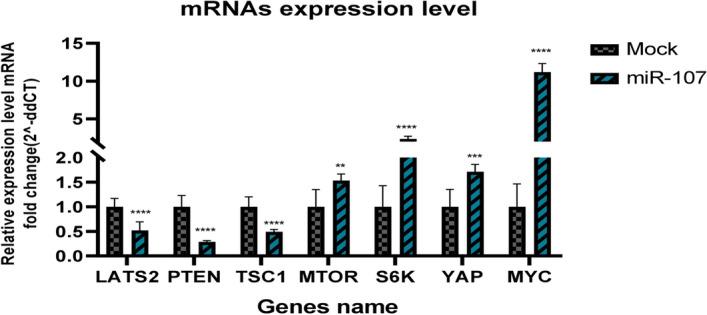
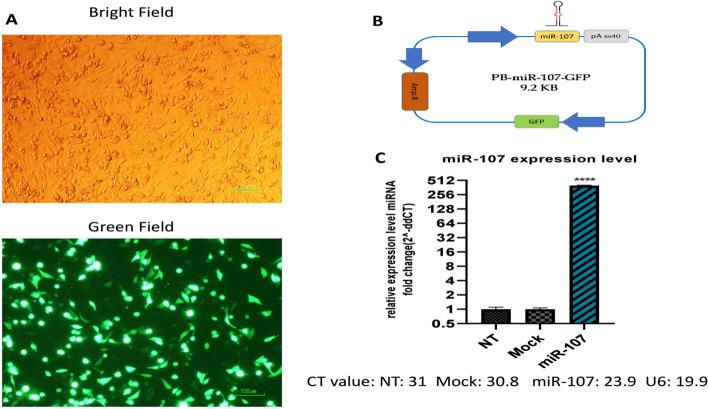
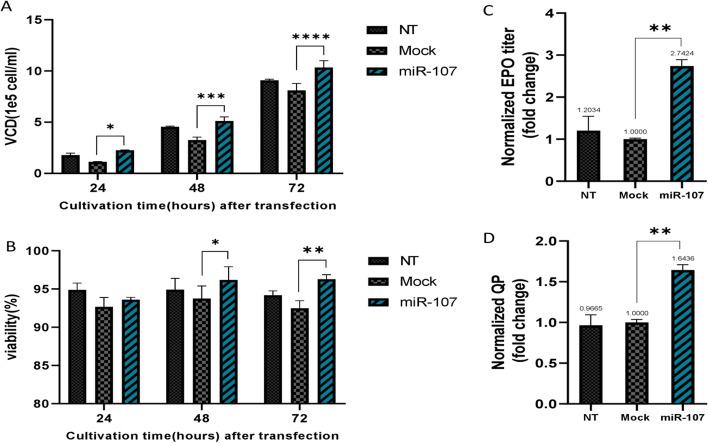
Chinese Hamster Ovary (CHO) cells are widely employed as host cells for biopharmaceutical production. The manufacturing of biopharmaceuticals poses several challenges, including restricted growth potential and inadequate productivity of the host cells. MicroRNAs play a crucial role in regulating gene expression and are considered highly promising tools for cell engineering to enhance protein production. Our study aimed to evaluate the effects of miR-107, which is recognized as an onco-miR, on erythropoietin-producing CHO cells (CHO-hEPO). To assess the impact of miR-107 on CHO cells, a DNA plasmid containing miR-107 was introduced to CHO-hEPO cells through transfection. Cell proliferation and viability were assessed using the trypan blue dye exclusion method. Cell cycle analysis was conducted by utilizing propidium iodide (PI) staining. The quantification of EPO was determined using an immunoassay test. Moreover, the impact of miR-107 on the expression of downstream target genes was evaluated using qRT-PCR. Our findings highlight and underscore the substantial impact of transient miR-107 overexpression, which led to a remarkable 2.7-fold increase in EPO titers and a significant 1.6-fold increase in the specific productivity of CHO cells (p < 0.01). Furthermore, this intervention resulted in significant enhancements in cell viability and growth rate (p < 0.05). Intriguingly, the overexpression of miR‑107 was linked to the downregulation of LATS2, PTEN, and TSC1 genes while concurrently driving upregulation in transcript levels of MYC, YAP, mTOR, and S6K genes within transgenic CHO cells. In conclusion, this study collectively underscores the feasibility of utilizing cancer-associated miRNAs as a powerful tool for CHO cell engineering. However, more in-depth exploration is warranted to unravel the precise molecular intricacies of miR-107's effects in the context of CHO cells.
中国仓鼠卵巢(CHO)细胞被广泛用作生物制药生产的宿主细胞。生物制药的生产面临若干挑战,包括宿主细胞生长潜力受限和生产力不足。微小RNA在调节基因表达中起关键作用,被认为是细胞工程中提高蛋白质产量的极具潜力的工具。我们的研究旨在评估被认为是癌基因miR的miR-107对产生促红细胞生成素的CHO细胞(CHO-hEPO)的影响。为了评估miR-107对CHO细胞的影响,通过转染将含有miR-107的DNA质粒导入CHO-hEPO细胞。使用台盼蓝染料排斥法评估细胞增殖和活力。利用碘化丙啶(PI)染色进行细胞周期分析。使用免疫测定试验测定促红细胞生成素的定量。此外,使用qRT-PCR评估miR-107对下游靶基因表达的影响。我们的研究结果突出并强调了瞬时miR-107过表达的重大影响,这导致促红细胞生成素滴度显著增加2.7倍,CHO细胞的比生产力显著增加1.6倍(p <0.01)。此外,这种干预导致细胞活力和生长速率显著提高(p <0.05)。有趣的是,miR-107的过表达与转基因CHO细胞中LATS2、PTEN和TSC1基因的下调有关,同时导致MYC、YAP、mTOR和S6K基因转录水平上调。总之,这项研究共同强调了利用与癌症相关的微小RNA作为CHO细胞工程强大工具的可行性。然而,需要进行更深入的探索,以揭示miR-107在CHO细胞背景下作用的精确分子复杂性。

 Zotero 插件