
正畸诱导牙周膜组织基因谱变化及龈沟液中细胞因子释放的初步研究。
Orthodontically induced changes to the genetic profile in periodontal ligament tissue and cytokine release in gingival crevicular fluid - A pilot investigation.
作者信息
Ratanasereeprasert Nutthakarn, Hsu Li-Fang, Wang Shih-Kai, Jane Yao Chung-Chen
机构信息
Graduate Institute of Clinical Dentistry, School of Dentistry, National Taiwan University, Taipei, Taiwan.
Department of Dentistry, National Taiwan University Hospital, Hsin-Chu Branch, Hsin-Chu, Taiwan.
出版信息
J Dent Sci. 2024 Jan;19(1):387-396. doi: 10.1016/j.jds.2023.07.038. Epub 2023 Aug 12.
BACKGROUND/PURPOSE: It has been known that genetic factors influence orthodontic tooth movement, however, scientific research on humans is lacking. Therefore, this study aimed to investigate dynamic changes to the genetic profile in human periodontal ligament (PDL) tissue and cytokine release in gingival crevicular fluid (GCF) during the first 28 days of orthodontic treatment.
MATERIALS AND METHODS
Fifteen teeth from three patients were recruited. Full-mouth fixed appliances with extraction of four premolars and one maxillary third molar was planned for orthodontic treatment. GCF collection and tooth extraction were performed following force application for 0, 1, 3, 7, and 28 days. GCF was analyzed using multiplex immunoassay for 27 cytokines. PDL tissue was collected after extraction and submitted for RNA exome-sequencing using Illumina sequencing platform. Further analysis of differentially expressed genes (DEGs), gene ontology (GO), Kyoto Encyclopedia of Genes and Genomes (KEGG) pathways, and heatmaps were conducted.
RESULTS
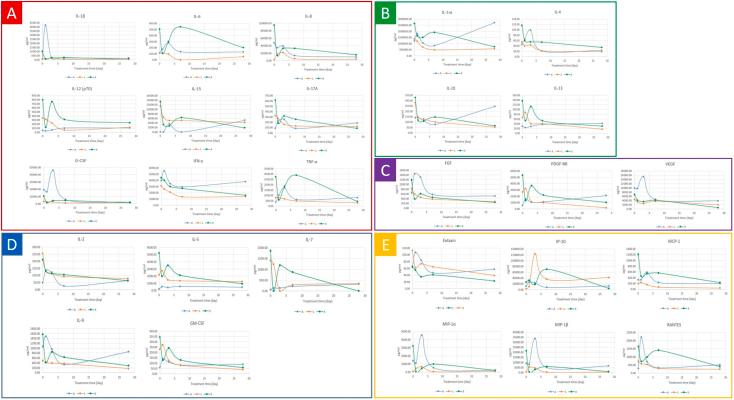
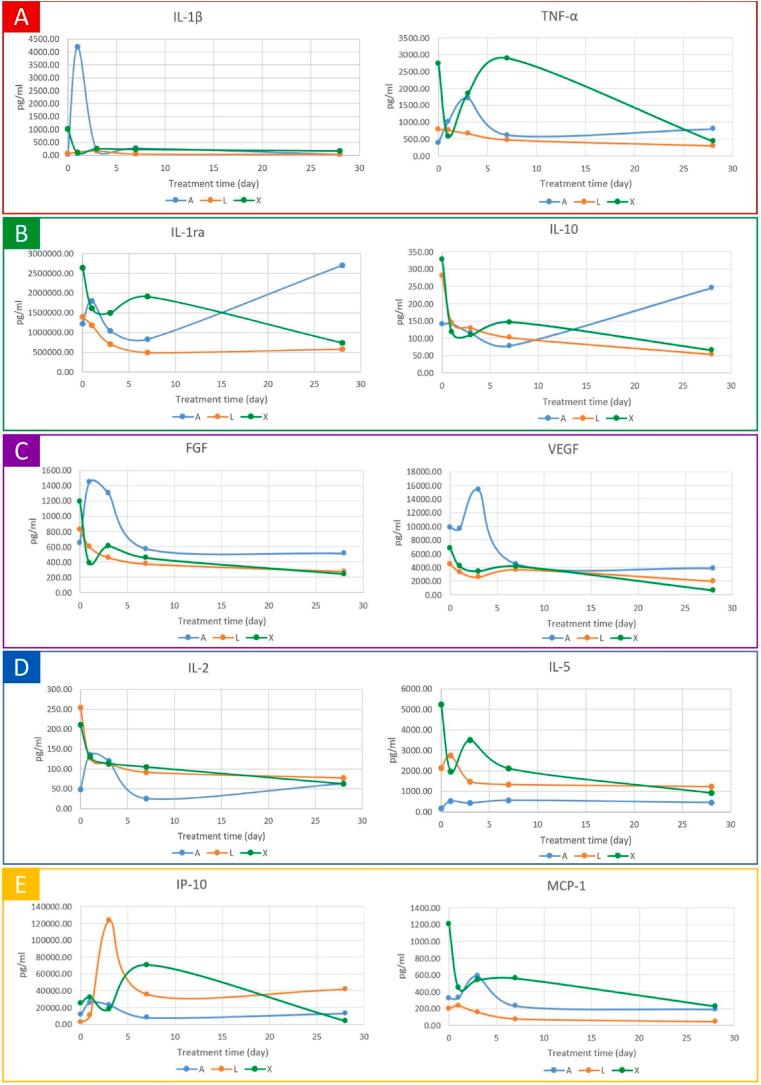
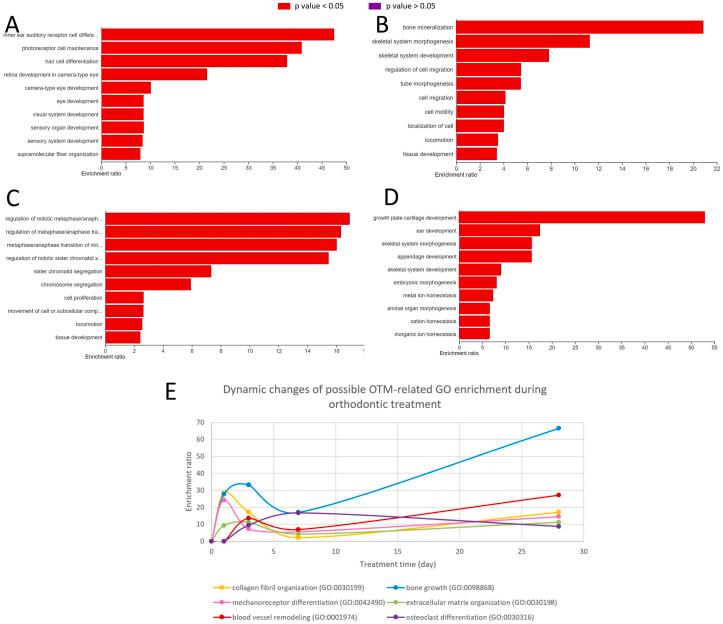
GCF cytokine levels varied among three patients; some patients exhibited a peak cytokine level on Day 0 whereas others did so on Days 1-3. In RNA exome sequencing data, GO and KEGG analyses showed that genes associated with sensory receptors were upregulated on Day 1, genes involved in bone remodeling were upregulated on Days 3 and 28, and genes related to osteoclast differentiation were upregulated on Day 7.
CONCLUSION
RNA sequencing data demonstrate that the specific types of genes are expressed at different time points, whereas the data on cytokine changes show a large variation in concentration levels and dynamic change patterns among the patients.
背景/目的:已知遗传因素会影响正畸牙齿移动,但缺乏对人类的科学研究。因此,本研究旨在调查正畸治疗前28天人类牙周膜(PDL)组织中基因谱的动态变化以及龈沟液(GCF)中细胞因子的释放情况。
材料与方法
招募了来自三名患者的15颗牙齿。计划进行全口固定矫治器治疗,拔除四颗前磨牙和一颗上颌第三磨牙。在施加力0、1、3、7和28天后进行GCF采集和牙齿拔除。使用多重免疫分析法分析GCF中的27种细胞因子。拔牙后收集PDL组织,并使用Illumina测序平台进行RNA外显子组测序。对差异表达基因(DEG)、基因本体论(GO)、京都基因与基因组百科全书(KEGG)通路和热图进行进一步分析。
结果
三名患者的GCF细胞因子水平各不相同;一些患者在第0天出现细胞因子水平峰值,而另一些患者在第1 - 3天出现峰值。在RNA外显子组测序数据中,GO和KEGG分析表明,与感觉受体相关的基因在第1天上调,参与骨重塑的基因在第3天和第28天上调,与破骨细胞分化相关的基因在第7天上调。
结论
RNA测序数据表明特定类型的基因在不同时间点表达,而细胞因子变化的数据显示患者之间浓度水平和动态变化模式存在很大差异。


 Zotero 插件