
口腔鳞状细胞癌中ErbB2唾液水平的评估。
Assessment of salivary levels of ErbB2 in oral squamous cell carcinoma.
作者信息
Jayarajkumar Sujithaa, Ramamoorthi Raghini, Muniapillai Sivakumar, Gopalakrishnan Sivakumar, Jayaseelan Vijayashree Priyadharshini
机构信息
Department of Oral Pathology and Microbiology, Madha Dental College and Hospital, Kundrathur, Chennai, Tamil Nadu, India.
Department of Oral Pathology and Microbiology, Madha Dental College, Research Scholar, Kundrathur, Chennai, Tamil Nadu, India.
出版信息
J Oral Maxillofac Pathol. 2023 Oct-Dec;27(4):777. doi: 10.4103/jomfp.jomfp_114_23. Epub 2023 Dec 20.
INTRODUCTION
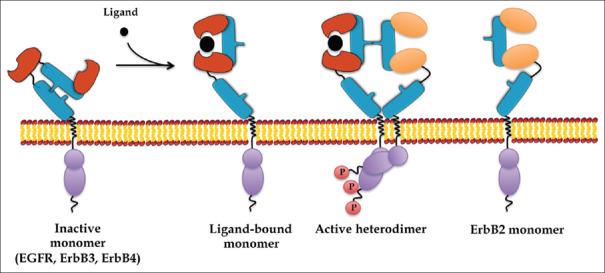
Oral cancer is the sixth-most common cancer globally. The survival rate of oral cancer is 5 years, depending on the stage it is diagnosed. To diagnose in the early stage, specialised tumour markers may assist and also help in improving the survival rate of oral cancer. ErbB2 is a transmembrane cell surface receptor required in signal transduction and an essential part of signalling pathways that take part in controlling the basic cellular processes like cell cycle, migration, metabolism and survival, besides cellular proliferation and differentiation. It is over-expressed in oral squamous cell carcinoma (OSCC) and is directly proportional to the poor prognosis, as it is expressed at a very low concentration in a healthy individual. Due to this, ErbB2 could be used as a diagnostic marker in OSCC. Nowadays, the search for tumour expression in the saliva with the use of salivary biomarkers could aid in the diagnosis of the OSSC.
AIM AND OBJECTIVES
To assess the expression of ErbB2 in the saliva of patients with oral squamous cell carcinoma by correlating the ErbB2 level in the disease group with the healthy group. To determine the diagnostic significance of ErbB2 in OSCC.
MATERIALS AND METHODS
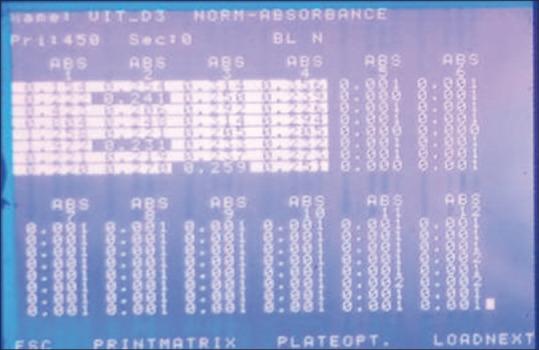
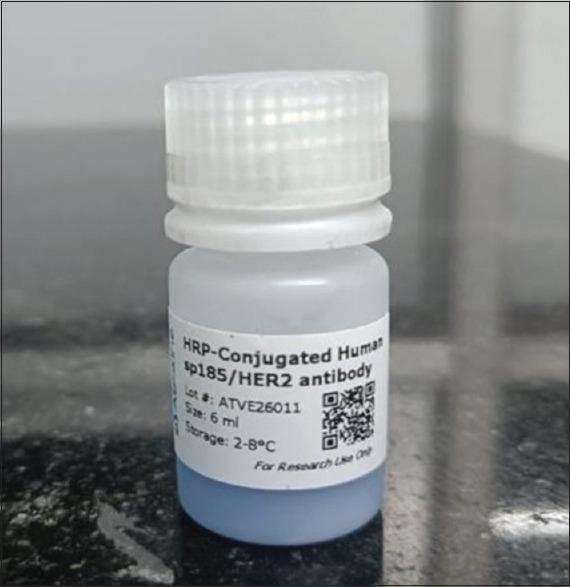
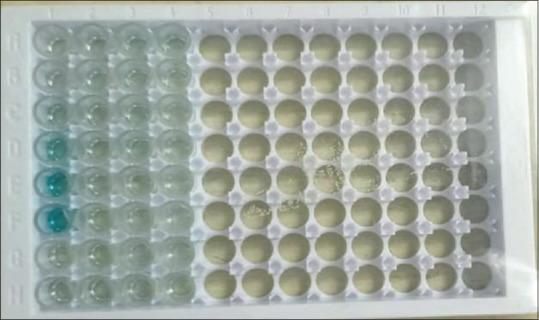
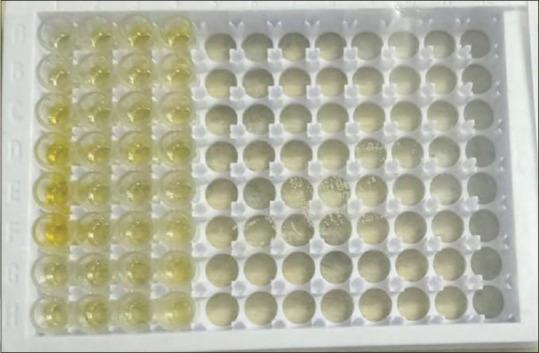
The study comprises 20 salivary samples from OSCC patients and 20 salivary samples from healthy individuals. The salivary level of ErbB2 was estimated using Enzyme Linked Immunosorbent Assay. To analyse the data, SPSS (IBM SPSS Statistics for Windows, Version 26.0, Armonk, NY: IBM Corp. Released 2019) is used. The significance level is fixed at 5% (α = 0.05). value <0.05 is considered to be statistically significant. To compare the mean values of mean and concentration, an unpaired/independent sample -test was used.
RESULTS
The mean age of OSCC and control were found to be 57 ± 8.13 and 26.6 ± 1.51, respectively. The mean age was compared between OSCC and control by the Chi-square test, and the value was <0.01, which was found to be statistically significant. The salivary levels of ErbB2 in the OSCC and control groups were measured by an unpaired sample t-test. The mean salivary ErbB2 level in the OSCC group is 3.20 ng/ml ± 0.57, and in the control group, it is 2.43 ng/ml ± 0.13. When a pairwise comparison of ErbB2 concentration was performed between OSCC and control, it showed a statistically significant difference with a value of 0.007, which is < 0.05.
CONCLUSION
The present study has demonstrated an increased salivary expression of ErbB2 in OSCC patients when compared to healthy individuals. This suggests that ErbB2 could aid in the diagnosis of OSCC and could be used as a diagnostic marker in the early detection of oral cancer, a finding that has to be further established with a larger sample size.
引言
口腔癌是全球第六大常见癌症。口腔癌的生存率为5年,这取决于其被诊断时的阶段。为了早期诊断,专门的肿瘤标志物可能会有所帮助,也有助于提高口腔癌的生存率。ErbB2是信号转导中所需的跨膜细胞表面受体,是信号通路的重要组成部分,除了参与细胞增殖和分化外,还参与控制细胞周期、迁移、代谢和存活等基本细胞过程。它在口腔鳞状细胞癌(OSCC)中过度表达,并且与不良预后成正比,因为在健康个体中它以非常低的浓度表达。因此,ErbB2可作为OSCC的诊断标志物。如今,利用唾液生物标志物寻找唾液中的肿瘤表达情况可能有助于OSCC的诊断。
目的
通过将疾病组与健康组的ErbB2水平进行关联,评估口腔鳞状细胞癌患者唾液中ErbB2的表达。确定ErbB2在OSCC中的诊断意义。
材料与方法
该研究包括20份OSCC患者的唾液样本和20份健康个体的唾液样本。使用酶联免疫吸附测定法估计唾液中ErbB2的水平。为了分析数据, 使用SPSS(IBM SPSS Statistics for Windows,版本26.0,纽约州阿蒙克:IBM公司。2019年发布)。显著性水平设定为5%(α = 0.05)。P值<0.05被认为具有统计学意义。为了比较均值和浓度的平均值,使用了非配对/独立样本t检验。
结果
发现OSCC组和对照组的平均年龄分别为57 ± 8.13岁和26.6 ± 1.51岁。通过卡方检验比较OSCC组和对照组之间的平均年龄,P值<0.01,发现具有统计学意义。通过非配对样本t检验测量OSCC组和对照组中ErbB2的唾液水平。OSCC组中唾液ErbB2的平均水平为3.20 ng/ml ± 0.57,对照组中为2.43 ng/ml ± 0.13。当对OSCC组和对照组之间ErbB2浓度进行成对比较时,显示出统计学上的显著差异,P值为0.007,即P < 0.05。
结论
本研究表明,与健康个体相比,OSCC患者唾液中ErbB2的表达增加。这表明ErbB2有助于OSCC的诊断,并且可作为口腔癌早期检测的诊断标志物,这一发现有待通过更大样本量进一步证实。




 Zotero 插件