
微塑料和内分泌干扰化学物质对黑头呆鱼繁殖社会行为的独立及协同效应
Independent and synergistic effects of microplastics and endocrine-disrupting chemicals on the reproductive social behavior of fathead minnows ().
作者信息
Carter Grace, Ward Jessica
机构信息
Biology Department Ball State University Muncie Indiana USA.
出版信息
Ecol Evol. 2024 Feb 6;14(2):e10846. doi: 10.1002/ece3.10846. eCollection 2024 Feb.
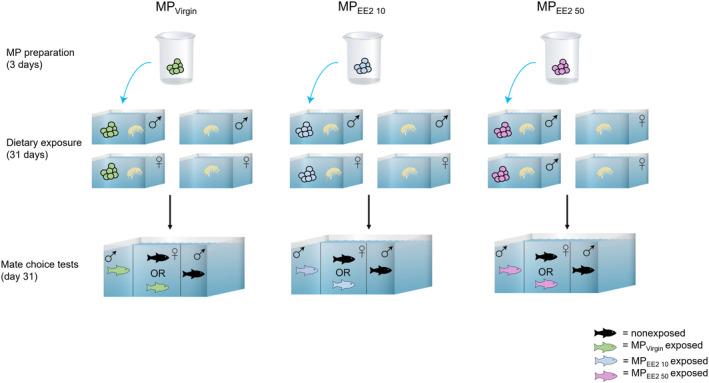
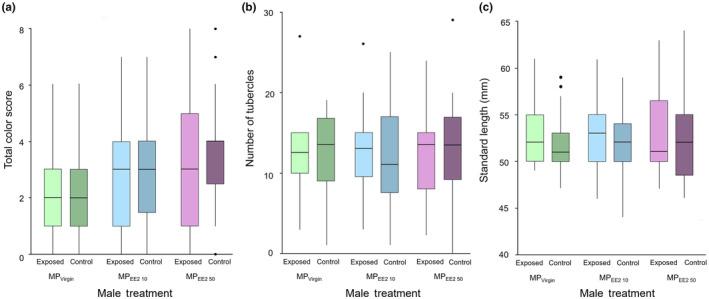
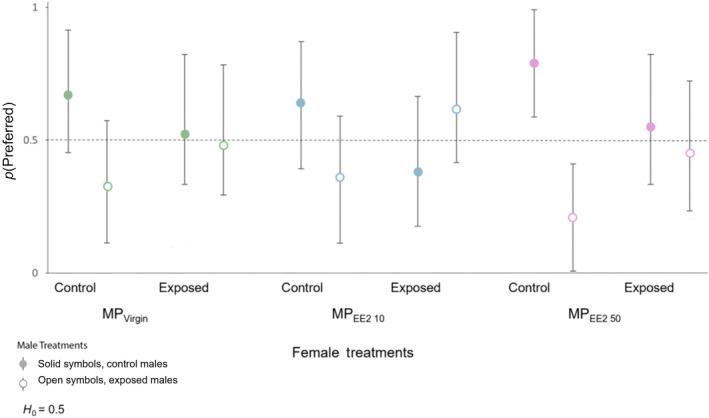
Microplastics (MPs) have become an environmental concern in recent years, with most research focused on the physiological effects of exposure. Comparatively little consideration has been given to the potential behavioral impacts of exposure, which may also have fitness consequences for individuals. Moreover, MPs can serve as vectors for endocrine-disrupting chemicals and other locally co-occurring contaminants known to impair behavioral responses. This project aimed to determine whether MPs alone or in association with a common environmental EDC (17-alpha ethinyl estradiol; EE2) alter reproductive behavior and decision-making in fish. Male and female fathead minnows () were exposed to MPs associated with either a low (10 ng/L; MP) or high (50 ng/L, MP) concentration of EE2, or MPs without EE2 (MP) for 30 days via a dietary feeding protocol. Behavioral trials were conducted on Day 31 to determine the effects of exposure on male-female social interactions. The expression of male sexually selected traits, including courtship, was unaffected by exposure. However, non-exposed females in all treatment groups trended toward discrimination against exposed males, which reached statistical significance for the MP group. Female fish exposed to MPs, alone or in association with EE2, were equally likely to approach and associate with non-exposed and exposed males. The results from this study suggest that MPs may alter social behavior in fishes and that the behavioral impacts of exposure may be more strongly pronounced in females than males. Such individual-level changes in fitness have the potential to impact population size, with downstream effects on the broader aquatic community.
近年来,微塑料(MPs)已成为一个环境问题,大多数研究集中在接触微塑料的生理影响上。相对而言,对接触微塑料潜在行为影响的考虑较少,而这也可能对个体的健康产生影响。此外,微塑料可作为内分泌干扰化学物质和其他已知会损害行为反应的同时存在的局部污染物的载体。本项目旨在确定单独的微塑料或与常见环境内分泌干扰物(17-α乙炔雌二醇;EE2)结合是否会改变鱼类的生殖行为和决策。通过饮食投喂方案,将雄性和雌性黑头呆鱼暴露于与低浓度(10纳克/升;MP)或高浓度(50纳克/升,MP)EE2相关的微塑料中,或暴露于不含EE2的微塑料(MP)中30天。在第31天进行行为试验,以确定暴露对雌雄社交互动的影响。包括求偶在内的雄性性选择特征的表达不受暴露的影响。然而,所有处理组中未暴露的雌性都倾向于歧视暴露的雄性,这在MP组中达到了统计学显著性。单独或与EE2结合暴露于微塑料的雌性鱼类接近并与未暴露和暴露的雄性交往的可能性相同。这项研究的结果表明,微塑料可能会改变鱼类的社会行为,而且暴露对行为的影响在雌性中可能比在雄性中更明显。这种个体健康水平的变化有可能影响种群数量,并对更广泛的水生群落产生下游影响。


 Zotero 插件