
实施 COVID-19 自我检测在高危人群和偏远地区的试点研究:结果和经验教训。
Implementing a pilot study of COVID-19 self-testing in high-risk populations and remote locations: results and lessons learnt.
机构信息
FIND, Geneva, Switzerland.
National Center for Disease Control and Public Health (NCDC), Tbilisi, Georgia.
出版信息
BMC Public Health. 2024 Feb 17;24(1):511. doi: 10.1186/s12889-024-17930-2.
BACKGROUND
Rapid antigen-detection tests for SARS-CoV-2 self-testing represent a useful tool for pandemic control and expanding access to community-level case screening. COVID-19 self-tests have been extensively used in high-income countries since 2021; however, their introduction and programmatic implementation in low- and middle-income countries was delayed. We aimed to identify and continuously improve a weekly COVID-19 self-testing model among staff at healthcare facilities and schools.
METHODS
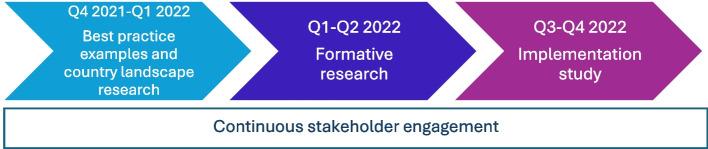
This mixed-methods, observational prospective study was conducted in 5 healthcare centres and 24 schools in Georgia, between June and December 2022. The study comprised the integration of COVID-19 self-testing into the national mandatory testing programme for high-risk groups, with primary distribution of self-tests among staff performed weekly, plus secondary distribution to their household members. These use cases were selected because NCDC was seeking to strengthen their already strong weekly testing programme, by investigating self-testing to ease the burden of testing in the healthcare system. Online surveys and semi-structured interviews were used for data collection.
RESULTS
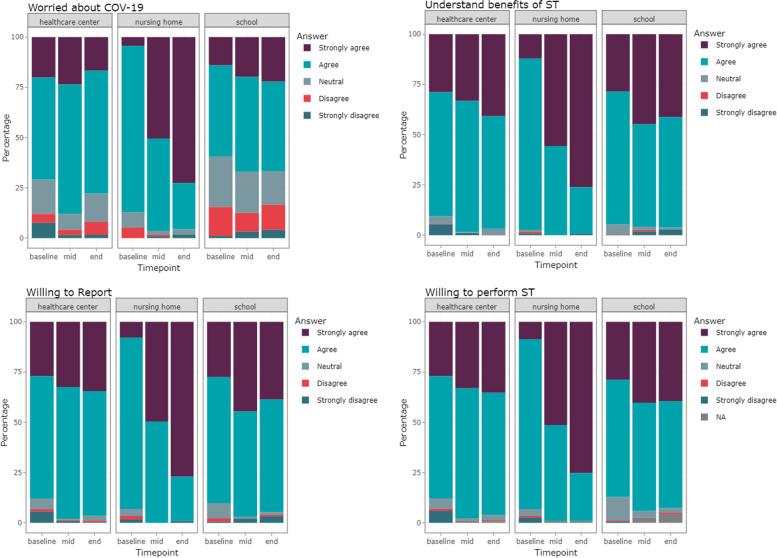
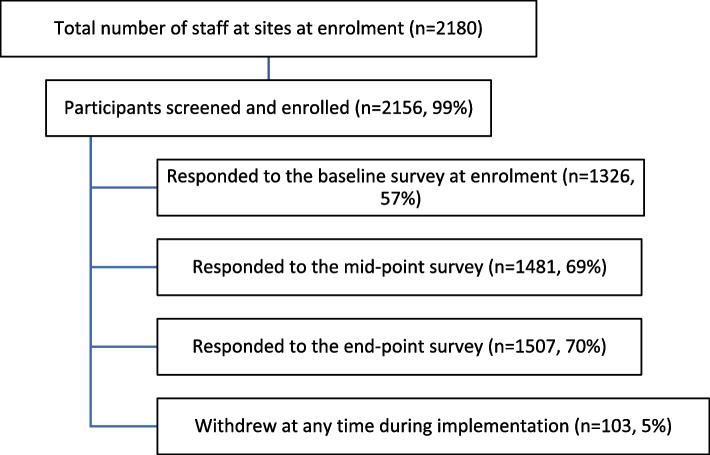
In total, 2156 participants were enrolled (1963 female, 72%). At baseline and mid- and end-points, 88%, 97% and 99%, respectively, of participants agreed/strongly agreed they would self-test. Similarly, the majority were willing to report their self-testing results (88%, 98% and 96% at baseline and mid- and end-points, respectively). Weekly reporting of test results to the national COVID-19 database was high during all the implementation. There were 622 COVID-19 positive results reported, and linked to care, from 601 individuals (282 participants and 319 household members). Findings from qualitative interviews showed great satisfaction with self-testing for its convenience, ease of use, trust in the results, no need to travel for diagnostics, and increased perception of safety.
CONCLUSIONS
Our findings contribute to the evidence-base regarding self-testing strategies conducted via workplaces and secondary distribution to households. Willingness to perform a COVID-19 self-test increased after implementation. This pilot enhanced pandemic preparedness through expansion of the national self-testing reporting system, development of communications materials, changes in the national legal framework and coordination mechanisms, and improved perceptions around self-care in the community. The lessons learnt can inform operational aspects of the introduction and scale-up of self-care strategies.
背景
用于 SARS-CoV-2 自测的快速抗原检测试剂盒是控制大流行和扩大社区层面病例筛查机会的有用工具。自 2021 年以来,COVID-19 自测已在高收入国家广泛使用;然而,在低收入和中等收入国家,其引入和计划实施被推迟。我们的目的是在医疗机构和学校工作人员中确定并不断改进每周 COVID-19 自测模型。
方法
这是一项在格鲁吉亚的 5 家医疗机构和 24 所学校进行的混合方法、观察性前瞻性研究,时间为 2022 年 6 月至 12 月。该研究将 COVID-19 自测纳入国家高风险人群强制性检测计划,每周向工作人员发放自测试剂盒,并向其家庭成员二次发放。选择这些用例是因为 NCDC 希望通过调查自测来减轻医疗系统的检测负担,从而加强其已经强大的每周检测计划。在线调查和半结构化访谈用于收集数据。
结果
共有 2156 名参与者(1963 名女性,72%)入组。在基线、中点和终点时,分别有 88%、97%和 99%的参与者表示他们愿意进行自测。同样,大多数人愿意报告他们的自测结果(分别为基线、中点和终点时的 88%、98%和 96%)。在整个实施过程中,每周向国家 COVID-19 数据库报告检测结果的比例很高。从 601 人中(282 名参与者和 319 名家庭成员)报告了 622 例 COVID-19 阳性结果,并与治疗相关联。定性访谈结果显示,参与者对自测的便利性、易用性、对结果的信任、无需旅行进行诊断以及增加的安全感非常满意。
结论
我们的研究结果为通过工作场所和向家庭二级分发进行自测的策略提供了证据基础。实施后,进行 COVID-19 自测的意愿增加。该试点通过扩大国家自测报告系统、制定通讯材料、改变国家法律框架和协调机制以及改善社区内自我保健意识,增强了大流行防范能力。所吸取的经验教训可以为引入和扩大自我保健策略的运营方面提供信息。

 Zotero 插件