
抗体结构和结合位价对双特异性 NKp30 x EGFR 自然杀伤细胞衔接子效应功能的影响。
Impact of antibody architecture and paratope valency on effector functions of bispecific NKp30 x EGFR natural killer cell engagers.
机构信息
Division of Antibody-Based Immunotherapy, Department of Internal Medicine II, University Medical Center Schleswig-Holstein and University of Kiel, Kiel, Germany.
Antibody Discovery & Protein Engineering, Merck Healthcare KGaA, Darmstadt, Germany.
出版信息
MAbs. 2024 Jan-Dec;16(1):2315640. doi: 10.1080/19420862.2024.2315640. Epub 2024 Feb 19.
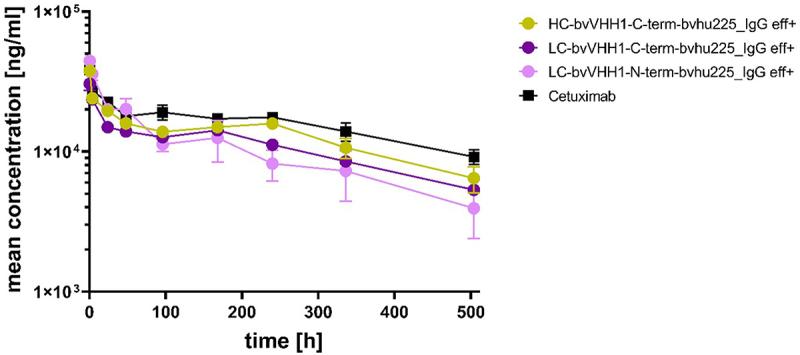
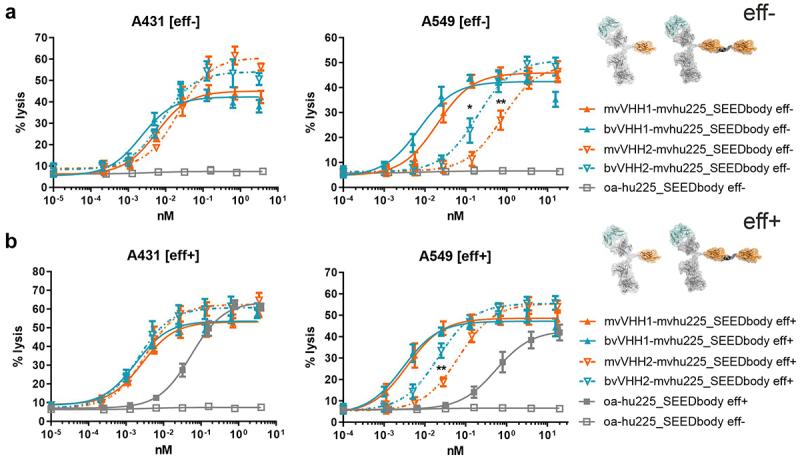
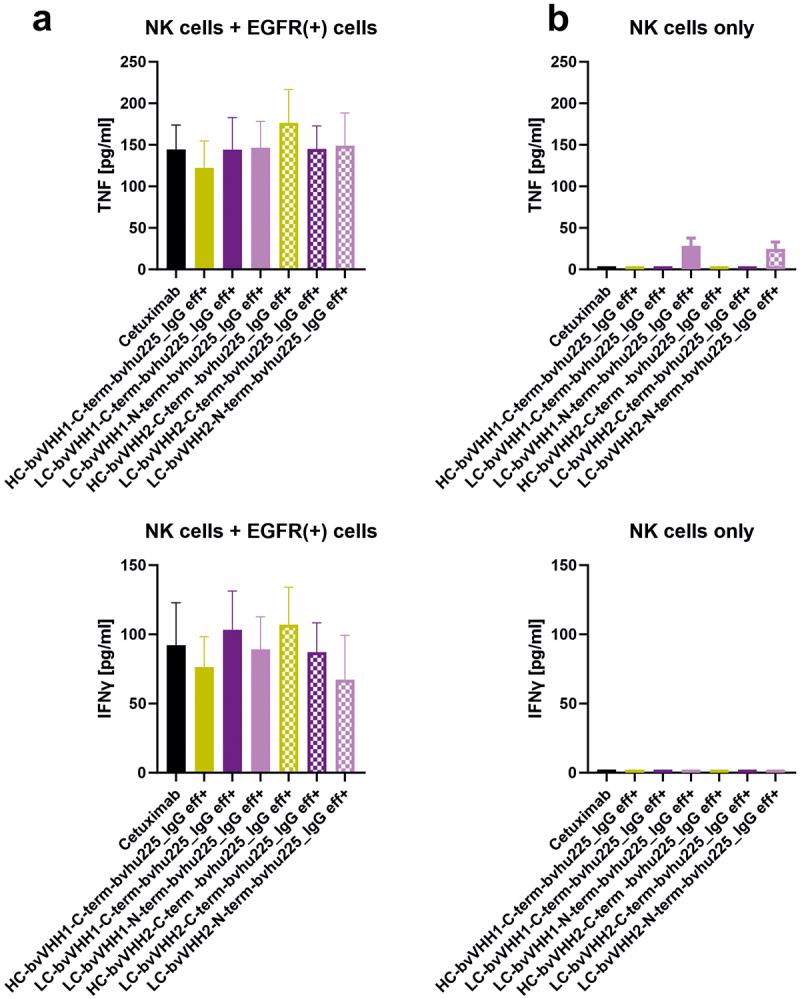
Natural killer (NK) cells emerged as a promising effector population that can be harnessed for anti-tumor therapy. In this work, we constructed NK cell engagers (NKCEs) based on NKp30-targeting single domain antibodies (sdAbs) that redirect the cytotoxic potential of NK cells toward epidermal growth factor receptor (EGFR)-expressing tumor cells. We investigated the impact of crucial parameters such as sdAb location, binding valencies, the targeted epitope on NKp30, and the overall antibody architecture on the redirection capacity. Our study exploited two NKp30-specific sdAbs, one of which binds a similar epitope on NKp30 as its natural ligand B7-H6, while the other sdAb addresses a non-competing epitope. For EGFR-positive tumor targeting, humanized antigen-binding domains of therapeutic antibody cetuximab were used. We demonstrate that NKCEs bivalently targeting EGFR and bivalently engaging NKp30 are superior to monovalent NKCEs in promoting NK cell-mediated tumor cell lysis and that the architecture of the NKCE can substantially influence killing capacities depending on the NKp30-targeting sdAb utilized. While having a pronounced impact on NK cell killing efficacy, the capabilities of triggering antibody-dependent cellular phagocytosis or complement-dependent cytotoxicity were not significantly affected comparing the bivalent IgG-like NKCEs with cetuximab. However, the fusion of sdAbs can have a slight impact on the NK cell release of immunomodulatory cytokines, as well as on the pharmacokinetic profile of the NKCE due to unfavorable spatial orientation within the molecule architecture. Ultimately, our findings reveal novel insights for the engineering of potent NKCEs triggering the NKp30 axis.
自然杀伤 (NK) 细胞已成为一种很有前途的效应细胞群体,可以用于抗肿瘤治疗。在这项工作中,我们构建了基于 NKp30 靶向单域抗体 (sdAb) 的 NK 细胞衔接器 (NKCE),将 NK 细胞的细胞毒性潜力重新导向表皮生长因子受体 (EGFR) 表达的肿瘤细胞。我们研究了关键参数的影响,如 sdAb 的位置、结合价、NKp30 上的靶向表位和抗体整体结构对重定向能力的影响。我们的研究利用了两种 NKp30 特异性 sdAb,其中一种与 NKp30 的天然配体 B7-H6 结合相似的表位,而另一种 sdAb 则针对非竞争表位。对于 EGFR 阳性肿瘤靶向,我们使用了治疗性抗体西妥昔单抗的人源化抗原结合结构域。我们证明,双价靶向 EGFR 和双价结合 NKp30 的 NKCE 比单价 NKCE 更能促进 NK 细胞介导的肿瘤细胞裂解,并且 NKCE 的结构可以根据所使用的 NKp30 靶向 sdAb 显著影响杀伤能力。尽管对 NK 细胞杀伤效力有明显影响,但与双价 IgG 样 NKCE 相比,触发抗体依赖的细胞吞噬或补体依赖的细胞毒性的能力并没有显著影响。然而,sdAb 的融合可能会对 NK 细胞释放免疫调节细胞因子产生轻微影响,以及由于分子结构内的不利空间取向对 NKCE 的药代动力学特性产生轻微影响。最终,我们的研究结果为设计触发 NKp30 轴的有效 NKCE 提供了新的见解。




 Zotero 插件