
地中海虾仁中潜在有毒元素的浓度:系统评价、分析与健康风险评估。
Concentration of potentially toxic elements in fillet shrimps of Mediterranean Sea: Systematic review, -analysis and health risk assessment.
作者信息
Mahmudiono Trias, Esfandiari Zahra, Zare Ali, Sarkhoshkalat Mohammadmahdi, Mehri Fereshteh, Fakhri Yadolah
机构信息
Department of Nutrition, Faculty of Public Health, Universitas Airlangga, Surabaya, Indonesia.
Nutrition and Food Security Research Center, Department of Food Science and Technology, School of Nutrition and Food Science, Isfahan University of Medical Sciences, Isfahan, Iran.
出版信息
Food Chem X. 2024 Feb 7;21:101206. doi: 10.1016/j.fochx.2024.101206. eCollection 2024 Mar 30.
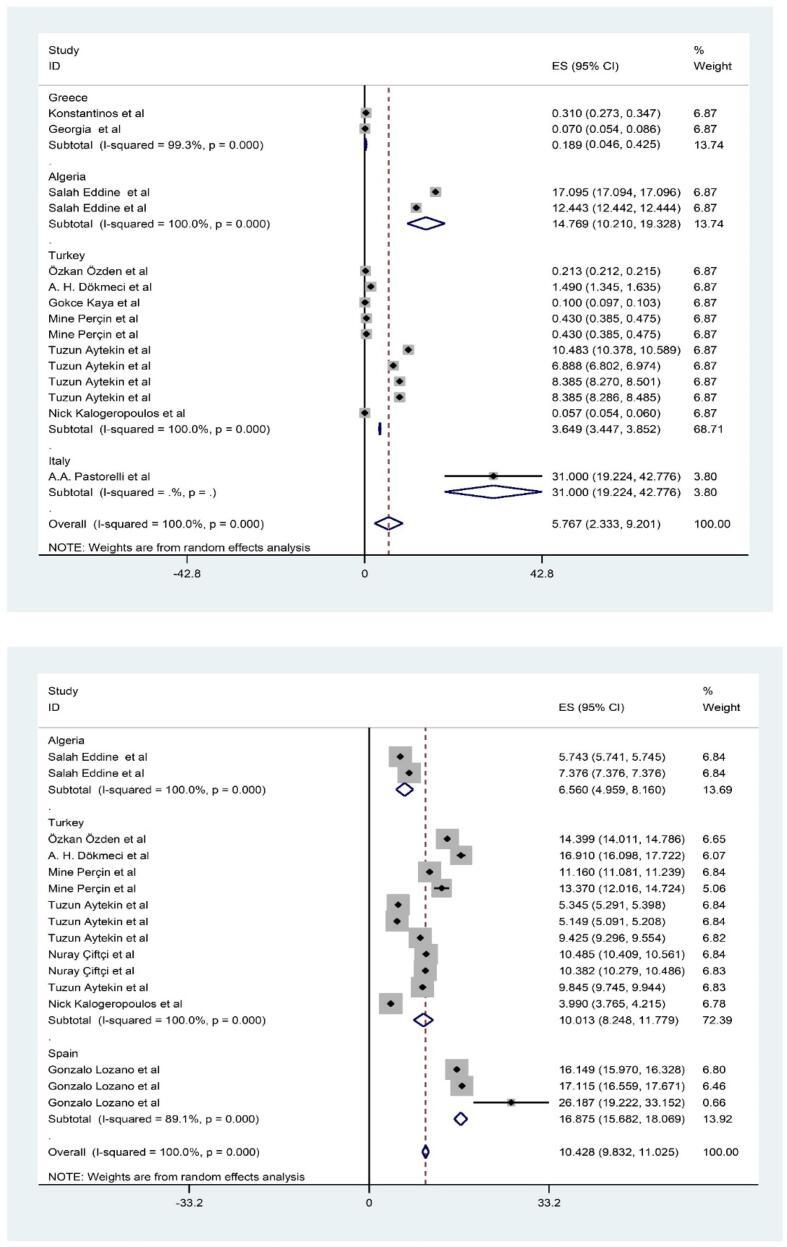
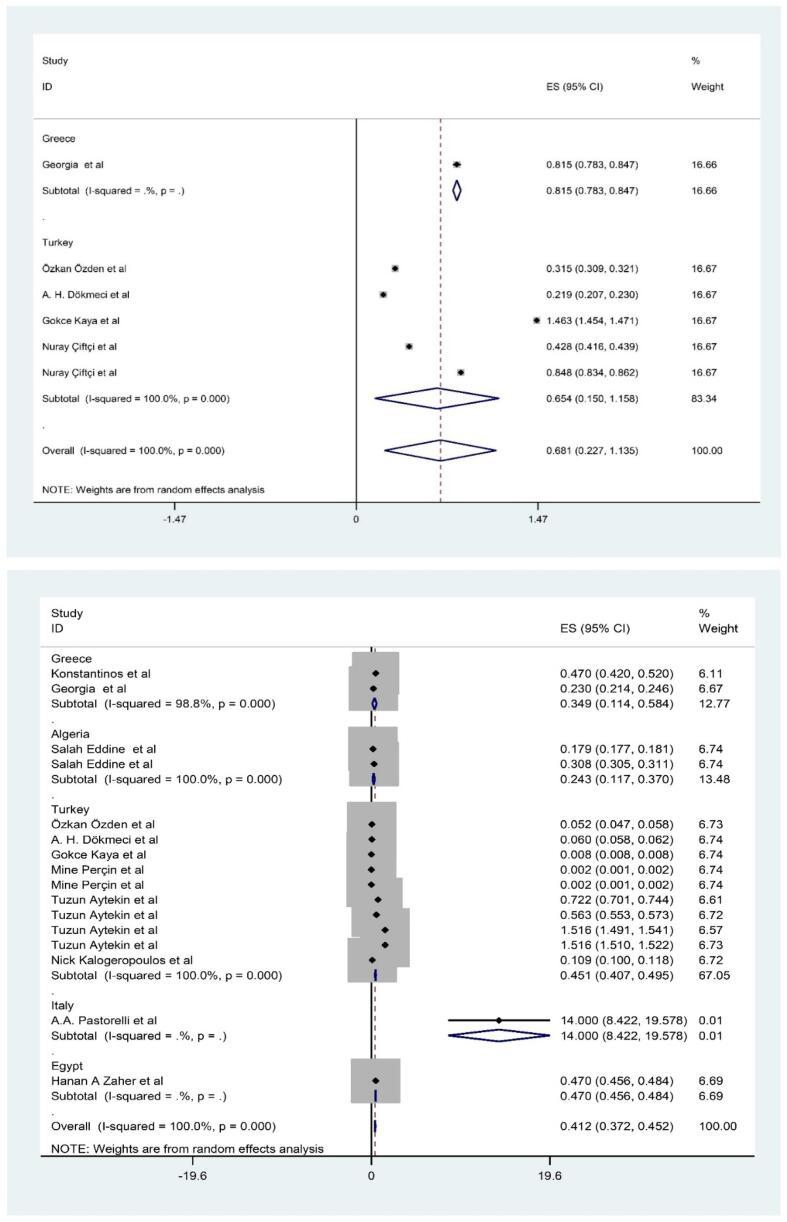
In this study, an attempt was made to -analyzed the concentration of potentially toxic elements (PTEs) in shrimps tissue of Mediterranean Sea and health risk of consumers was estimated. Search was conducted in international databases includes Scopus, PubMed, Embase, Science Direct and Web of Science from 1 January 2010 to 20 July 2023. The random effects model used to -analysis of concentration of PTEs in shrimp in subgroups. In addition, non-carcinogenic and carcinogenic risks for adults and children were calculated using target hazard quotient (THQ) and cancer risk (CR). Meta-analysis concentration of PTEs in shrimps was conducted using random effects model based on country subgroups. The rank order of PTEs based on mean (pooled) level in fillet of shrimps was Fe (15.395 mg/kg-ww) > Zn (10.428 mg/kg-ww) > Cu (6.941 mg/kg-ww) Pb (5.7 mg/kg-ww) > Ni (1.115 mg/kg-ww) > As (0.681 mg/kg-ww) > Cd (0.412 mg/kg-ww) > Hg (0.300 mg/kg-ww). THQ level in adults and children due to Cd and Pb in Italy was higher than 1 value. THQ level in adults and children due to Cu, Ni, Fe, Zn and inorganic As was lower than 1 value. CR due to inorganic As in Greece and Türkiye for adults and children was higher than 1E-6 value. Therefore, it was recommended to continuously monitor and reduce the concentration of PTEs in shrimps in Italy, Greece and Türkiye, especially.
在本研究中,尝试分析了地中海虾类组织中潜在有毒元素(PTEs)的浓度,并评估了消费者的健康风险。在2010年1月1日至2023年7月20日期间,在包括Scopus、PubMed、Embase、Science Direct和Web of Science在内的国际数据库中进行了检索。采用随机效应模型分析亚组中虾类PTEs的浓度。此外,使用目标危险商数(THQ)和癌症风险(CR)计算了成人和儿童的非致癌和致癌风险。基于国家亚组,采用随机效应模型对虾类中PTEs的浓度进行了荟萃分析。基于虾类鱼片平均(合并)水平的PTEs排序为:铁(15.395毫克/千克-湿重)>锌(10.428毫克/千克-湿重)>铜(6.941毫克/千克-湿重)>铅(5.7毫克/千克-湿重)>镍(1.115毫克/千克-湿重)>砷(0.681毫克/千克-湿重)>镉(0.412毫克/千克-湿重)>汞(0.300毫克/千克-湿重)。意大利成人和儿童因镉和铅导致的THQ水平高于1。成人和儿童因铜、镍、铁、锌和无机砷导致的THQ水平低于1。希腊和土耳其成人和儿童因无机砷导致的CR高于1E-6。因此,建议尤其要持续监测并降低意大利、希腊和土耳其虾类中PTEs的浓度。



 Zotero 插件