
基于代谢组学的跨属生物标志物鉴定及其在小鼠模型中对肠道血吸虫病早期诊断和肠道病理学进展的研究
Identification of trans-genus biomarkers for early diagnosis of intestinal schistosomiasis and progression of gut pathology in a mouse model using metabolomics.
机构信息
Princess Srisavangavadhana College of Medicine, Chulabhorn Royal Academy, Bangkok, Thailand.
Mahidol Oxford Tropical Medicine Research Unit, Faculty of Tropical Medicine, Mahidol University, Bangkok, Thailand.
出版信息
PLoS Negl Trop Dis. 2024 Feb 21;18(2):e0011966. doi: 10.1371/journal.pntd.0011966. eCollection 2024 Feb.
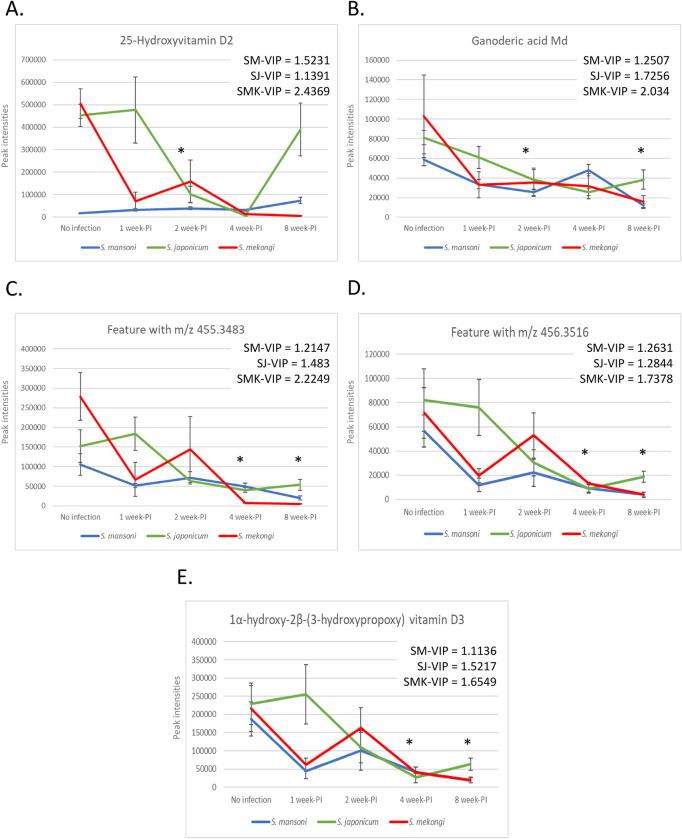
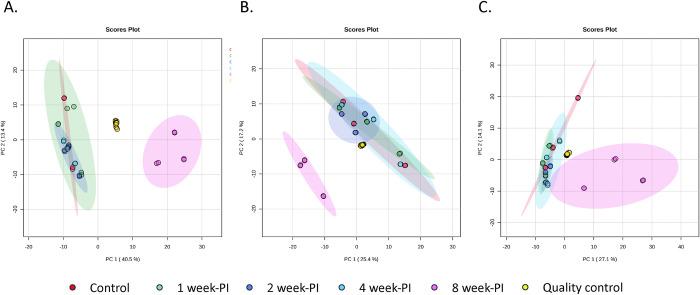
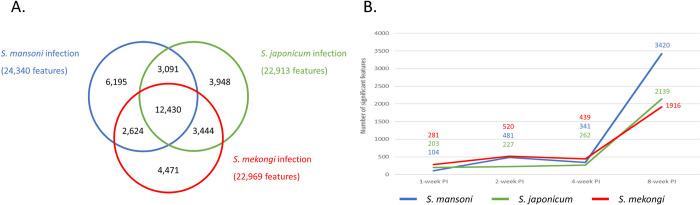
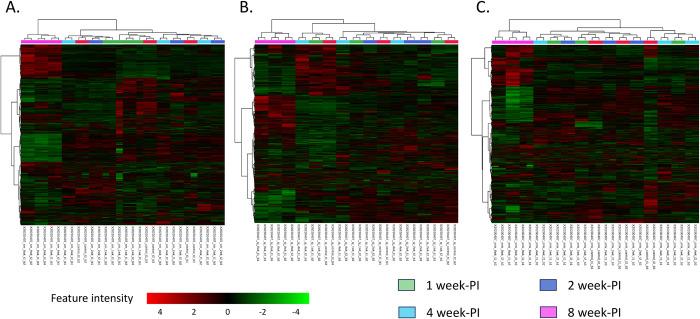
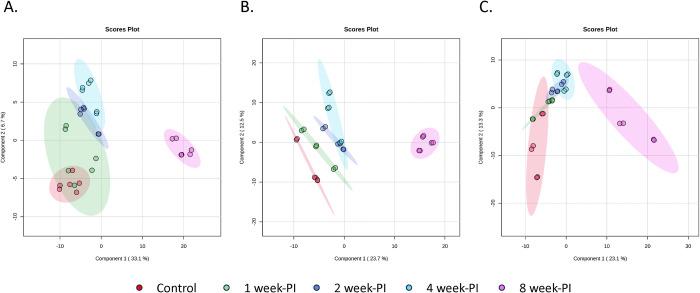
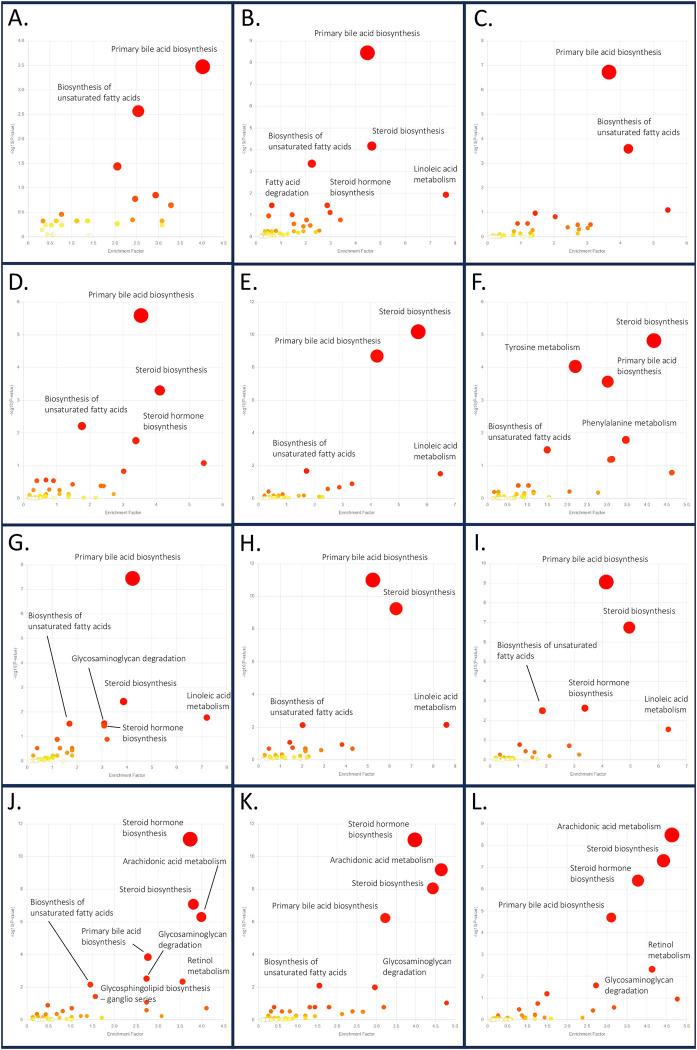
Schistosomiasis is one of the most devastating human diseases worldwide. The disease is caused by six species of Schistosoma blood fluke; five of which cause intestinal granulomatous inflammation and bleeding. The current diagnostic method is inaccurate and delayed, hence, biomarker identification using metabolomics has been applied. However, previous studies only investigated infection caused by one Schistosoma spp., leaving a gap in the use of biomarkers for other species. No study focused on understanding the progression of intestinal disease. Therefore, we aimed to identify early gut biomarkers of infection with three Schistosoma spp. and progression of intestinal pathology. We infected 3 groups of mice, 3 mice each, with Schistosoma mansoni, Schistosoma japonicum or Schistosoma mekongi and collected their feces before and 1, 2, 4 and 8 weeks after infection. Metabolites in feces were extracted and identified using mass spectrometer-based metabolomics. Metabolites were annotated and analyzed with XCMS bioinformatics tool and Metaboanalyst platform. From >36,000 features in all conditions, multivariate analysis found a distinct pattern at each time point for all species. Pathway analysis reported alteration of several lipid metabolism pathways as infection progressed. Disturbance of the glycosaminoglycan degradation pathway was found with the presence of parasite eggs, indicating involvement of this pathway in disease progression. Biomarkers were discovered using a combination of variable importance for projection score cut-off and receiver operating characteristic curve analysis. Five molecules met our criteria and were present in all three species: 25-hydroxyvitamin D2, 1α-hydroxy-2β-(3-hydroxypropoxy) vitamin D3, Ganoderic acid Md, unidentified feature with m/z 455.3483, and unidentified feature with m/z 456.3516. These molecules were proposed as trans-genus biomarkers of early schistosomiasis. Our findings provide evidence for disease progression in intestinal schistosomiasis and potential biomarkers, which could be beneficial for early detection of this disease.
血吸虫病是全球最具破坏性的人类疾病之一。该疾病由六种血吸虫引起;其中五种可导致肠道肉芽肿性炎症和出血。目前的诊断方法不准确且滞后,因此,已经应用代谢组学来识别生物标志物。然而,以前的研究仅调查了一种血吸虫感染,因此在使用其他物种的生物标志物方面存在差距。没有研究专注于了解肠道疾病的进展。因此,我们旨在鉴定感染三种血吸虫和肠道病理学进展的早期肠道生物标志物。我们用曼氏血吸虫、日本血吸虫或湄公血吸虫感染了 3 组每组 3 只小鼠,在感染前和感染后 1、2、4 和 8 周收集它们的粪便。使用基于质谱的代谢组学提取和鉴定粪便中的代谢物。使用 XCMS 生物信息学工具和 Metaboanalyst 平台对代谢物进行注释和分析。在所有条件下,从 >36000 个特征中,多元分析在每个时间点都为所有物种找到了一个独特的模式。随着感染的进展,途径分析报告了几种脂质代谢途径的改变。在寄生虫卵存在的情况下,发现了糖胺聚糖降解途径的紊乱,表明该途径参与了疾病的进展。使用变量重要性投影得分截止值和接收器操作特征曲线分析的组合发现了生物标志物。有五个分子符合我们的标准并存在于所有三个物种中:25-羟基维生素 D2、1α-羟基-2β-(3-羟基丙氧基)维生素 D3、Ganoderic acid Md、m/z 455.3483 的未识别特征和 m/z 456.3516 的未识别特征。这些分子被提议作为早期血吸虫病的跨属生物标志物。我们的研究结果为肠道血吸虫病的疾病进展提供了证据,并提供了潜在的生物标志物,这可能有助于这种疾病的早期发现。



 Zotero 插件