
高分辨率的食草动物诱导植物挥发物转移动力学揭示了邻近植物中计时响应模式。
High-resolution kinetics of herbivore-induced plant volatile transfer reveal clocked response patterns in neighboring plants.
机构信息
Institute of Plant Sciences, University of Bern, Bern, Switzerland.
Neuchâtel Platform of Analytical Chemistry, Faculty of Science, University of Neuchâtel, Neuchâtel, Switzerland.
出版信息
Elife. 2024 Feb 22;12:RP89855. doi: 10.7554/eLife.89855.
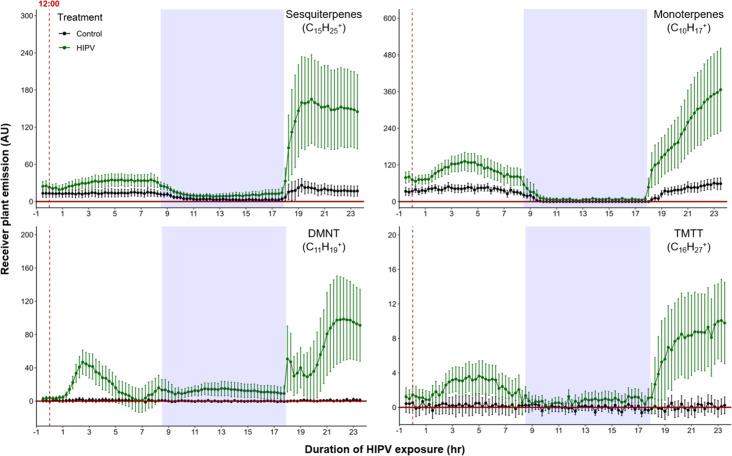
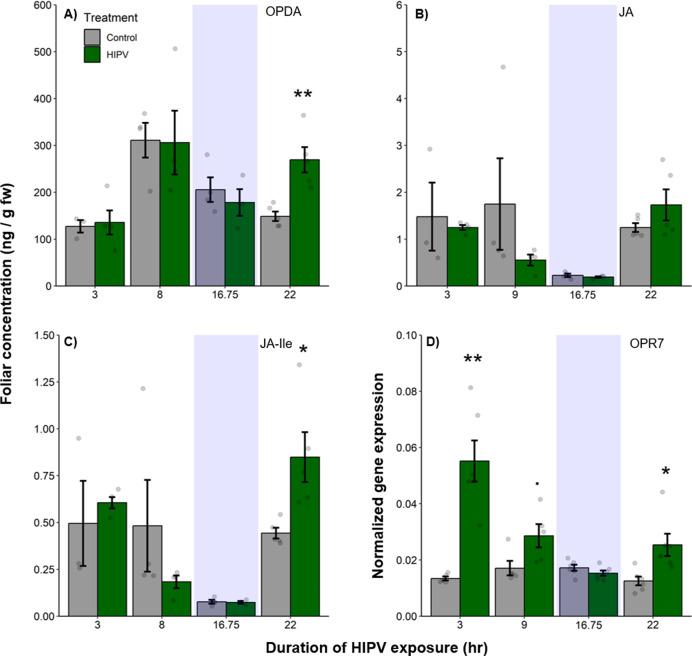
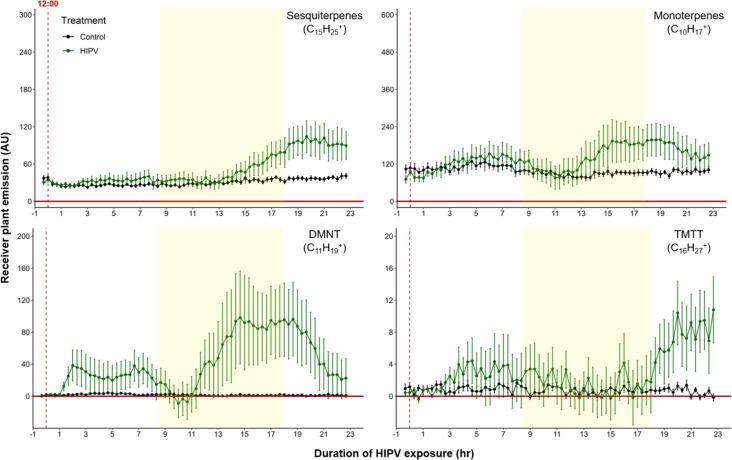
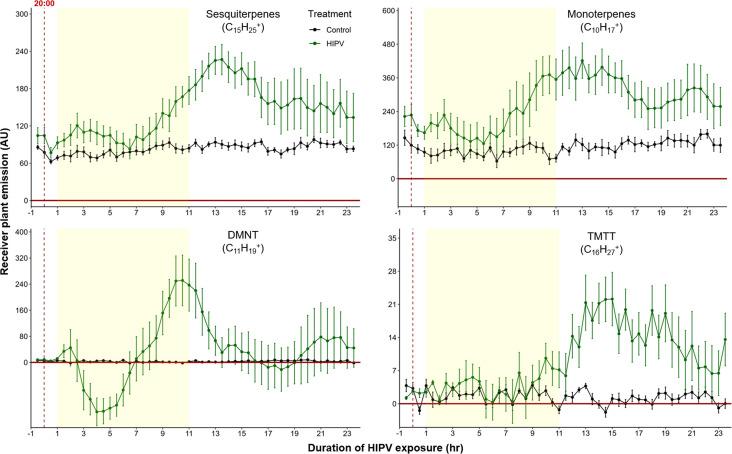
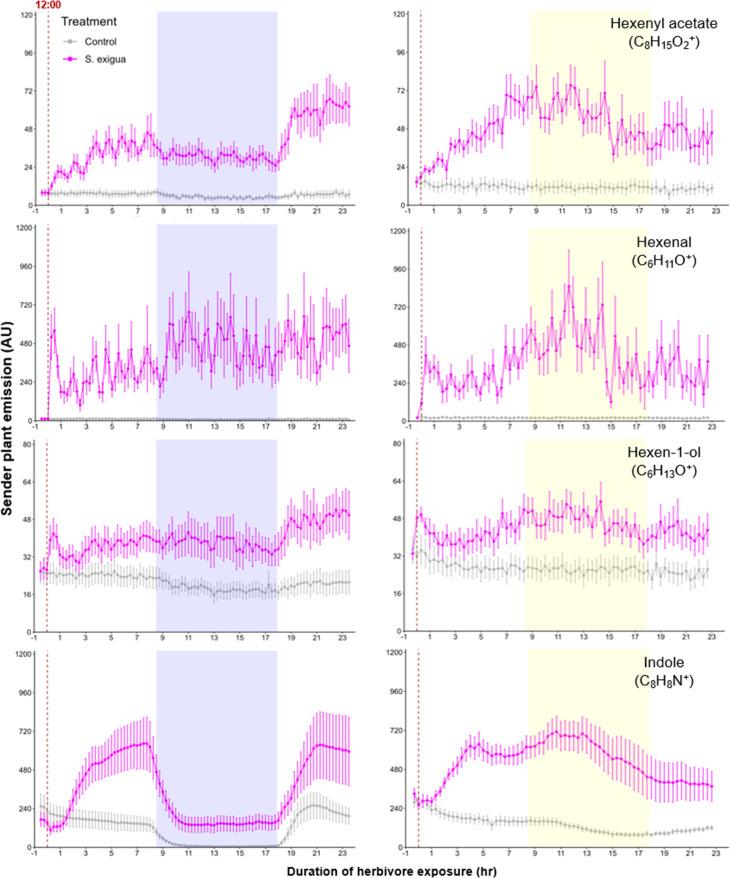
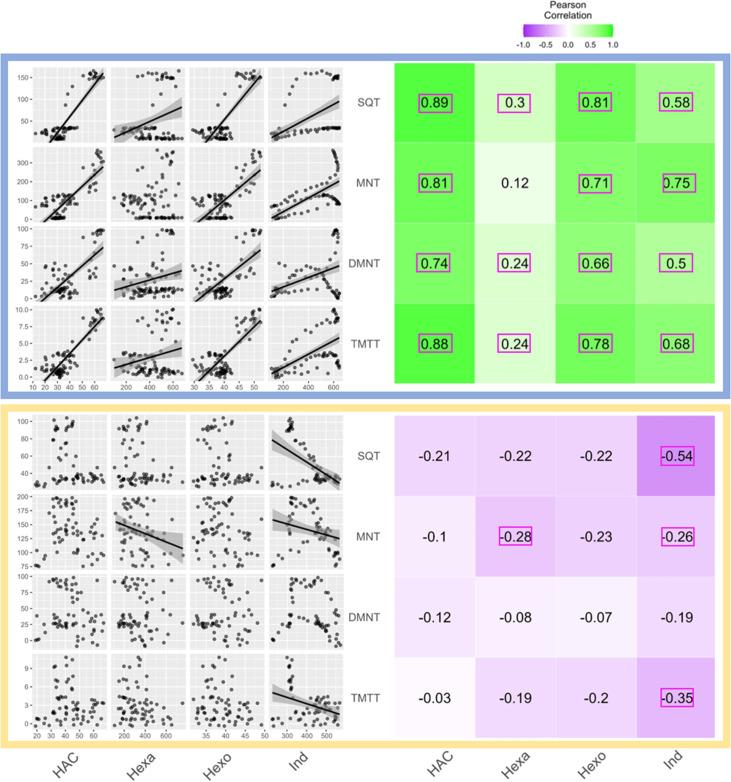
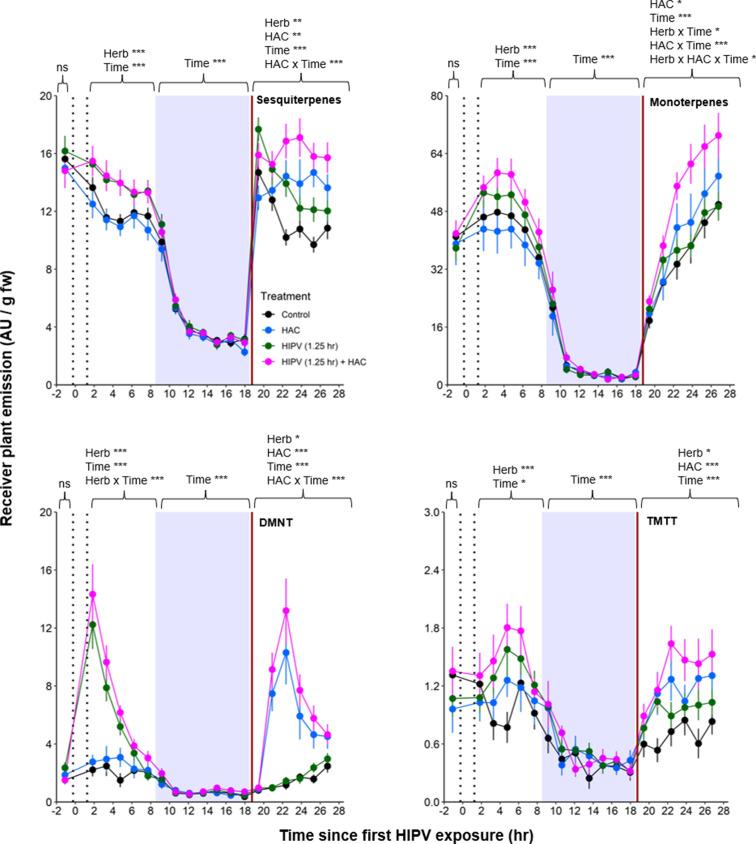
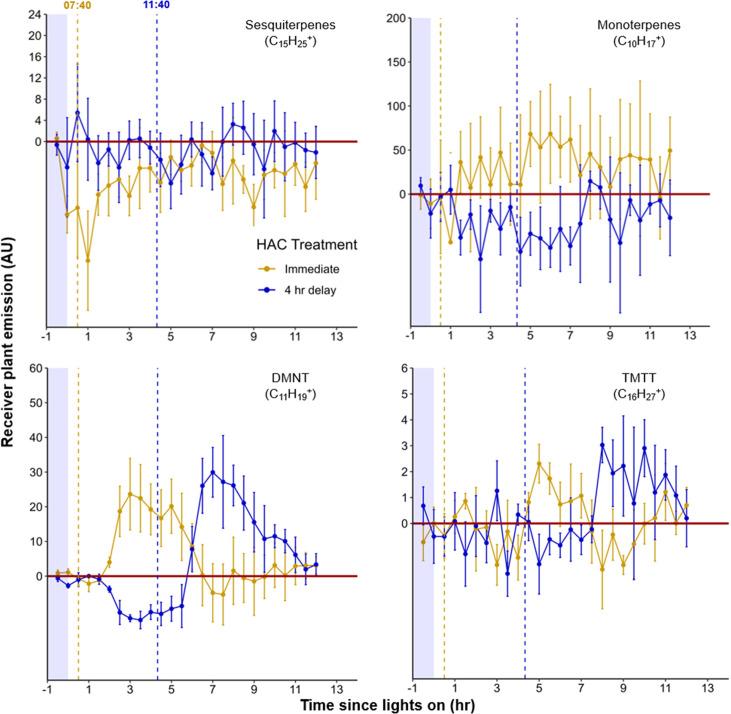
Volatiles emitted by herbivore-attacked plants (senders) can enhance defenses in neighboring plants (receivers), however, the temporal dynamics of this phenomenon remain poorly studied. Using a custom-built, high-throughput proton transfer reaction time-of-flight mass spectrometry (PTR-ToF-MS) system, we explored temporal patterns of volatile transfer and responses between herbivore-attacked and undamaged maize plants. We found that continuous exposure to natural blends of herbivore-induced volatiles results in clocked temporal response patterns in neighboring plants, characterized by an induced terpene burst at the onset of the second day of exposure. This delayed burst is not explained by terpene accumulation during the night, but coincides with delayed jasmonate accumulation in receiver plants. The delayed burst occurs independent of day:night light transitions and cannot be fully explained by sender volatile dynamics. Instead, it is the result of a stress memory from volatile exposure during the first day and secondary exposure to bioactive volatiles on the second day. Our study reveals that prolonged exposure to natural blends of stress-induced volatiles results in a response that integrates priming and direct induction into a distinct and predictable temporal response pattern. This provides an answer to the long-standing question of whether stress volatiles predominantly induce or prime plant defenses in neighboring plants, by revealing that they can do both in sequence.
受食草动物攻击的植物(发送者)释放的挥发物可以增强邻近植物(接收者)的防御能力,但这种现象的时间动态仍未得到充分研究。使用定制的高通量质子转移反应飞行时间质谱(PTR-ToF-MS)系统,我们探索了受食草动物攻击和未受损玉米植物之间挥发物转移和响应的时间模式。我们发现,连续暴露于天然混合的食草动物诱导挥发物会导致邻近植物出现定时的时间响应模式,其特征是在暴露的第二天开始时萜烯爆发。这种延迟爆发不能用萜烯在夜间的积累来解释,而是与接收植物中茉莉酸的延迟积累相吻合。延迟爆发与日夜光转换无关,不能完全用发送器挥发物动态来解释。相反,它是由于第一天暴露于挥发性物质而产生的应激记忆,以及第二天再次接触生物活性挥发性物质的结果。我们的研究表明,长时间暴露于天然混合的应激诱导挥发物会导致一种响应,将启动和直接诱导整合到一个独特且可预测的时间响应模式中。这回答了一个长期存在的问题,即应激挥发物主要是诱导还是启动邻近植物的防御,揭示了它们可以依次进行。



 Zotero 插件