
基于适配体的癌症靶向治疗:用于诊断和治疗目标的强大工具。
Aptamer-Based Targeting of Cancer: A Powerful Tool for Diagnostic and Therapeutic Aims.
机构信息
Department of Fundamental, Prophylactic and Clinical Disciplines, Faculty of Medicine, Transilvania University of Brasov, 500019 Brașov, Romania.
Research Center for Fundamental Research and Prevention Strategies in Medicine, Research and Development Institute of Transilvania University of Brasov, 500484 Brașov, Romania.
出版信息
Biosensors (Basel). 2024 Jan 31;14(2):78. doi: 10.3390/bios14020078.
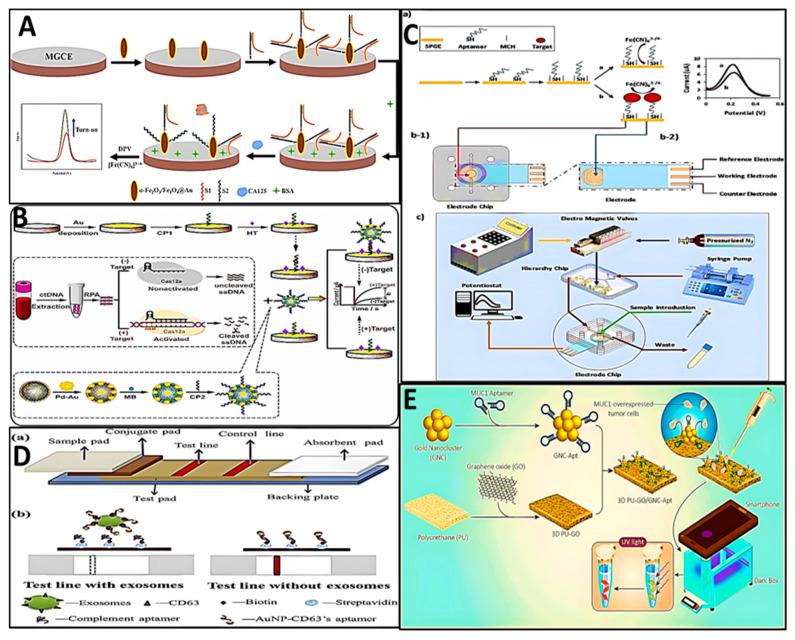
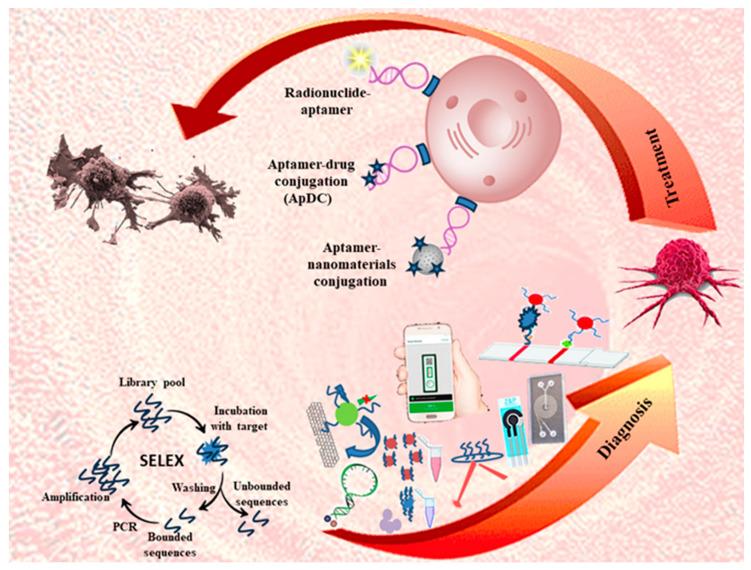
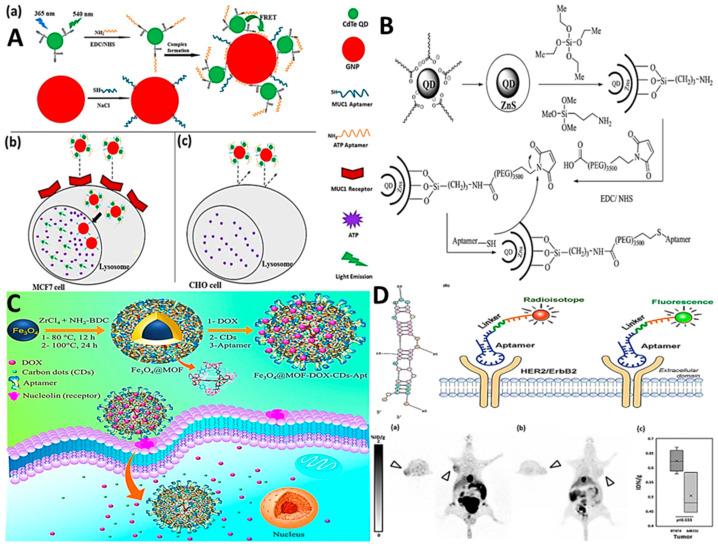
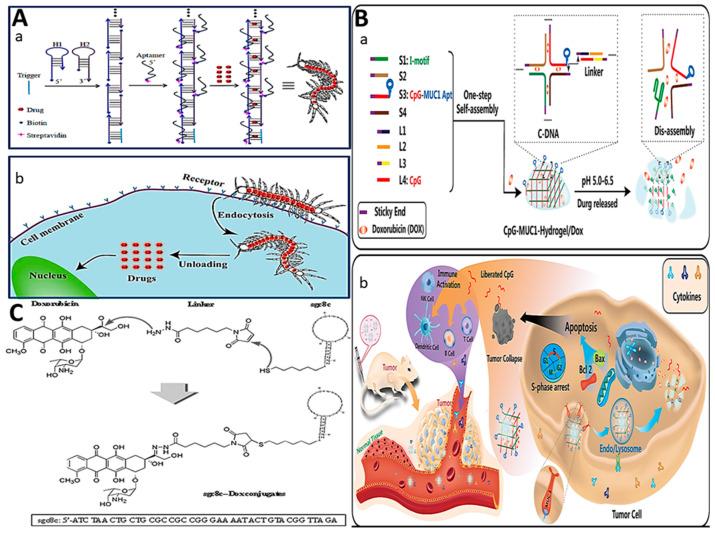
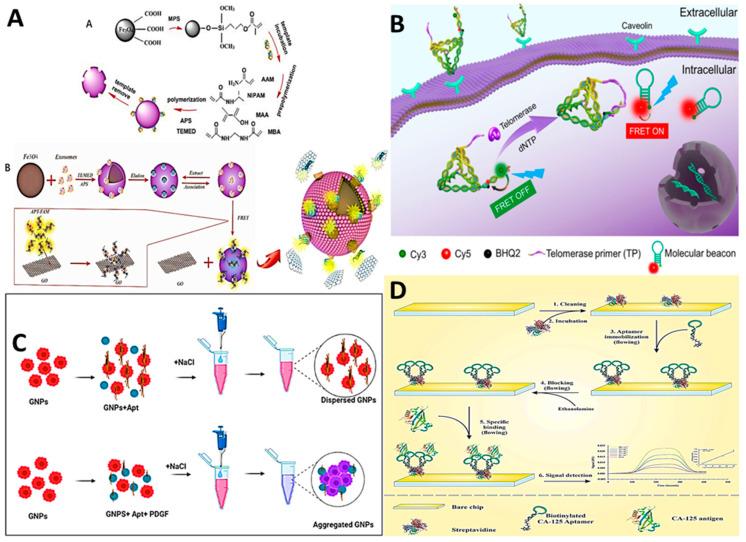
Cancer is known as one of the most significant causes of death worldwide, and, in spite of novel therapeutic methods, continues to cause a considerable number of deaths. Targeted molecular diagnosis and therapy using aptamers with high affinity have become popular techniques for pathological angiogenesis and cancer therapy scientists. In this paper, several aptamer-based diagnostic and therapeutic techniques such as aptamer-nanomaterial conjugation, aptamer-drug conjugation (physically or covalently), and biosensors, which have been successfully designed for biomarkers, were critically reviewed. The results demonstrated that aptamers can potentially be incorporated with targeted delivery systems and biosensors for the detection of biomarkers expressed by cancer cells. Aptamer-based therapeutic and diagnostic methods, representing the main field of medical sciences, possess high potential for use in cancer therapy, pathological angiogenesis, and improvement of community health. The clinical use of aptamers is limited due to target impurities, inaccuracy in the systematic evolution of ligands via exponential enrichment (SELEX)stage process, and in vitro synthesis, making them unreliable and leading to lower selectivity for in vivo targets. Moreover, size, behavior, probable toxicity, low distribution, and the unpredictable behavior of nanomaterials in in vivo media make their usage in clinical assays critical. This review is helpful for the implementation of aptamer-based therapies which are effective and applicable for clinical use and the design of future studies.
癌症是全球主要死亡原因之一,尽管有新的治疗方法,但仍导致大量死亡。使用高亲和力的适体进行靶向分子诊断和治疗已成为病理性血管生成和癌症治疗科学家的热门技术。在本文中,我们批判性地回顾了几种基于适体的诊断和治疗技术,如适体-纳米材料缀合、适体-药物缀合(物理或共价)和生物传感器,这些技术已成功用于生物标志物的设计。结果表明,适体可与靶向递药系统和生物传感器结合,用于检测癌细胞表达的生物标志物。基于适体的治疗和诊断方法是医学科学的主要领域,具有在癌症治疗、病理性血管生成和改善社区健康方面的巨大应用潜力。由于靶杂质、系统进化配体的指数富集(SELEX)阶段过程中的不准确性以及体外合成,适体的临床应用受到限制,这使得它们不可靠,对体内靶标选择性较低。此外,纳米材料的大小、行为、可能的毒性、低分布和不可预测的体内介质行为使得它们在临床检测中的应用具有挑战性。本综述有助于实施基于适体的治疗方法,这些方法在临床应用中是有效和适用的,并为未来的研究设计提供了参考。
 Zotero 插件