
基于喜树碱的前药与人羧酸酯酶 2 结合的计算机研究。
In Silico Study of Camptothecin-Based Pro-Drugs Binding to Human Carboxylesterase 2.
机构信息
Department for Chemistry and Pharmacy, Computer Chemistry Center, Friedrich-Alexander University Erlangen Nürnberg (FAU), Nägelsbachstraße 25, 91052 Erlangen, Germany.
Erlangen National High Performance Computing Center (NHR@FAU), Friedrich-Alexander University Erlangen Nürnberg (FAU), Martensstraße 1, 91058 Erlangen, Germany.
出版信息
Biomolecules. 2024 Jan 27;14(2):153. doi: 10.3390/biom14020153.
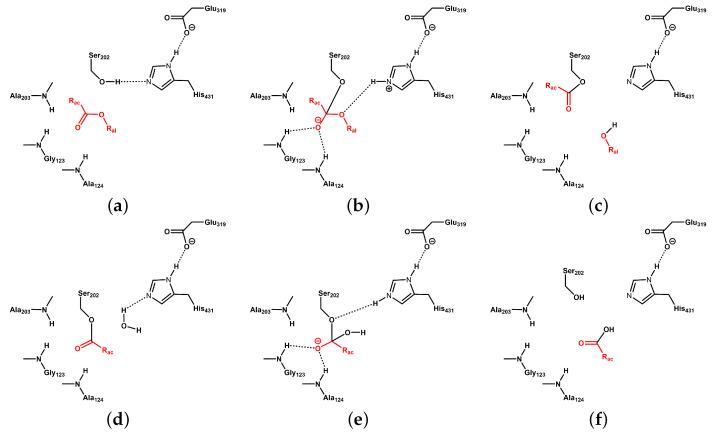
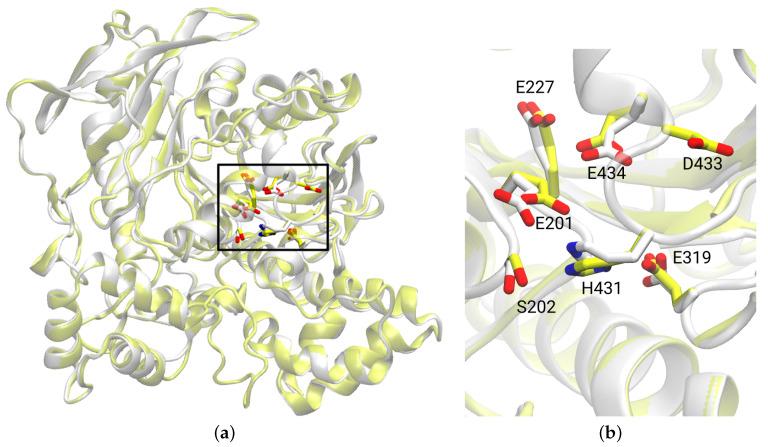
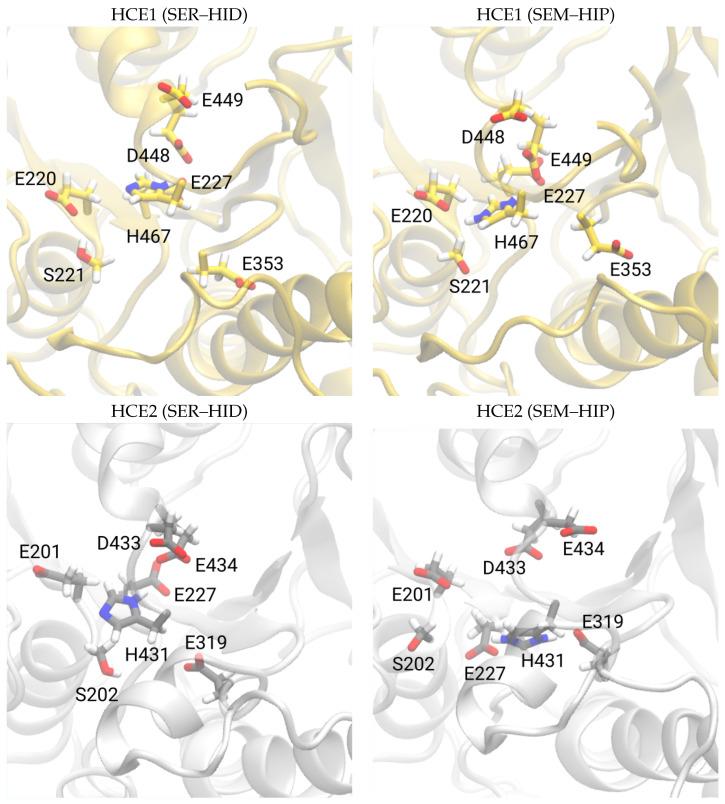
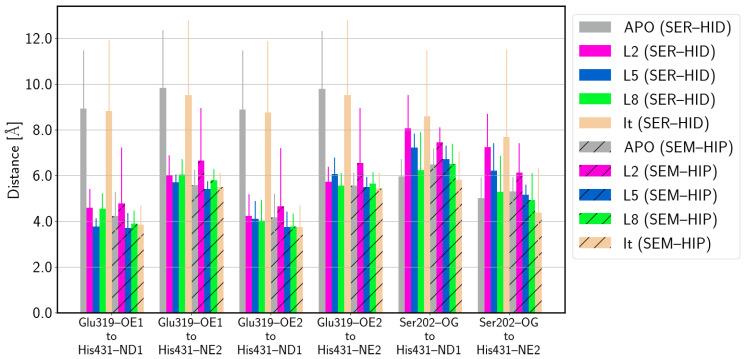
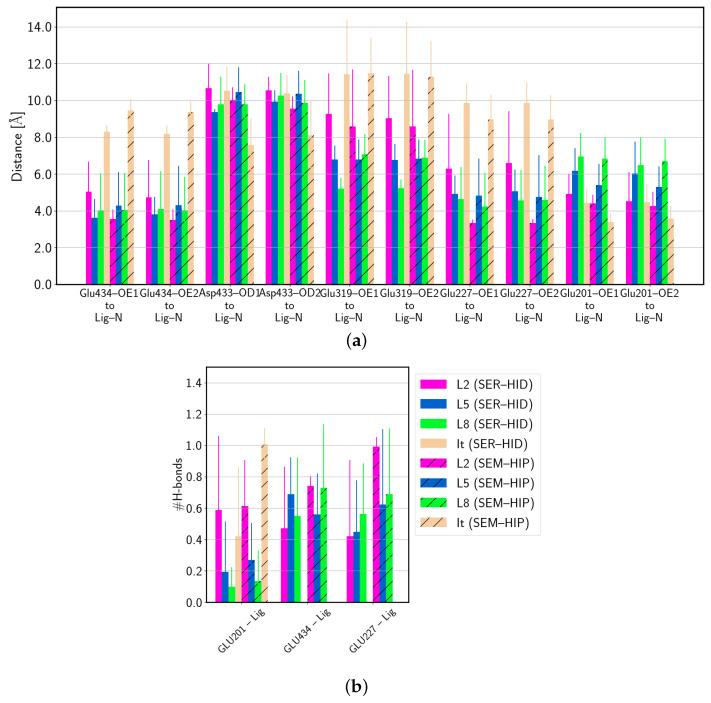
Pro-drugs, which ideally release their active compound only at the site of action, i.e., in a cancer cell, are a promising approach towards an increased specificity and hence reduced side effects in chemotherapy. A popular form of pro-drugs is esters, which are activated upon their hydrolysis. Since carboxylesterases that catalyse such a hydrolysis reaction are also abundant in normal tissue, it is of great interest whether a putative pro-drug is a probable substrate of such an enzyme and hence bears the danger of being activated not just in the target environment, i.e., in cancer cells. In this work, we study the binding mode of carboxylesters of the drug molecule camptothecin, which is an inhibitor of topoisomerase I, of varying size to human carboxylesterase 2 (HCE2) by molecular docking and molecular dynamics simulations. A comparison to irinotecan, known to be a substrate of HCE2, shows that all three pro-drugs analysed in this work can bind to the HCE2 protein, but not in a pose that is well suited for subsequent hydrolysis. Our data suggest, moreover, that for the irinotecan substrate, a reactant-competent pose is stabilised once the initial proton transfer from the putative nucleophile Ser202 to the His431 of the catalytic triad has already occurred. Our simulation work also shows that it is important to go beyond the static models obtained from molecular docking and include the flexibility of enzyme-ligand complexes in solvents and at a finite temperature. Under such conditions, the pro-drugs studied in this work are unlikely to be hydrolysed by the HCE2 enzyme, indicating a low risk of undesired drug release in normal tissue.
前药只有在作用部位(即癌细胞)才释放其活性化合物,这是提高化疗特异性和降低副作用的一种有前途的方法。前药的一种流行形式是酯,其在水解时被激活。由于催化这种水解反应的羧酸酯酶在正常组织中也很丰富,因此研究潜在的前药是否可能成为此类酶的底物,并且不仅仅在靶环境(即癌细胞)中存在被激活的危险,这是非常有趣的。在这项工作中,我们通过分子对接和分子动力学模拟研究了不同大小的药物分子喜树碱的羧酸酯作为拓扑异构酶 I 的抑制剂与人类羧酸酯酶 2(HCE2)的结合模式。与伊立替康的比较表明,HCE2 已知是伊立替康的底物,所有三种在这项工作中分析的前药都可以与 HCE2 蛋白结合,但不是适合随后水解的构象。此外,我们的数据表明,对于伊立替康的底物,一旦最初的质子从假定的亲核试剂 Ser202转移到催化三联体的 His431 已经发生,那么反应性合适的构象就会稳定下来。我们的模拟工作还表明,超越从分子对接获得的静态模型并包括酶 - 配体复合物在溶剂中和有限温度下的灵活性非常重要。在这种情况下,这项工作中研究的前药不太可能被 HCE2 酶水解,这表明在正常组织中释放不需要的药物的风险较低。





 Zotero 插件