
银纳米颗粒(AgNPs)对嗜热细菌的影响:抗菌、形态学、生理学及生化研究
The Effects of Silver Nanoparticles (AgNPs) on Thermophilic Bacteria: Antibacterial, Morphological, Physiological and Biochemical Investigations.
作者信息
Jahan Israt, Matpan Bekler Fatma, Tunç Ahmed, Güven Kemal
机构信息
Department of Health Care Services, Vocational School of Health Services, Mardin Artuklu University, 47100 Mardin, Türkiye.
Department of Molecular Biology and Genetics, Faculty of Science, Dicle University, 21280 Diyarbakir, Türkiye.
出版信息
Microorganisms. 2024 Feb 17;12(2):402. doi: 10.3390/microorganisms12020402.
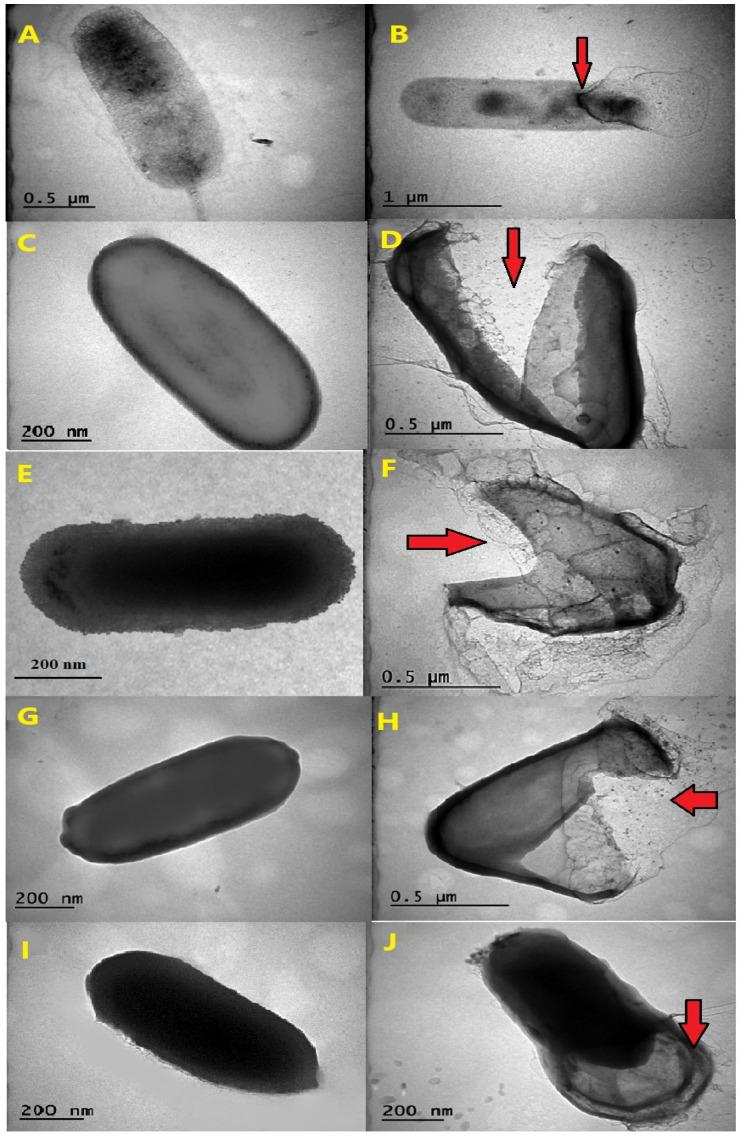
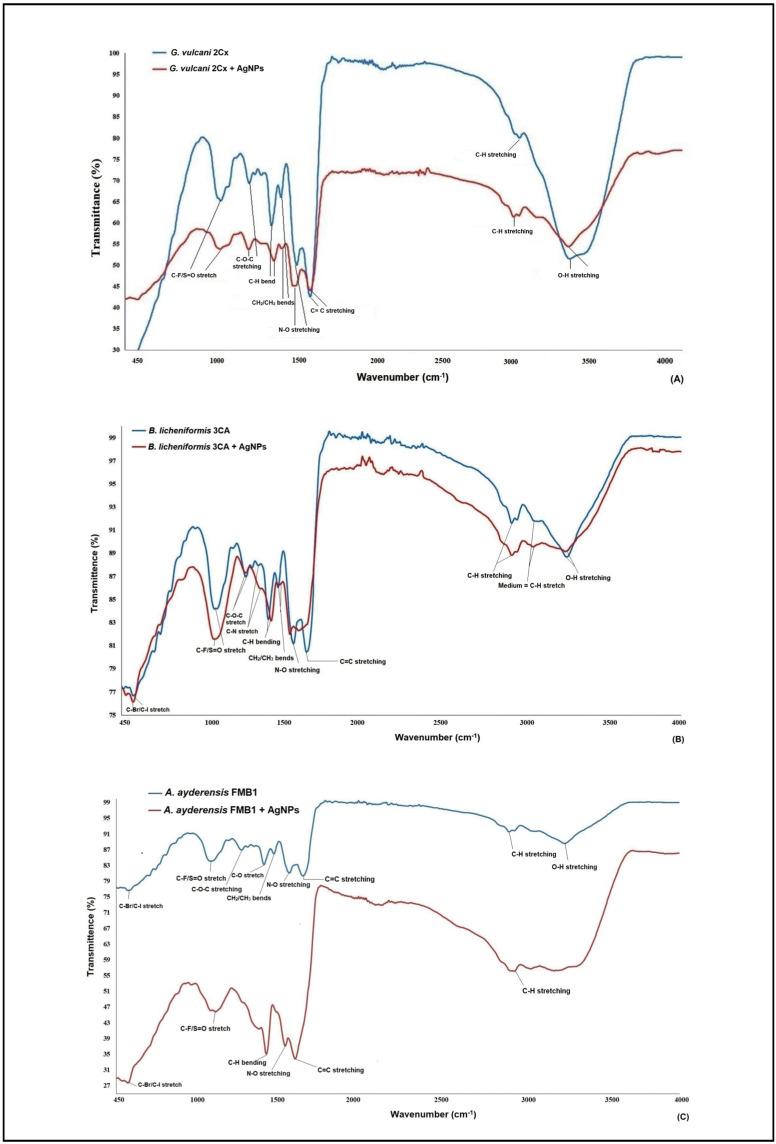
Since thermophilic microorganisms are valuable sources of thermostable enzymes, it is essential to recognize the potential toxicity of silver nanoparticles used in diverse industrial sectors. Thermophilic bacteria 2Cx, 3CA, 3CA1, FMB1, and FMB2-1 were selected, and their MIC and MBC values were assessed by treatment with AgNPs in a range of 62.5-1500 μg mL. The growth inhibition curves showed that the 2Cx, and FMB2-1 strains were more sensitive to AgNPs, demonstrating a reduction in population by 71.1% and 31.7% at 62.5 μg mL and by 82.9% and 72.8% at 250 μg mL, respectively. TEM and FT-IR analysis revealed that AgNPs caused structural damage, cytoplasmic leakage, and disruption of cellular integrity. Furthermore, cell viability showed a significant decrease alongside an increase in superoxide radical (SOR; O) production. β-galactosidase biosynthesis decreased to 28.8% level at 500 μg mL AgNPs for 2Cx, 32.2% at 250 μg mL for FMB1, and 38.8% only at 62.5 μg mL, but it was completely inhibited at 500 μg mL for 3CA. Moreover, FMB2-1 showed a significant decrease to 11.2% at 125 μg mL. This study is the first to reveal the toxic effects of AgNPs on thermophilic bacteria.
由于嗜热微生物是热稳定酶的宝贵来源,因此认识到不同工业部门使用的银纳米颗粒的潜在毒性至关重要。选择了嗜热细菌2Cx、3CA、3CA1、FMB1和FMB2-1,并通过在62.5-1500μg/mL范围内用银纳米颗粒处理来评估它们的最低抑菌浓度(MIC)和最低杀菌浓度(MBC)值。生长抑制曲线表明,2Cx和FMB2-1菌株对银纳米颗粒更敏感,在62.5μg/mL时种群数量分别减少71.1%和31.7%,在250μg/mL时分别减少82.9%和72.8%。透射电子显微镜(TEM)和傅里叶变换红外光谱(FT-IR)分析表明,银纳米颗粒会导致结构损伤、细胞质泄漏和细胞完整性破坏。此外,细胞活力显著下降,同时超氧自由基(SOR;O)的产生增加。对于2Cx,在500μg/mL银纳米颗粒时β-半乳糖苷酶生物合成降至28.8%的水平,对于FMB1,在250μg/mL时降至32.2%,而对于3CA,仅在62.5μg/mL时降至38.8%,但在500μg/mL时完全被抑制。此外,FMB2-1在125μg/mL时显著降至11.2%。本研究首次揭示了银纳米颗粒对嗜热细菌的毒性作用。




 Zotero 插件