
奥密克戎变异株的进化:对病毒适应性的遗传影响。
Evolution of the SARS-CoV-2 Omicron Variants: Genetic Impact on Viral Fitness.
机构信息
State Key Laboratory of Vaccines for Infectious Diseases, Xiang An Biomedicine Laboratory, School of Public Health, Xiamen University, Xiamen 361000, China.
National Institute of Diagnostics and Vaccine Development in Infectious Diseases, Xiamen University, Xiamen 361102, China.
出版信息
Viruses. 2024 Jan 25;16(2):184. doi: 10.3390/v16020184.
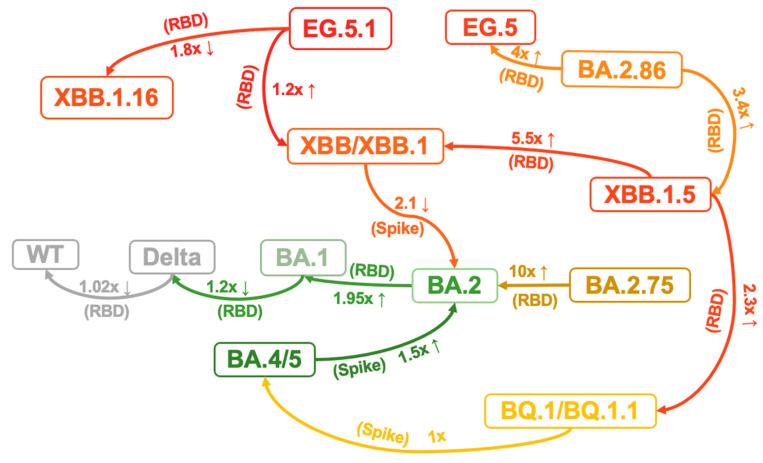
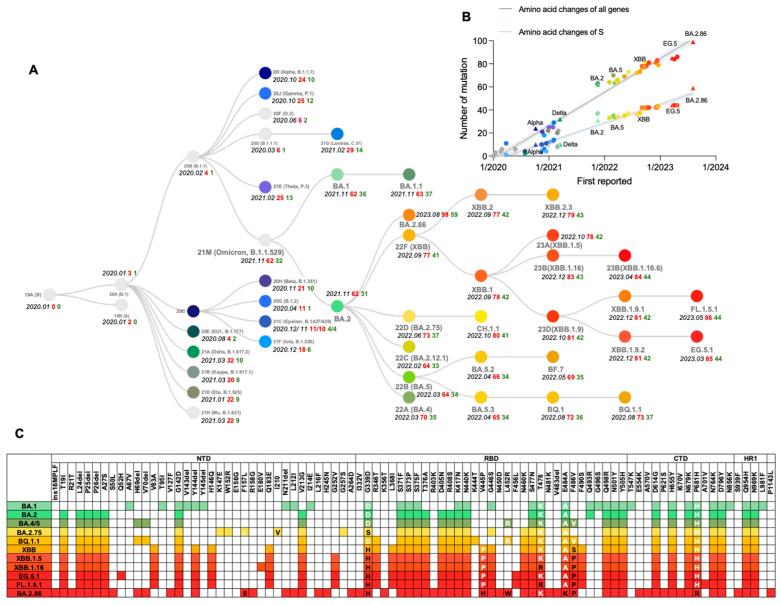
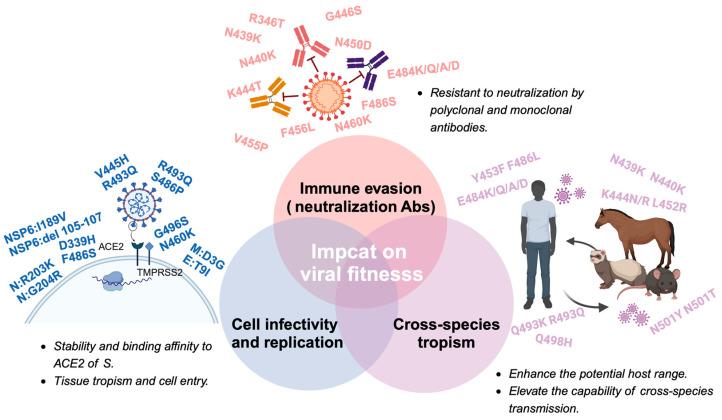
Over the last three years, the pandemic of COVID-19 has had a significant impact on people's lives and the global economy. The incessant emergence of variant strains has compounded the challenges associated with the management of COVID-19. As the predominant variant from late 2021 to the present, Omicron and its sublineages, through continuous evolution, have demonstrated iterative viral fitness. The comprehensive elucidation of the biological implications that catalyzed this evolution remains incomplete. In accordance with extant research evidence, we provide a comprehensive review of subvariants of Omicron, delineating alterations in immune evasion, cellular infectivity, and the cross-species transmission potential. This review seeks to clarify the underpinnings of biology within the evolution of SARS-CoV-2, thereby providing a foundation for strategic considerations in the post-pandemic era of COVID-19.
在过去的三年中,COVID-19 大流行对人们的生活和全球经济产生了重大影响。不断出现的变异株使 COVID-19 的管理面临的挑战更加复杂。作为 2021 年末至今的主要变异株,Omicron 及其亚系通过不断进化,表现出迭代的病毒适应性。对于促成这种进化的生物学意义的综合阐述仍不完整。根据现有的研究证据,我们全面回顾了 Omicron 的亚变体,描述了其在免疫逃逸、细胞感染性和跨物种传播潜力方面的变化。本综述旨在阐明 SARS-CoV-2 进化过程中的生物学基础,为 COVID-19 大流行后时代的战略考虑提供依据。

 Zotero 插件