
二十年来,在糖尿病研究中考虑性别这一生物学变量。
Consideration of sex as a biological variable in diabetes research across twenty years.
机构信息
Department of Cellular and Physiological Sciences, Life Sciences Institute, The University of British Columbia, Vancouver, Canada.
School of Molecular Biosciences, University of Glasgow, Glasgow, UK.
出版信息
Biol Sex Differ. 2024 Feb 26;15(1):19. doi: 10.1186/s13293-024-00595-2.
BACKGROUND
Sex differences exist in the risk of developing type 1 and type 2 diabetes, and in the risk of developing diabetes-associated complications. Sex differences in glucose homeostasis, islet and β cell biology, and peripheral insulin sensitivity have also been reported. Yet, we lack detailed information on the mechanisms underlying these differences, preventing the development of sex-informed therapeutic strategies for persons living with diabetes. To chart a path toward greater inclusion of biological sex as a variable in diabetes research, we first need a detailed assessment of common practices in the field.
METHODS
We developed a scoring system to evaluate the inclusion of biological sex in manuscripts published in Diabetes, a journal published by the American Diabetes Association. We chose Diabetes as this journal focuses solely on diabetes and diabetes-related research, and includes manuscripts that use both clinical and biomedical approaches. We scored papers published across 3 years within a 20-year period (1999, 2009, 2019), a timeframe that spans the introduction of funding agency and journal policies designed to improve the consideration of biological sex as a variable.
RESULTS
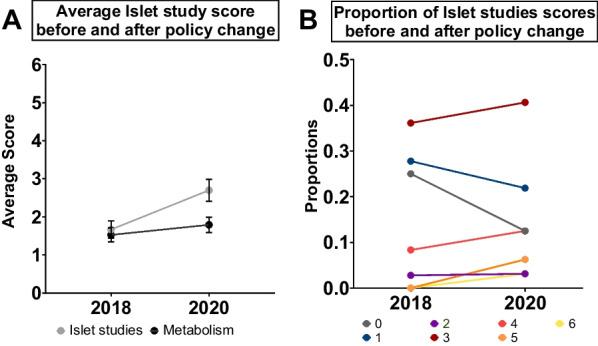
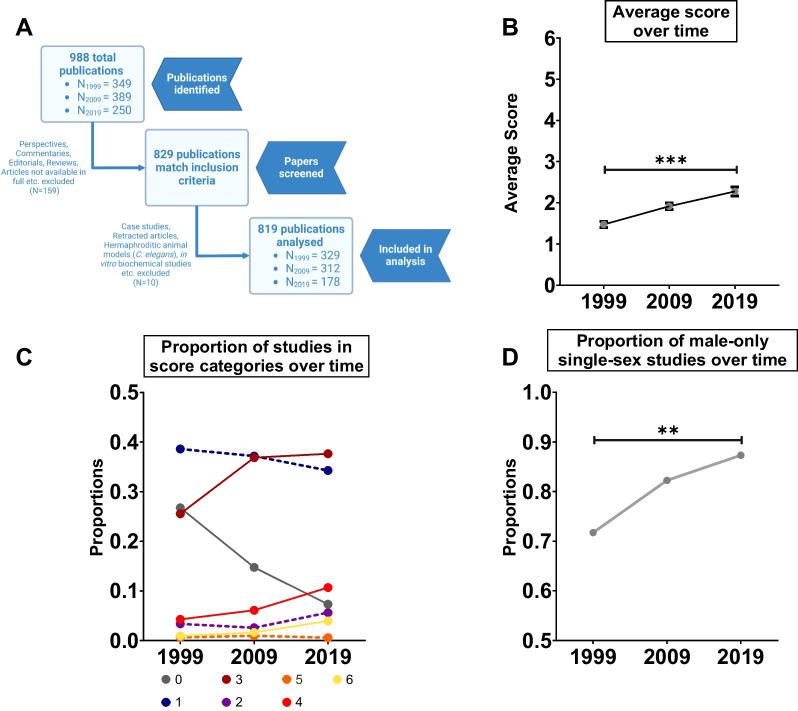
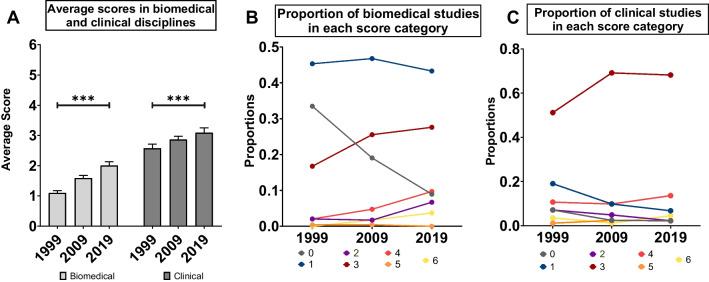
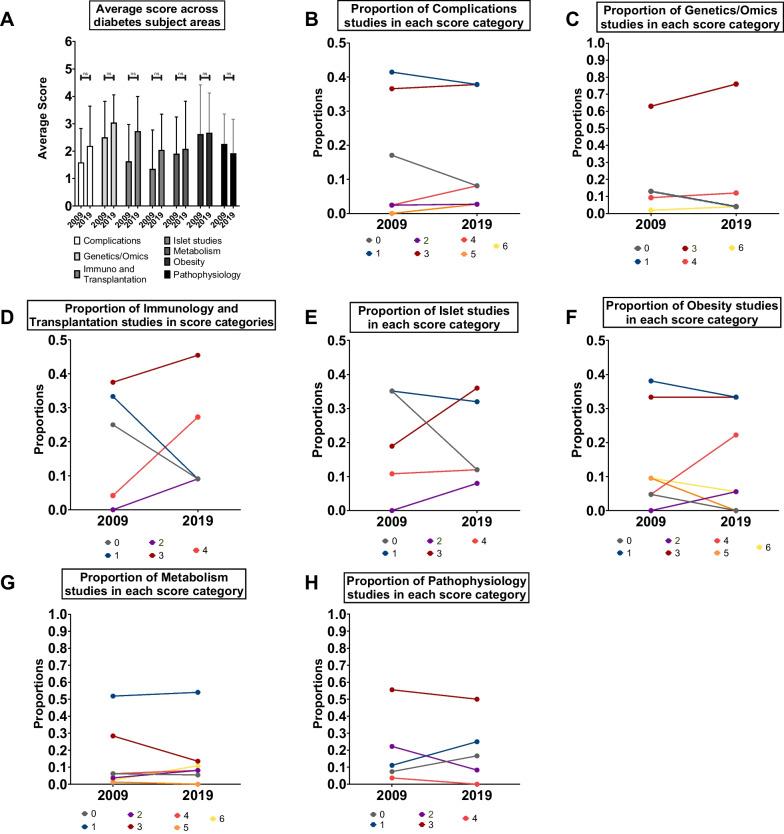
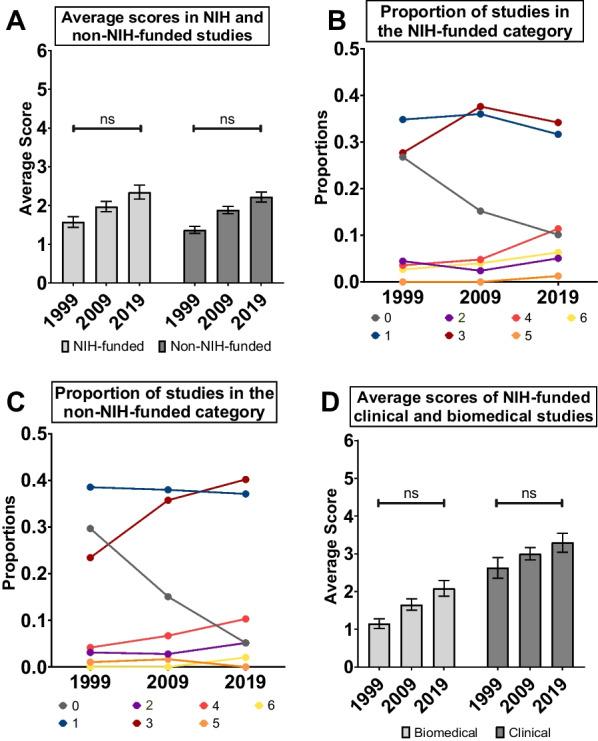
Our analysis showed fewer than 15% of papers used sex-based analysis in even one figure across all study years, a trend that was reproduced across journal-defined categories of diabetes research (e.g., islet studies, signal transduction). Single-sex studies accounted for approximately 40% of all manuscripts, of which > 87% used male subjects only. While we observed a modest increase in the overall inclusion of sex as a biological variable during our study period, our data highlight significant opportunities for improvement in diabetes research practices. We also present data supporting a positive role for journal policies in promoting better consideration of biological sex in diabetes research.
CONCLUSIONS
Our analysis provides significant insight into common practices in diabetes research related to the consideration of biological sex as a variable. Based on our analysis we recommend ways that diabetes researchers can improve inclusion of biological sex as a variable. In the long term, improved practices will reveal sex-specific mechanisms underlying diabetes risk and complications, generating knowledge to enable the development of sex-informed prevention and treatment strategies.
背景
1 型和 2 型糖尿病的发病风险以及糖尿病相关并发症的发病风险存在性别差异。葡萄糖稳态、胰岛和β细胞生物学以及外周胰岛素敏感性也存在性别差异。然而,我们缺乏这些差异背后机制的详细信息,这阻碍了为糖尿病患者制定基于性别的治疗策略。为了制定出一个更全面的方案,将生物学性别纳入糖尿病研究中,我们首先需要详细评估该领域的常见做法。
方法
我们开发了一个评分系统来评估美国糖尿病协会(ADA)出版的《糖尿病》杂志上发表的手稿中生物学性别纳入情况。我们选择《糖尿病》杂志是因为该杂志专注于糖尿病及其相关研究,并包含使用临床和生物医学方法的手稿。我们对 20 年期间(1999 年、2009 年、2019 年)的 3 年内发表的论文进行了评分,这个时间跨度涵盖了旨在提高将生物学性别作为变量考虑的资金机构和期刊政策的引入。
结果
我们的分析表明,在所有研究年份中,即使在一个图表中使用基于性别的分析的论文也不到 15%,这种趋势在杂志定义的糖尿病研究类别(例如胰岛研究、信号转导)中重现。单性别研究占所有手稿的近 40%,其中超过 87%仅使用雄性动物作为研究对象。虽然我们在研究期间观察到将性别作为生物学变量的总体纳入略有增加,但我们的数据突出表明,在糖尿病研究实践中还有很大的改进空间。我们还提供了支持期刊政策在促进更好地考虑糖尿病研究中生物学性别作用的数据。
结论
我们的分析为考虑将生物学性别作为变量的糖尿病研究中的常见做法提供了重要的见解。基于我们的分析,我们建议糖尿病研究人员可以改进将生物学性别作为变量的纳入方式。从长远来看,改进实践将揭示糖尿病风险和并发症的性别特异性机制,为制定基于性别的预防和治疗策略提供知识。
 Zotero 插件