
卵巢癌化疗耐药性发展中的新参与者:卵巢癌干细胞、非编码RNA和核受体。
Novel players in the development of chemoresistance in ovarian cancer: ovarian cancer stem cells, non-coding RNA and nuclear receptors.
作者信息
Alam Shahil, Giri Pankaj Kumar
机构信息
Faculty of Life Sciences and Biotechnology, South Asian University, New Delhi 110068, India.
出版信息
Cancer Drug Resist. 2024 Feb 28;7:6. doi: 10.20517/cdr.2023.152. eCollection 2024.
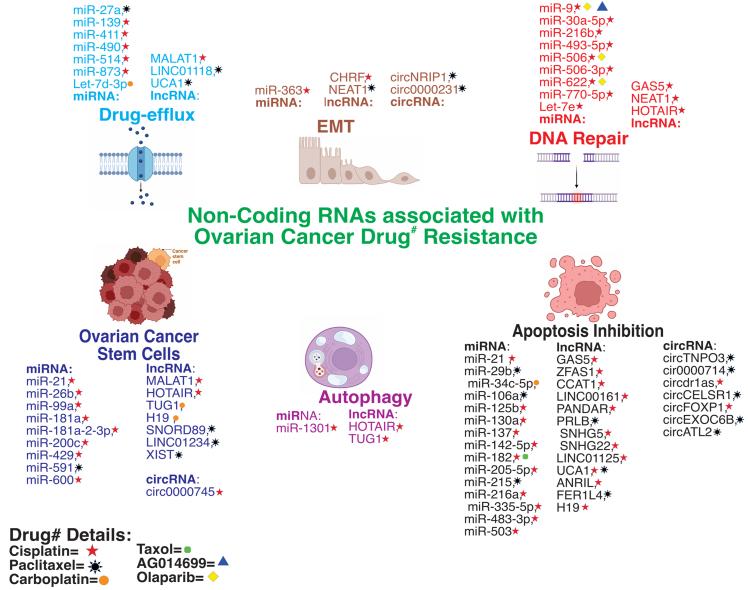
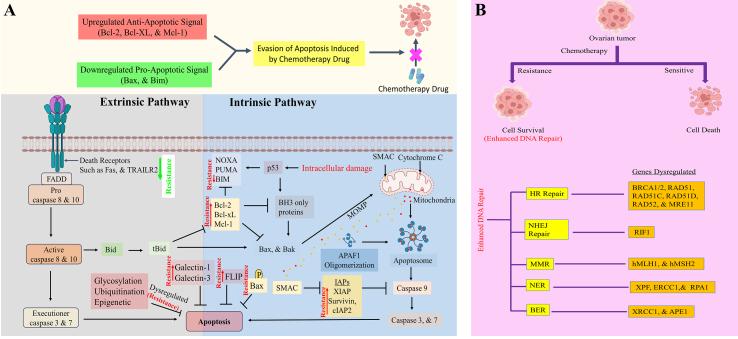
Ovarian cancer (OC) ranks as the fifth leading factor for female mortality globally, with a substantial burden of new cases and mortality recorded annually. Survival rates vary significantly based on the stage of diagnosis, with advanced stages posing significant challenges to treatment. OC is primarily categorized as epithelial, constituting approximately 90% of cases, and correct staging is essential for tailored treatment. The debulking followed by chemotherapy is the prevailing treatment, involving platinum-based drugs in combination with taxanes. However, the efficacy of chemotherapy is hindered by the development of chemoresistance, both acquired during treatment (acquired chemoresistance) and intrinsic to the patient (intrinsic chemoresistance). The emergence of chemoresistance leads to increased mortality rates, with many advanced patients experiencing disease relapse shortly after initial treatment. This review delves into the multifactorial nature of chemoresistance in OC, addressing mechanisms involving transport systems, apoptosis, DNA repair, and ovarian cancer stem cells (OCSCs). While previous research has identified genes associated with these mechanisms, the regulatory roles of non-coding RNA (ncRNA) and nuclear receptors in modulating gene expression to confer chemoresistance have remained poorly understood and underexplored. This comprehensive review aims to shed light on the genes linked to different chemoresistance mechanisms in OC and their intricate regulation by ncRNA and nuclear receptors. Specifically, we examine how these molecular players influence the chemoresistance mechanism. By exploring the interplay between these factors and gene expression regulation, this review seeks to provide a comprehensive mechanism driving chemoresistance in OC.
卵巢癌(OC)是全球女性死亡的第五大主要因素,每年都有大量新发病例和死亡病例。生存率因诊断阶段而异,晚期阶段对治疗构成重大挑战。OC主要分为上皮性,约占病例的90%,正确分期对于量身定制治疗至关重要。减瘤后化疗是主要的治疗方法,包括铂类药物与紫杉烷联合使用。然而,化疗的疗效受到化疗耐药性的阻碍,化疗耐药性包括治疗期间获得的(获得性化疗耐药)和患者固有的(固有化疗耐药)。化疗耐药性的出现导致死亡率上升,许多晚期患者在初始治疗后不久就会出现疾病复发。本综述深入探讨了OC中化疗耐药性的多因素性质,涉及转运系统、细胞凋亡、DNA修复和卵巢癌干细胞(OCSCs)等机制。虽然先前的研究已经确定了与这些机制相关的基因,但非编码RNA(ncRNA)和核受体在调节基因表达以赋予化疗耐药性方面的调节作用仍知之甚少且未得到充分探索。本全面综述旨在阐明与OC中不同化疗耐药机制相关的基因及其受ncRNA和核受体的复杂调控。具体而言,我们研究这些分子参与者如何影响化疗耐药机制。通过探索这些因素与基因表达调控之间的相互作用,本综述旨在提供一个驱动OC化疗耐药性的全面机制。


 Zotero 插件