
生物信息学在预测消化肿瘤免疫治疗靶点TIM-3及其抑制剂疗效中的应用
Application of Bioinformatics in Predicting the Efficacy of Digestive Tumour Immunotherapy Target TIM-3 and its Inhibitors.
作者信息
Wang Zexin, Li Xibin, Tian Litao, Sha Dan, Sun Qinhui, Wang Jinshen
机构信息
Department of Gastrointestinal Surgery, Shandong Provincial Hospital Affiliated to Shandong First Medical University, Jinan, Shandong 250021.
Department of Minimally Invasive Treatment of Cancer, Shandong Provincial Hospital Affiliated to Shandong First Medical University, Jinan, Shandong 250021.
出版信息
J Cancer. 2024 Feb 12;15(7):1954-1965. doi: 10.7150/jca.92446. eCollection 2024.
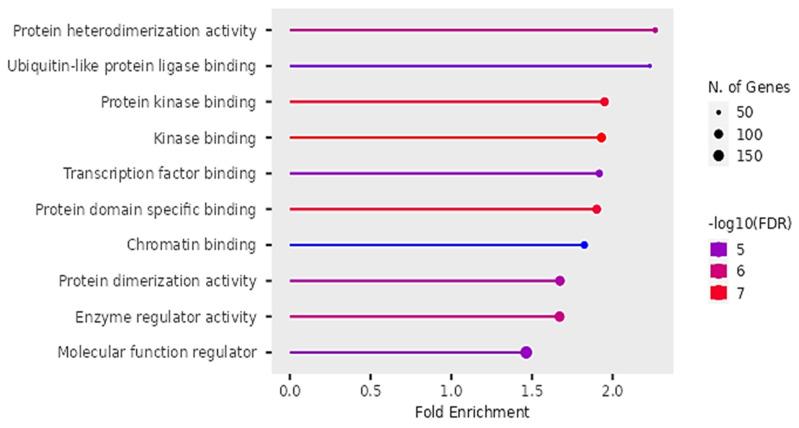
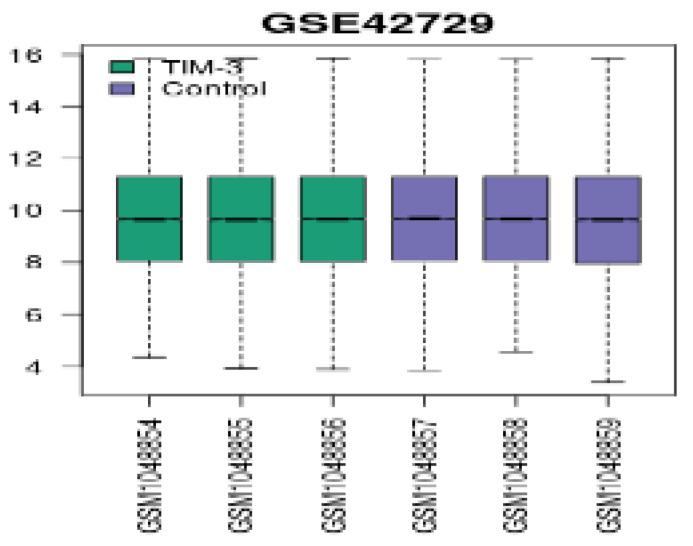
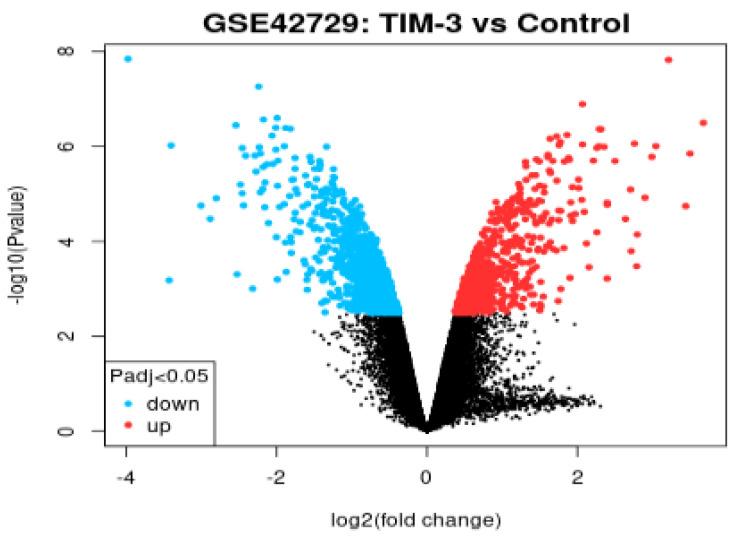
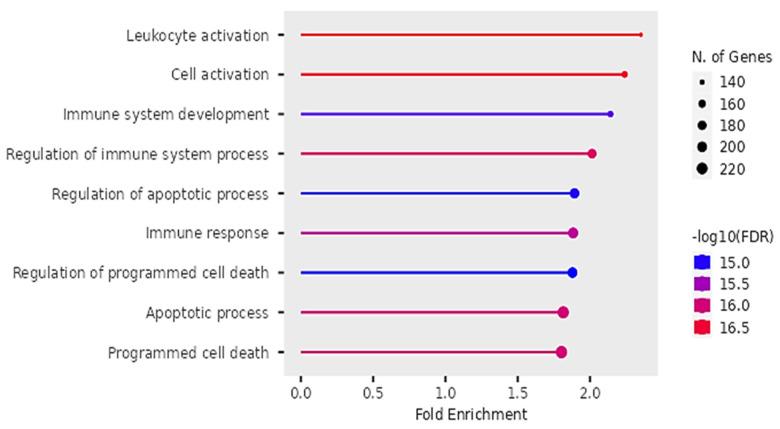
Our main objective is to apply bioinformatics in predicting the efficacy of digestive tumour immunotherapy target TIM-3 and its inhibitors. Our study used the gene expression omnibus (GEO) database to identify datasets associated with digestive tumours and the action of TIM-3. The GSE427729 dataset based on the GPL10192 platform. The dataset consisted of six samples of total RNA derived from TIM-3 control and knockdown RAW 264.7 cells. We used GEO2R tool to identify DEGs before performing Gene Ontology and identifying the kyoto encyclopedia of genes and genomes (KEGG) pathways. Lastly, we determined the PPI networks to identify hub genes. Our study identified 57 differentially expressed genes based on an adjusted p-value of less than 0.05 and a log2 fold change of 2.0. There were 26 down-regulated genes with 31 up-regulated genes while 22, 404 genes were non-significant. The DEGs were enriched in biological pathways such as activating leukocytes, cells, and development of the immune system. Additionally, we identified four significant KEGG pathways that were implicated in digestive tumour immunotherapy and TIM-3; pathways of pancreatic cancer, NF-Kappa B signalling pathway, Toll-like receptor signalling pathway and C-type lectin receptor signalling pathway. The PPI networks identified 10 hub genes that were implicated in digestive tumour immunotherapy target TIM-3 (Myd88, Traf6, Irf7, Cdk4, Ccnd2, Mapkap1, Prr5, Mpp3, Serpinb6b and Pvrl3). Targeting these biological pathways, KEGG pathways, molecular functions and cellular processes can lead to novel therapeutic treatment and management in digestive tumours based on TIM-3 immunotherapy.
我们的主要目标是应用生物信息学来预测消化肿瘤免疫治疗靶点TIM-3及其抑制剂的疗效。我们的研究使用基因表达综合数据库(GEO)来识别与消化肿瘤和TIM-3作用相关的数据集。基于GPL10192平台的GSE427729数据集。该数据集由来自TIM-3对照和敲低的RAW 264.7细胞的六个总RNA样本组成。在进行基因本体分析和识别京都基因与基因组百科全书(KEGG)途径之前,我们使用GEO2R工具来识别差异表达基因(DEG)。最后,我们确定蛋白质-蛋白质相互作用(PPI)网络以识别枢纽基因。我们的研究基于调整后的p值小于0.05和log2倍数变化为2.0,确定了57个差异表达基因。有26个下调基因和31个上调基因,而22404个基因无显著性差异。这些差异表达基因富集于激活白细胞、细胞和免疫系统发育等生物学途径。此外,我们确定了与消化肿瘤免疫治疗和TIM-3相关的四个重要KEGG途径;胰腺癌途径、核因子κB信号通路、Toll样受体信号通路和C型凝集素受体信号通路。蛋白质-蛋白质相互作用网络确定了10个与消化肿瘤免疫治疗靶点TIM-3相关的枢纽基因(髓样分化因子88、肿瘤坏死因子受体相关因子6、干扰素调节因子7、细胞周期蛋白依赖性激酶4、细胞周期蛋白D2、丝裂原活化蛋白激酶激活蛋白1、脯氨酸丰富蛋白5、膜泡运输蛋白3、丝氨酸蛋白酶抑制剂B6b和脊髓灰质炎病毒受体样3)。针对这些生物学途径以及KEGG途径、分子功能和细胞过程,可基于TIM-3免疫治疗为消化肿瘤带来新的治疗和管理方法。



 Zotero 插件