
胸膜间皮瘤(PMe):一种罕见且侵袭性癌症的不断发展的分子知识。
Pleural mesothelioma (PMe): The evolving molecular knowledge of a rare and aggressive cancer.
机构信息
Centre for Clinical Pharmacology and Precision Medicine William Harvey Research Institute, Queen Mary University of London, UK.
Department of Biology, University of Rome Tor Vergata, Rome, Italy.
出版信息
Mol Oncol. 2024 Apr;18(4):797-814. doi: 10.1002/1878-0261.13591. Epub 2024 Mar 8.
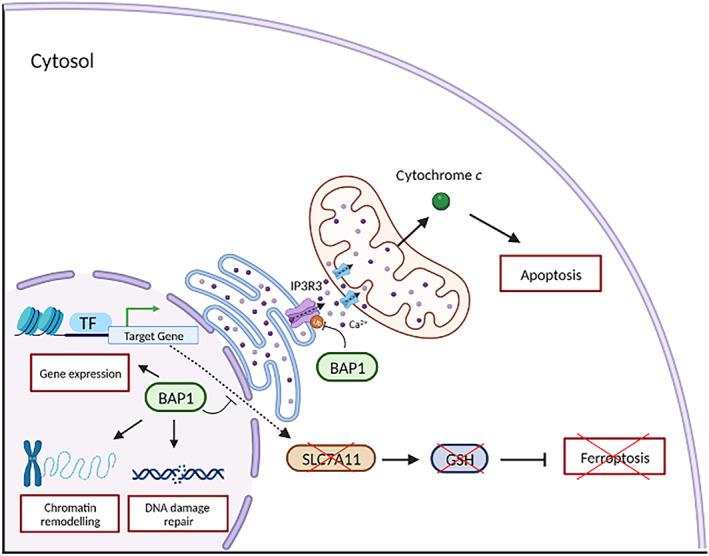
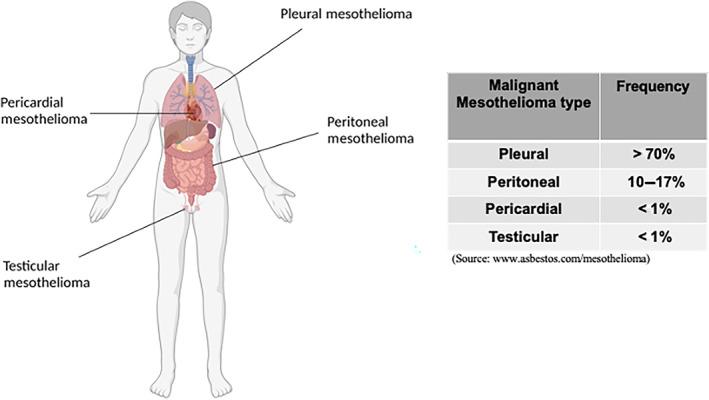
Mesothelioma is a type of late-onset cancer that develops in cells covering the outer surface of organs. Although it can affect the peritoneum, heart, or testicles, it mainly targets the lining of the lungs, making pleural mesothelioma (PMe) the most common and widely studied mesothelioma type. PMe is caused by exposure to fibres of asbestos, which when inhaled leads to inflammation and scarring of the pleura. Despite the ban on asbestos by most Western countries, the incidence of PMe is on the rise, also facilitated by a lack of specific symptomatology and diagnostic methods. Therapeutic options are also limited to mainly palliative care, making this disease untreatable. Here we present an overview of biological aspects underlying PMe by listing genetic and molecular mechanisms behind its onset, aggressive nature, and fast-paced progression. To this end, we report on the role of deubiquitinase BRCA1-associated protein-1 (BAP1), a tumour suppressor gene with a widely acknowledged role in the corrupted signalling and metabolism of PMe. This review aims to enhance our understanding of this devastating malignancy and propel efforts for its investigation.
间皮瘤是一种迟发性癌症,发生在覆盖器官外表面的细胞中。虽然它可能影响腹膜、心脏或睾丸,但主要针对肺部的衬里,使胸膜间皮瘤(PMe)成为最常见和广泛研究的间皮瘤类型。PMe 是由暴露于石棉纤维引起的,石棉纤维吸入后会导致胸膜炎症和瘢痕形成。尽管大多数西方国家都禁止使用石棉,但 PMe 的发病率仍在上升,这也与缺乏特定的症状和诊断方法有关。治疗选择也仅限于主要的姑息治疗,因此这种疾病无法治愈。在这里,我们通过列出其发病、侵袭性和快速进展背后的遗传和分子机制,概述了 PMe 的生物学方面。为此,我们报告了去泛素化酶 BRCA1 相关蛋白-1(BAP1)的作用,BAP1 是一种肿瘤抑制基因,在 PMe 的受损信号转导和代谢中具有广泛的作用。本综述旨在增强我们对这种毁灭性恶性肿瘤的理解,并推动对其进行研究的努力。


 Zotero 插件