
(兰科)物种的完整叶绿体基因组:对基因组结构分化和系统发育分析的深入了解。
The Complete Chloroplast Genomes of (Orchidaceae) Species: Insight into Genome Structure Divergence and Phylogenetic Analysis.
机构信息
Key Laboratory of National Forestry and Grassland Administration for Orchid Conservation and Utilization at Landscape Architecture and Arts, Fujian Agriculture and Forestry University, Fuzhou 350002, China.
Fujian Colleges and Universities Engineering Research Institute of Conservation and Utilization of Natural Bioresources, Fujian Agriculture and Forestry University, Fuzhou 350002, China.
出版信息
Int J Mol Sci. 2024 Feb 25;25(5):2665. doi: 10.3390/ijms25052665.
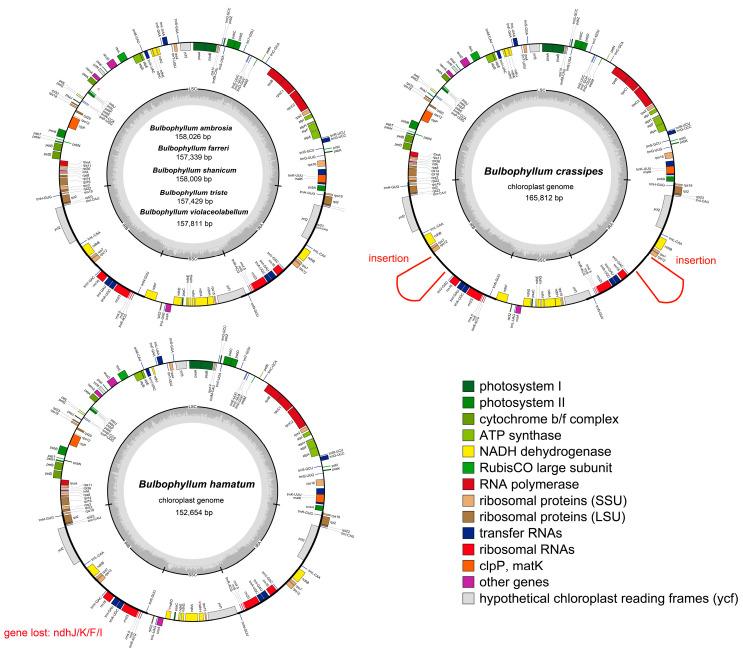
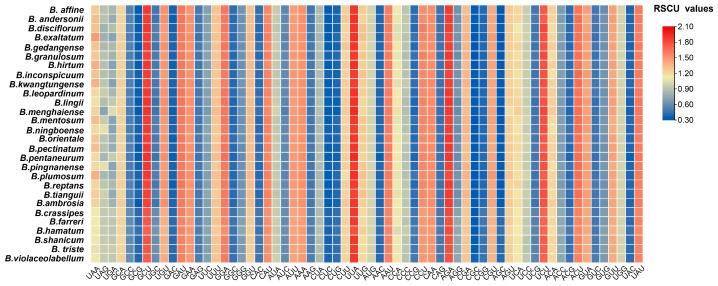
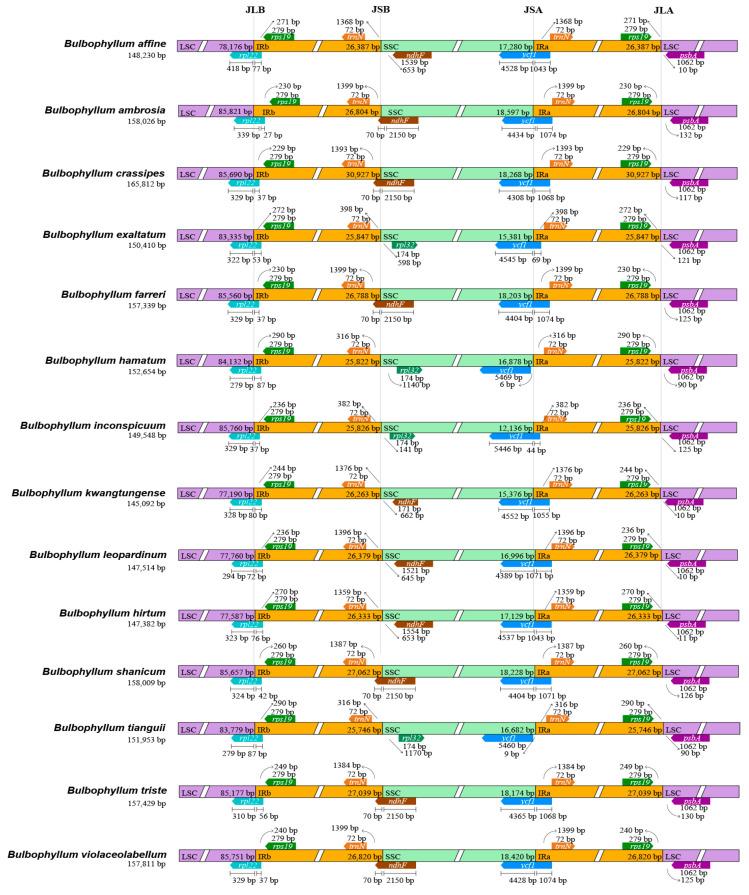
is one of the largest genera and presents some of the most intricate taxonomic problems in the family Orchidaceae, including species of ornamental and medical importance. The lack of knowledge regarding the characterization of chloroplast (cp) genomes has imposed current limitations on our study. Here, we report the complete cp genomes of seven species, including . , . , . , . , . , . , and . , and compared with related taxa to provide a better understanding of their genomic information on taxonomy and phylogeny. A total of 28 cp genomes exhibit typical quadripartite structures with lengths ranging from 145,092 bp to 165,812 bp and a GC content of 36.60% to 38.04%. Each genome contained 125-132 genes, encompassing 74-86 protein-coding genes, 38 tRNA genes, and eight rRNA genes. The genome arrangements, gene contents, and length were similar, with differences observed in gene composition. It is worth noting that there were exogenous fragment insertions in the IR regions of . . A total of 18-49 long repeats and 38-80 simple sequence repeats (SSRs) were detected and the single nucleotide (A/T) was dominant in cp genomes, with an obvious A/T preference. An analysis of relative synonymous codon usage (RSCU) revealed that leucine (Leu) was the most frequently used codon, while cysteine (Cys) was the least used. Six highly variable regions (- > - > - > - > - > -) and five coding sequences ( > > > > ) were identified as potential DNA markers based on nucleotide diversity. Additionally, 31,641 molecular diagnostic characters (MDCs) were identified in complete cp genomes. A phylogenetic analysis based on the complete cp genome sequences and 68 protein-coding genes strongly supported that 28 species can be divided into four branches, sects. , , and , defined by morphology, were non-monophyly. Our results enriched the genetic resources of , providing valuable information to illustrate the complicated taxonomy, phylogeny, and evolution process of the genus.
是最大的属之一,在兰科植物中呈现出一些最复杂的分类学问题,包括一些具有观赏和药用价值的物种。由于缺乏对叶绿体 (cp) 基因组特征的了解,目前我们的研究受到了限制。在这里,我们报告了七个物种的完整 cp 基因组,包括.,.,.,.,.,.,. ,并与相关分类群进行了比较,以更好地了解它们在分类学和系统发育上的基因组信息。总共 28 个 cp 基因组表现出典型的四部分结构,长度范围从 145092 bp 到 165812 bp,GC 含量从 36.60%到 38.04%。每个基因组包含 125-132 个基因,包括 74-86 个蛋白质编码基因、38 个 tRNA 基因和 8 个 rRNA 基因。基因组排列、基因组成和长度相似,但在基因组成上存在差异。值得注意的是,. . . 的 IR 区有外源片段插入。总共检测到 18-49 个长重复和 38-80 个简单序列重复 (SSR),cp 基因组中以单核苷酸 (A/T) 为主,明显存在 A/T 偏好。相对同义密码子使用 (RSCU) 分析表明亮氨酸 (Leu) 是最常用的密码子,而半胱氨酸 (Cys) 是最少用的密码子。根据核苷酸多样性,确定了六个高变区 (- > - > - > - > - > -) 和五个编码序列 ( > > > > ) 作为潜在的 DNA 标记。此外,在完整的 cp 基因组中鉴定出 31641 个分子诊断特征 (MDCs)。基于完整的 cp 基因组序列和 68 个蛋白质编码基因的系统发育分析强烈支持 28 个物种可以分为四个分支,形态学定义的 sect.,, 和, 是多系的。我们的结果丰富了 的遗传资源,为说明该属复杂的分类学、系统发育和进化过程提供了有价值的信息。




 Zotero 插件