
经鼻递送巨噬细胞膜伪装脂质体减轻缺血性脑卒中损伤的优化设计
The Optimization Design of Macrophage Membrane Camouflaging Liposomes for Alleviating Ischemic Stroke Injury through Intranasal Delivery.
作者信息
Liu Tianshu, Wang Yan, Zhang Mengfan, Zhang Jin, Kang Naijin, Zheng Linlin, Ding Zhiying
机构信息
School of Pharmaceutical Sciences, Jilin University, Changchun 130021, China.
出版信息
Int J Mol Sci. 2024 Mar 2;25(5):2927. doi: 10.3390/ijms25052927.
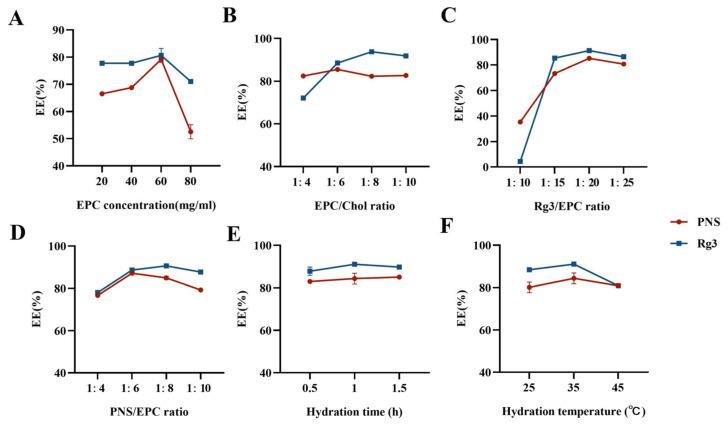
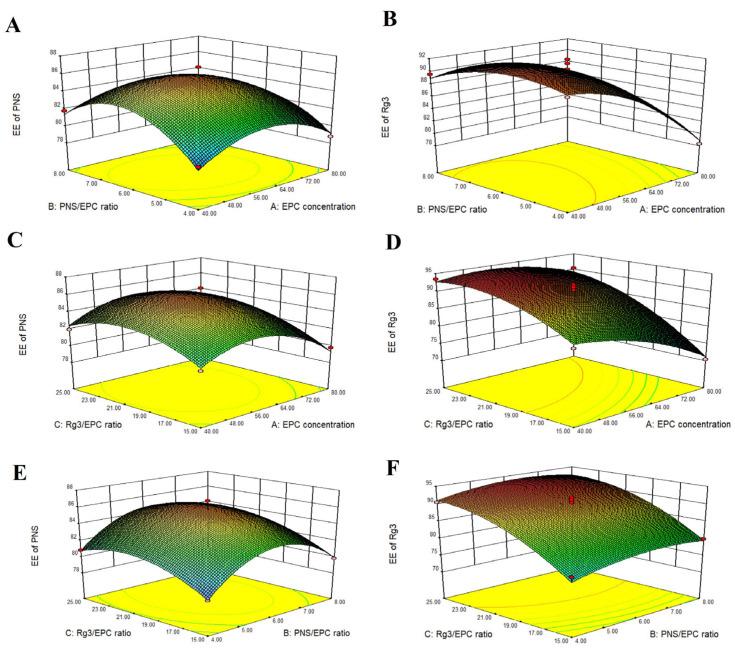
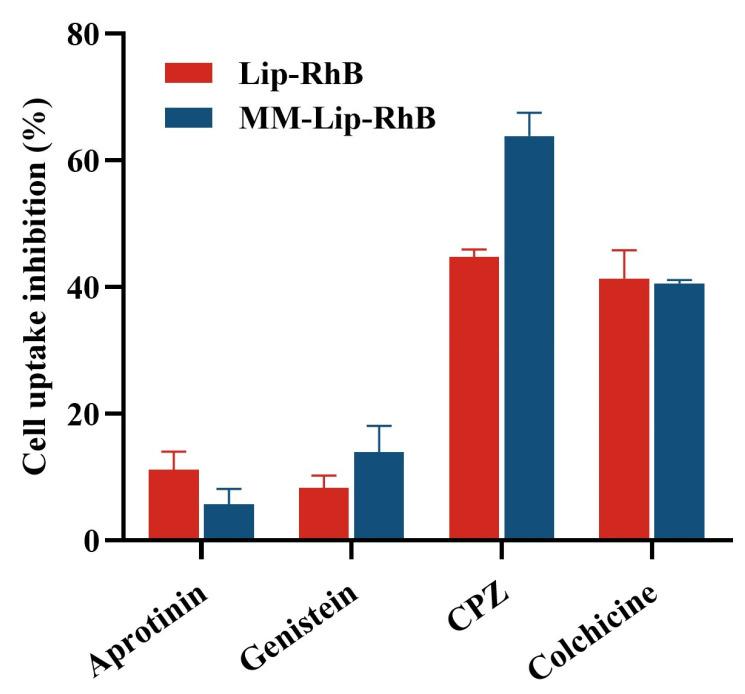
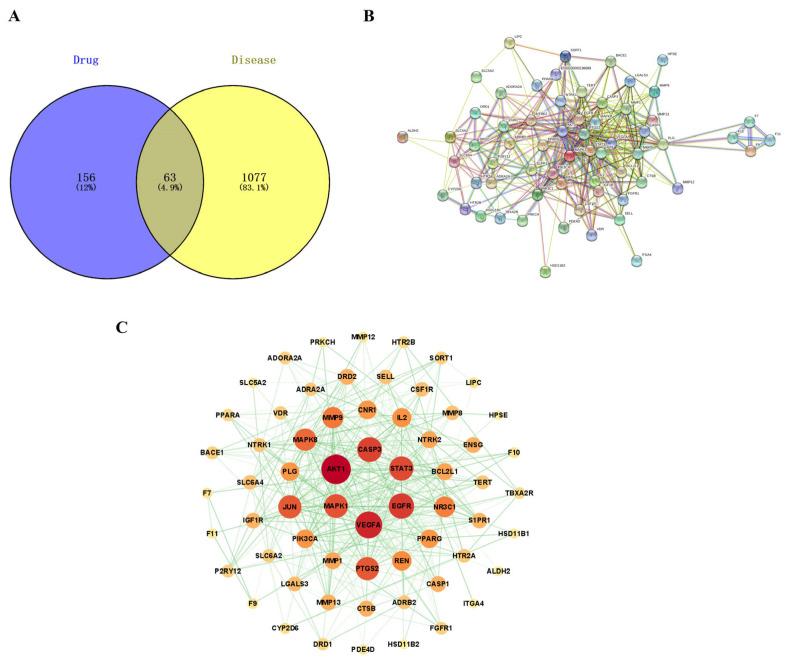
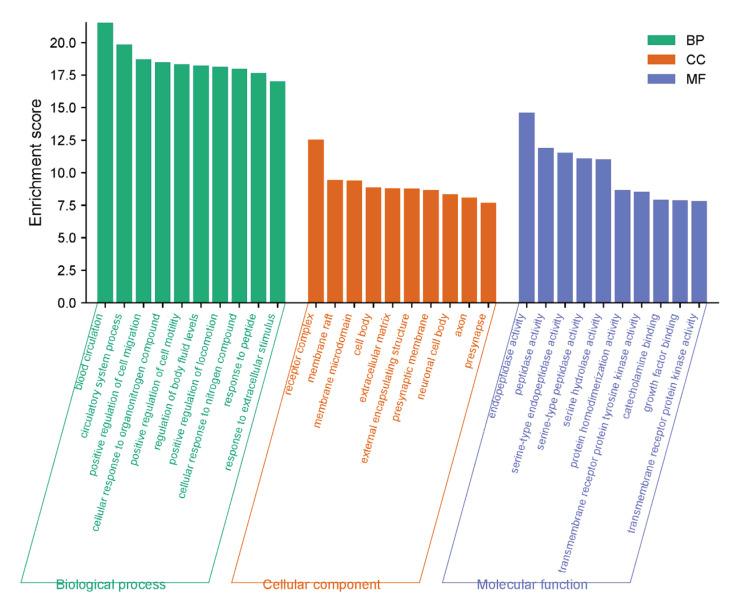
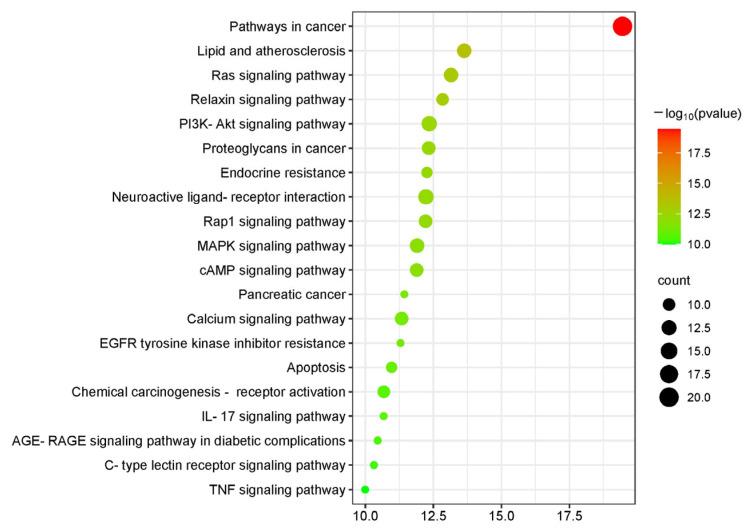
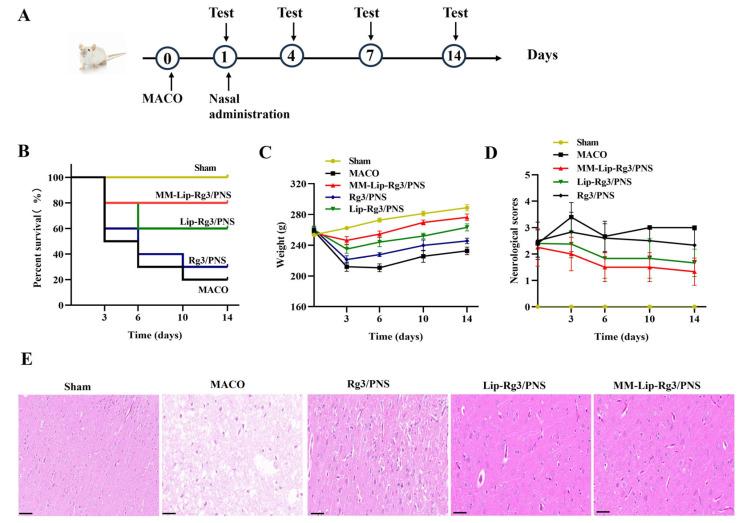
Ischemic stroke is associated with a high mortality rate, and effective treatment strategies are currently lacking. In this study, we aimed to develop a novel nano delivery system to treat ischemic stroke via intranasal administration. A three-factor Box-Behnken experimental design was used to optimize the formulation of liposomes co-loaded with Panax notoginseng saponins (PNSs) and Ginsenoside Rg3 (Rg3) (Lip-Rg3/PNS). Macrophage membranes were coated onto the surface of the optimized liposomes to target the ischemic site of the brain. The double-loaded liposomes disguised by macrophage membranes (MM-Lip-Rg3/PNS) were spherical, in a "shell-core" structure, with encapsulation rates of 81.41% (PNS) and 93.81% (Rg3), and showed good stability. In vitro, MM-Lip-Rg3/PNS was taken up by brain endothelial cells via the clathrin-dependent endocytosis and micropinocytosis pathways. Network pharmacology experiments predicted that MM-Lip-Rg3/PNS could regulate multiple signaling pathways and treat ischemic stroke by reducing apoptosis and inflammatory responses. After 14 days of treatment with MM-Lip-Rg3/PNS, the survival rate, weight, and neurological score of middle cerebral artery occlusion (MCAO) rats significantly improved. The hematoxylin and eosin (H&E) and TUNEL staining results showed that MM-Lip-Rg3/PNS can reduce neuronal apoptosis and inflammatory cell infiltration and protect the ischemic brain. In vivo biological experiments have shown that free Rg3, PNS, and MM-Lip-Rg3/PNS can alleviate inflammation and apoptosis, especially MM-Lip-Rg3/PNS, indicating that biomimetic liposomes can improve the therapeutic effects of drugs. Overall, MM-Lip-Rg3/PNS is a potential biomimetic nano targeted formulation for ischemic stroke therapy.
缺血性中风死亡率高,目前缺乏有效的治疗策略。在本研究中,我们旨在开发一种新型纳米递送系统,通过鼻内给药治疗缺血性中风。采用三因素Box-Behnken实验设计优化同时负载三七皂苷(PNSs)和人参皂苷Rg3(Rg3)的脂质体(Lip-Rg3/PNS)配方。将巨噬细胞膜包被在优化后的脂质体表面,以靶向脑缺血部位。巨噬细胞膜伪装的双载脂质体(MM-Lip-Rg3/PNS)呈球形,具有“壳-核”结构,包封率分别为81.41%(PNS)和93.81%(Rg3),且稳定性良好。体外实验中,MM-Lip-Rg3/PNS通过网格蛋白依赖性内吞和微胞饮途径被脑内皮细胞摄取。网络药理学实验预测,MM-Lip-Rg3/PNS可调节多种信号通路,通过减少细胞凋亡和炎症反应治疗缺血性中风。用MM-Lip-Rg3/PNS治疗14天后,大脑中动脉闭塞(MCAO)大鼠的存活率、体重和神经功能评分显著改善。苏木精-伊红(H&E)染色和TUNEL染色结果表明,MM-Lip-Rg3/PNS可减少神经元凋亡和炎症细胞浸润,保护缺血性脑。体内生物学实验表明,游离Rg3、PNS和MM-Lip-Rg3/PNS均可减轻炎症和细胞凋亡,尤其是MM-Lip-Rg3/PNS,表明仿生脂质体可提高药物的治疗效果。总体而言,MM-Lip-Rg3/PNS是一种潜在的用于缺血性中风治疗的仿生纳米靶向制剂。



 Zotero 插件