
患者来源神经元模型:在亨廷顿病中捕获年龄依赖性成人发病退行性病变。
Patient-derived neuron model: Capturing age-dependent adult-onset degenerative pathology in Huntington's disease.
机构信息
Department of Biomedical Sciences, Mercer University School of Medicine, Columbus, GA 31901, USA.
出版信息
Mol Cells. 2024 Apr;47(4):100046. doi: 10.1016/j.mocell.2024.100046. Epub 2024 Mar 16.
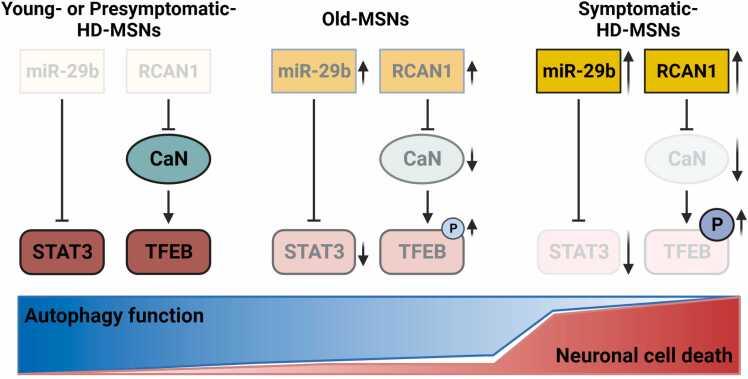
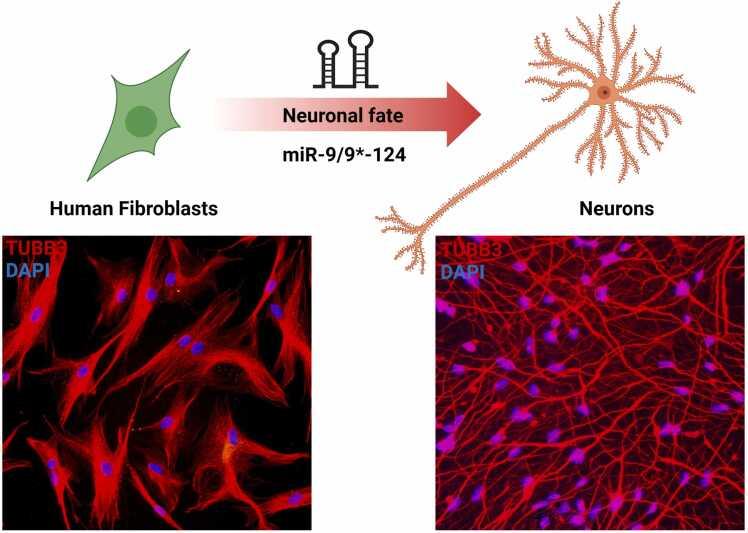
MicroRNAs play a crucial role in directly reprogramming (converting) human fibroblasts into neurons. Specifically, miR-9/9* and miR-124 (miR-9/9*-124) display neurogenic and cell fate-switching activities when ectopically expressed in human fibroblasts by erasing fibroblast identity and inducing a pan-neuronal state. These converted neurons maintain the biological age of the starting fibroblasts and thus provide a human neuron-based platform to study cellular properties in aged neurons and model adult-onset neurodegenerative disorders using patient-derived cells. Furthermore, the expression of striatal-enriched transcription factors in conjunction with miR-9/9*-124 guides the identity of medium spiny neurons (MSNs), the primary targets in Huntington's disease (HD). Converted MSNs from HD patient-derived fibroblasts (HD-MSNs) can replicate HD-related phenotypes including neurodegeneration associated with age-related declines in critical cellular functions such as autophagy. Here, we review the role of microRNAs in the direct conversion of patient-derived fibroblasts into MSNs and the practical application of converted HD-MSNs as a model for studying adult-onset neuropathology in HD. We provide valuable insights into age-related, cell-intrinsic changes contributing to neurodegeneration in HD-MSNs. Ultimately, we address a comprehensive understanding of the complex molecular landscape underlying HD pathology, offering potential avenues for therapeutic application.
MicroRNAs 在直接重编程(转化)人成纤维细胞为神经元方面发挥着关键作用。具体而言,miR-9/9* 和 miR-124(miR-9/9*-124)在外源性表达于人成纤维细胞中时具有神经发生和细胞命运转换活性,通过消除成纤维细胞身份并诱导全神经元状态。这些转化的神经元保持起始成纤维细胞的生物学年龄,因此提供了一个基于人神经元的平台,用于研究老年神经元中的细胞特性,并使用源自患者的细胞来模拟成年发病的神经退行性疾病。此外,纹状体丰富转录因子的表达与 miR-9/9*-124 一起指导中间神经元(MSNs)的身份,MSNs 是亨廷顿病(HD)的主要靶点。源自 HD 患者成纤维细胞的转化 MSNs(HD-MSNs)可以复制与年龄相关的关键细胞功能下降相关的 HD 相关表型,例如自噬相关的神经退行性变。在这里,我们综述了 microRNAs 在将源自患者的成纤维细胞直接转化为 MSNs 中的作用,以及转化的 HD-MSNs 作为研究 HD 中成年发病神经病理学的模型的实际应用。我们提供了对与 HD-MSNs 神经退行性变相关的年龄相关、细胞内变化的宝贵见解。最终,我们全面了解了 HD 病理学背后的复杂分子景观,为治疗应用提供了潜在途径。
 Zotero 插件