
ACE-2 样酶活性与 COVID-19 患者的免疫球蛋白有关。
ACE-2-like enzymatic activity is associated with immunoglobulin in COVID-19 patients.
机构信息
Department of Pediatrics, University of Virginia, Charlottesville, Virginia, USA.
College of Arts and Sciences, University of Virginia, Charlottesville, Virginia, USA.
出版信息
mBio. 2024 Apr 10;15(4):e0054124. doi: 10.1128/mbio.00541-24. Epub 2024 Mar 19.
UNLABELLED
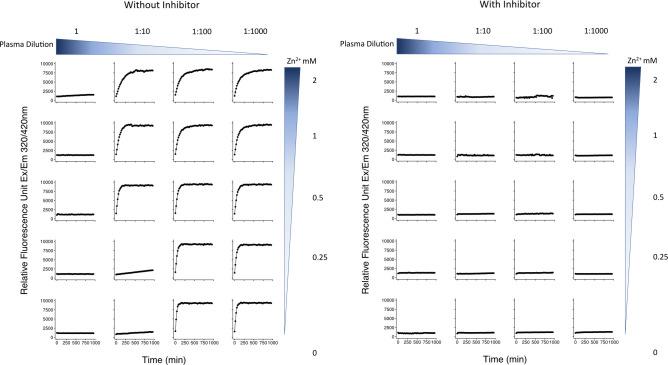
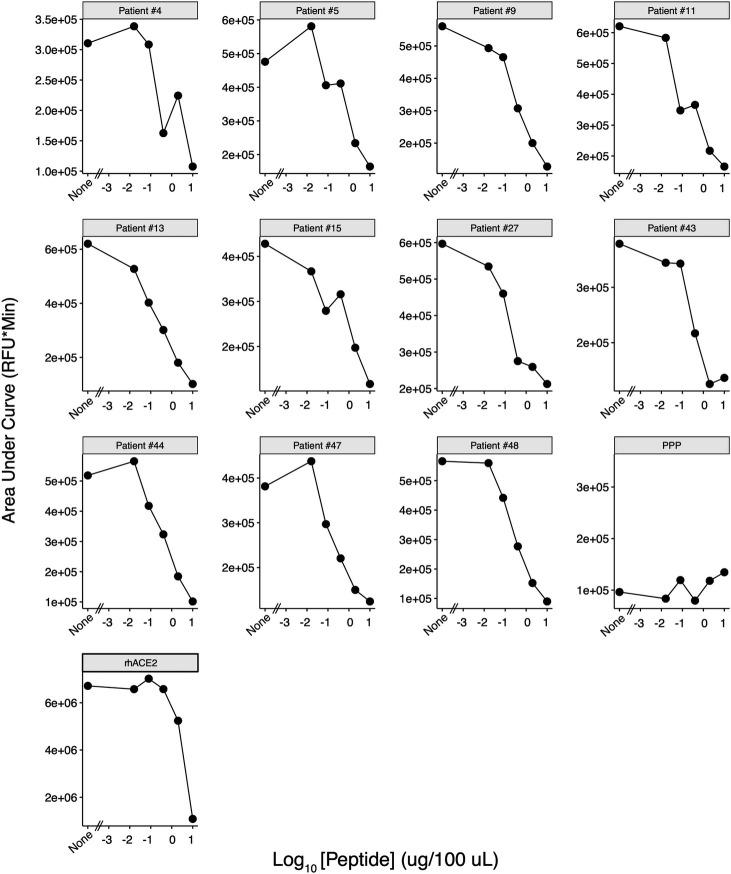
Many mechanisms responsible for COVID-19 pathogenesis are well-established, but COVID-19 includes features with unclear pathogenesis, such as autonomic dysregulation, coagulopathies, and high levels of inflammation. The receptor for the SARS-CoV-2 spike protein receptor-binding domain (RBD) is angiotensin-converting enzyme 2 (ACE2). We hypothesized that some COVID-19 patients may develop antibodies that have a negative molecular image of RBD sufficiently similar to ACE2 to yield ACE2-like catalytic activity-ACE2-like abzymes. To explore this hypothesis, we studied patients hospitalized with COVID-19 who had plasma samples available obtained about 7 days after admission. ACE2 is a metalloprotease that requires Zn for activity. However, we found that the plasma from some patients studied could specifically cleave a synthetic ACE2 peptide substrate, even though the plasma samples were collected using disodium EDTA anticoagulant. When we spiked plasma with synthetic ACE2, no ACE2 substrate cleavage activity was observed unless Zn was added or the plasma was diluted to decrease EDTA concentration. After processing samples by 100 kDa size exclusion columns and protein A/G adsorption, which depleted immunoglobulin by >99.99%, the plasma samples did not cleave the ACE2 substrate peptide. The data suggest that some patients with COVID-19 develop antibodies with abzyme-like activity capable of cleaving synthetic ACE2 substrate. Since abzymes can exhibit promiscuous substrate specificities compared to the enzyme whose active site image they resemble, and since proteolytic cascades regulate many physiologic processes, anti-RBD abzymes may contribute to some otherwise obscure COVID-19 pathogenesis.
IMPORTANCE
We provide what we believe to be the first description of angiotensin-converting enzyme 2 (ACE2)-like enzymatic activity associated with immunoglobulin in COVID-19 patients. COVID-19 includes many puzzling clinical features that have unclear pathogenesis, including a hyperinflammatory state, abnormalities of the clotting cascade, and blood pressure instability. We hypothesized that some patients with COVID-19 patients may produce antibodies against SARS-CoV-2 with enzymatic activity, or abzymes, that target important proteolytic regulatory cascades. The receptor-binding domain (RBD) of the SARS-CoV-2 spike protein binds ACE2 on the surface of the future host cell. This means that the RBD has a negative molecular image of ACE2. We hypothesized that some antibodies produced against the RBD would have, in turn, a negative molecular image of the RBD sufficiently similar to ACE2 to have ACE2-like catalytic activity. In other words, some anti-RBD antibodies would be ACE2-like abzymes. Abzymes elicited by SARS-CoV-2 infection have the potential to affect host physiology.
目的
我们提供了 COVID-19 患者中与免疫球蛋白相关的 ACE2 样酶活性的首次描述。COVID-19 包括许多发病机制尚不清楚的令人费解的临床特征,包括过度炎症状态、凝血级联异常和血压不稳定。我们假设 COVID-19 患者中可能产生针对 SARS-CoV-2 的具有酶活性的抗体,即抗体酶,靶向重要的蛋白水解调节级联。SARS-CoV-2 刺突蛋白的受体结合域 (RBD) 与未来宿主细胞表面的 ACE2 结合。这意味着 RBD 具有 ACE2 的负分子图像。我们假设针对 RBD 产生的一些抗体反过来具有与 ACE2 足够相似的 RBD 的负分子图像,从而具有 ACE2 样催化活性。换句话说,一些针对 RBD 的抗体是 ACE2 样抗体酶。由 SARS-CoV-2 感染引起的抗体酶有可能影响宿主生理学。




 Zotero 插件