
单链文库制备对用于癌症检测的血浆游离DNA多样性影响的综述
A review on the impact of single-stranded library preparation on plasma cell-free diversity for cancer detection.
作者信息
Cheng Jordan C, Swarup Neeti, Wong David T W, Chia David
机构信息
School of Dentistry, University of California, Los Angeles, Los Angeles, CA, United States.
Stanford Cancer Institute, Stanford University, Stanford, CA, United States.
出版信息
Front Oncol. 2024 Mar 6;14:1332004. doi: 10.3389/fonc.2024.1332004. eCollection 2024.
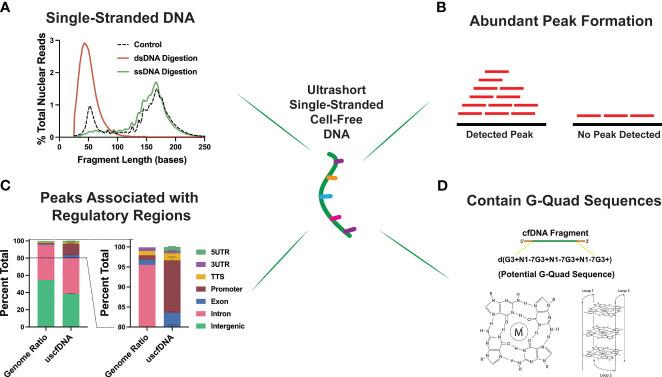
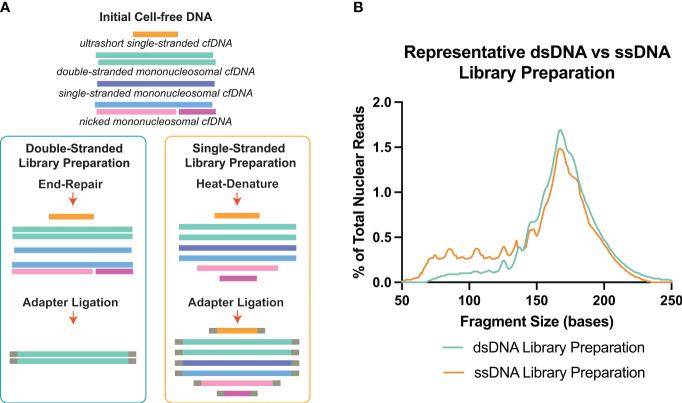
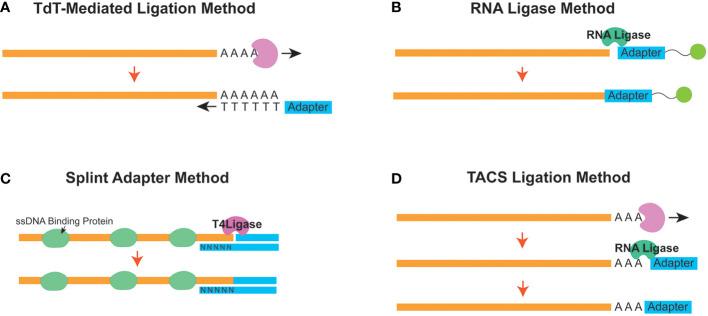
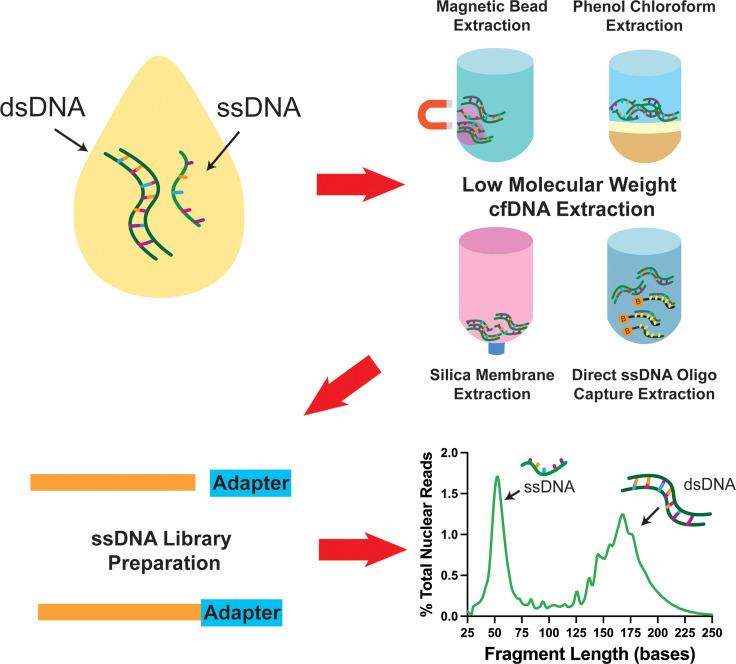
In clinical oncology, cell-free DNA (cfDNA) has shown immense potential in its ability to noninvasively detect cancer at various stages and monitor the progression of therapy. Despite the rapid improvements in cfDNA liquid biopsy approaches, achieving the required sensitivity to detect rare tumor-derived cfDNA still remains a challenge. For next-generation sequencing, the perceived presentation of cfDNA is strongly linked to the extraction and library preparation protocols. Conventional double-stranded DNA library preparation (dsDNA-LP) focuses on assessing ~167bp double-stranded mononucleosomal (mncfDNA) and its other oligonucleosomal cell-free DNA counterparts in plasma. However, dsDNA-LP methods fail to include short, single-stranded, or nicked DNA in the final library preparation, biasing the representation of the actual cfDNA populations in plasma. The emergence of single-stranded library preparation (ssDNA-LP) strategies over the past decade has now allowed these other populations of cfDNA to be studied from plasma. With the use of ssDNA-LP, single-stranded, nicked, and ultrashort cfDNA can be comprehensively assessed for its molecular characteristics and clinical potential. In this review, we overview the current literature on applications of ssDNA-LP on plasma cfDNA from a potential cancer liquid biopsy perspective. To this end, we discuss the molecular principles of single-stranded DNA adapter ligation, how library preparation contributes to the understanding of native cfDNA characteristics, and the potential for ssDNA-LP to improve the sensitivity of circulating tumor DNA detection. Additionally, we review the current literature on the newly reported species of plasma ultrashort single-stranded cell-free DNA plasma, which appear biologically distinct from mncfDNA. We conclude with a discussion of future perspectives of ssDNA-LP for liquid biopsy endeavors.
在临床肿瘤学中,游离DNA(cfDNA)在无创检测癌症各阶段及监测治疗进展方面展现出巨大潜力。尽管cfDNA液体活检方法迅速改进,但实现检测罕见肿瘤来源cfDNA所需的灵敏度仍是一项挑战。对于下一代测序,cfDNA的可感知呈现与提取和文库制备方案密切相关。传统的双链DNA文库制备(dsDNA-LP)专注于评估血浆中约167bp的双链单核小体(mncfDNA)及其其他寡核小体游离DNA对应物。然而,dsDNA-LP方法在最终文库制备中未纳入短链、单链或带切口的DNA,从而使血浆中实际cfDNA群体的代表性产生偏差。过去十年中,单链文库制备(ssDNA-LP)策略的出现使这些其他cfDNA群体能够从血浆中进行研究。通过使用ssDNA-LP,可以全面评估单链、带切口和超短cfDNA的分子特征和临床潜力。在本综述中,我们从潜在癌症液体活检的角度概述了当前关于ssDNA-LP在血浆cfDNA应用方面的文献。为此我们讨论了单链DNA衔接子连接的分子原理、文库制备如何有助于理解天然cfDNA特征,以及ssDNA-LP提高循环肿瘤DNA检测灵敏度的潜力。此外,我们回顾了当前关于新报道的血浆超短单链游离DNA种类的文献,这些超短单链游离DNA在生物学上似乎与mncfDNA不同。我们最后讨论了ssDNA-LP在液体活检研究中的未来前景。
 Zotero 插件