
评估铜在公共交通系统中的耐用性和抗菌功效的一年期试验。
One-year trial evaluating the durability and antimicrobial efficacy of copper in public transportation systems.
机构信息
Division of Medical Microbiology and Infection Prevention, Vancouver Coastal Health, Vancouver, BC, Canada.
Department of Materials Engineering, University of British Columbia, Vancouver, BC, Canada.
出版信息
Sci Rep. 2024 Mar 21;14(1):6765. doi: 10.1038/s41598-024-56225-9.
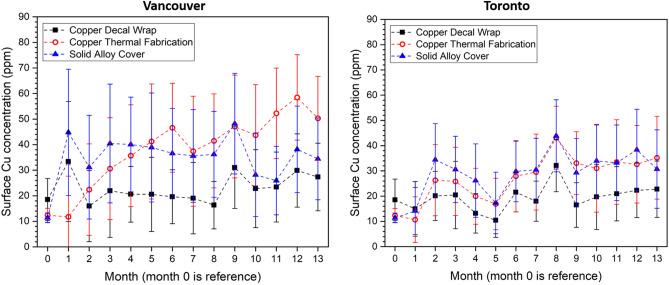
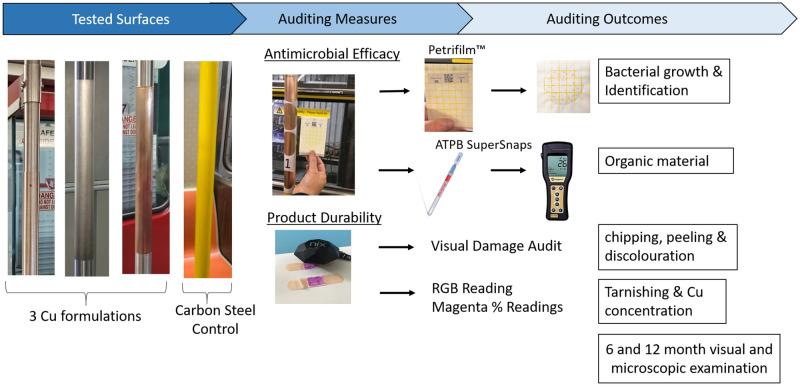
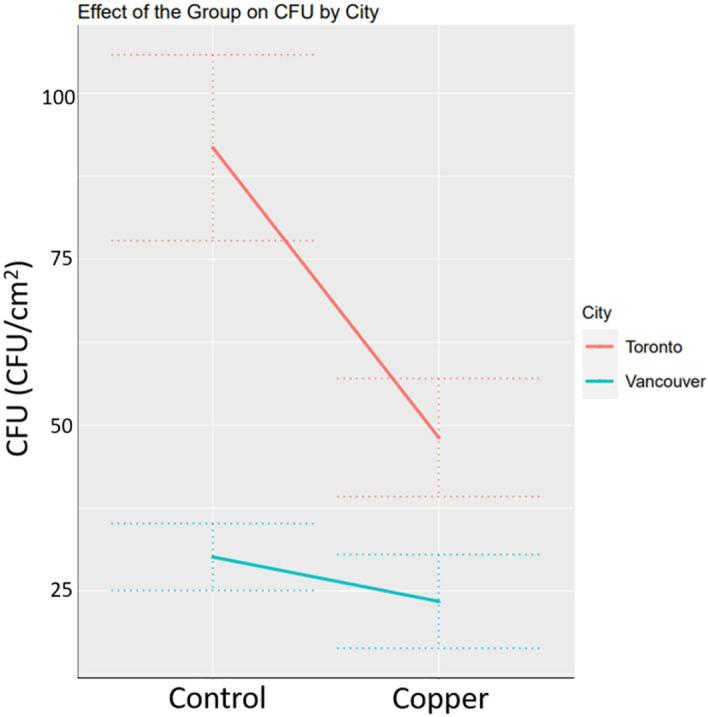
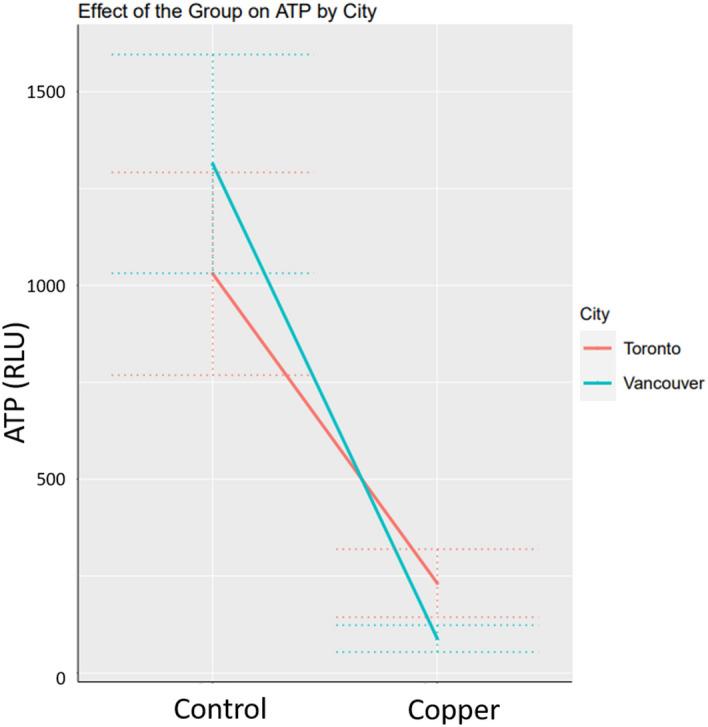
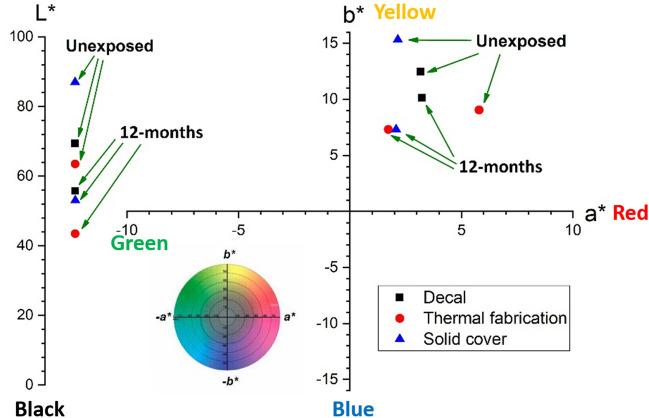
Surfaces on transit vehicles are frequently touched and could potentially act as reservoirs for micro-organism transmission. Regular cleaning and disinfection to minimize the spread of micro-organisms is operationally challenging due to the need to keep vehicles in circulation. The application of copper (Cu) alloys to high- touch surfaces could help reduce the risk of cross-contamination, however, little is known about the durability and efficacy of engineered copper surfaces after prolonged use. Three Cu products (decal, thermal fabrication, and alloy covers) were assessed over a 12-month period. These Cu products were randomly installed on 110 stanchions on three buses and four train (SkyTrain) cars in Vancouver and three buses, two subway cars, and two streetcars in Toronto with mirrored control surfaces directly opposite. Bacterial counts (Colony forming units, CFU) and ATP bioluminescence (ATPB) were measured every two months after peak morning routes. Durability of the Cu products were assessed monthly through visual inspection and colorimetry assays or by ex-situ microscopy. Cu products on stanchions reduced the mean colony forming units (CFU) of all vehicles by 42.7% in the mean CFU (0.573 (CI 95% 0.453-0.726), p-value < 0.001) compared to control surfaces. The three Cu products exhibited an overall 87.1% reduction in the mean ATPB readings (0.129 (CI 95% 0.059-0.285, p-value < 0.001) compared to controls. Surface Cu concentration for all three products was consistent throughout the 12-month period. Electron microscopy (SEM) and Energy-dispersive X-ray Spectroscopy (EDS) cross-sectional analysis showed no change in thickness or dealloying of Cu products, however SEM top-down analysis revealed substantial carbon accumulation on all surfaces. Cu products installed on transit vehicles maintained antimicrobial efficacy and durability after 12 months of use.
过境车辆的表面经常被触摸,并且可能充当微生物传播的储库。由于需要保持车辆循环使用,因此定期进行清洁和消毒以最大程度减少微生物的传播具有操作上的挑战性。将铜 (Cu) 合金应用于高接触表面可能有助于降低交叉污染的风险,但是,对于经过长时间使用后工程化铜表面的耐用性和功效知之甚少。评估了三种 Cu 产品(贴膜、热加工和合金盖),为期 12 个月。这些 Cu 产品随机安装在温哥华的三辆公共汽车和四辆火车(SkyTrain)车的 110 根支柱上,以及多伦多的三辆公共汽车、两辆地铁车和两辆街车上,在这些车辆上与镜像控制表面相对的地方直接安装了 Cu 产品。在高峰早班路线后的每两个月测量一次细菌计数(菌落形成单位,CFU)和 ATP 生物发光(ATPB)。通过目视检查和比色法测定或通过体外显微镜每月评估 Cu 产品的耐用性。支柱上的 Cu 产品使所有车辆的平均菌落形成单位(CFU)减少了 42.7%(平均 CFU 为 0.573(95%CI 0.453-0.726),p 值<0.001),与对照表面相比。与对照相比,三种 Cu 产品的平均 ATPB 读数总体减少了 87.1%(0.129(95%CI 0.059-0.285,p 值<0.001)。所有三种产品的表面 Cu 浓度在整个 12 个月期间保持一致。电子显微镜(SEM)和能量色散 X 射线光谱(EDS)横截面分析显示,Cu 产品的厚度或脱合金没有变化,但是 SEM 自上而下的分析显示所有表面都有大量的碳积累。经过 12 个月的使用,安装在过境车辆上的 Cu 产品保持了抗菌功效和耐用性。
 Zotero 插件