
ROS 信号转导通过氧化蛋白质修饰在固有免疫中的作用。
ROS signaling in innate immunity via oxidative protein modifications.
机构信息
Department of Biophysics, Faculty of Science, Palacký University, Olomouc, Czechia.
Institute of Transfusion Medicine and Immunology, Institute for Innate Immunoscience (MI3), Medical Faculty Mannheim, Heidelberg University, Mannheim, Germany.
出版信息
Front Immunol. 2024 Mar 7;15:1359600. doi: 10.3389/fimmu.2024.1359600. eCollection 2024.
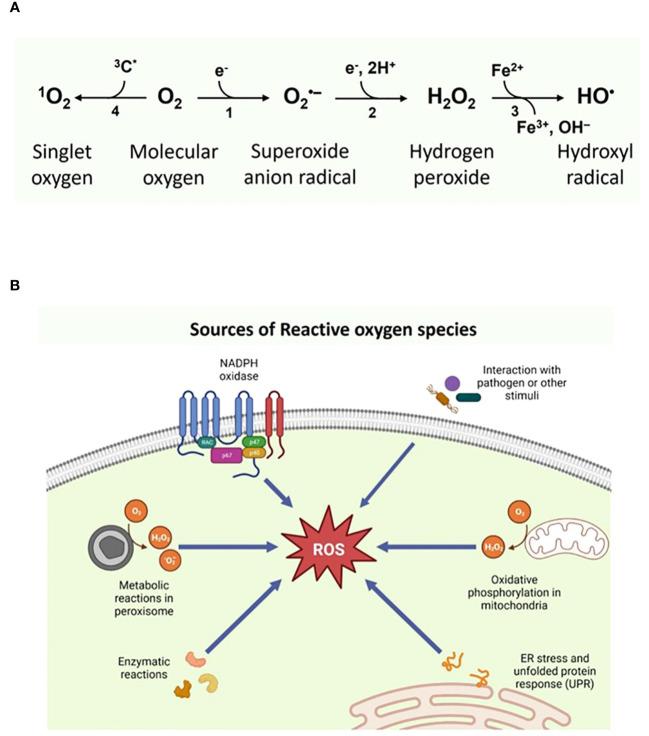
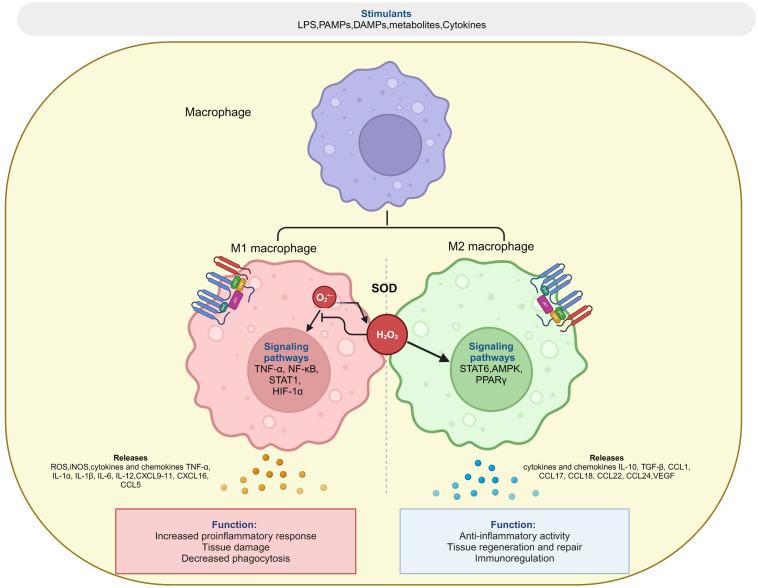
The innate immune response represents the first-line of defense against invading pathogens. Reactive oxygen species (ROS) and reactive nitrogen species (RNS) have been implicated in various aspects of innate immune function, which involves respiratory bursts and inflammasome activation. These reactive species widely distributed within the cellular environment are short-lived intermediates that play a vital role in cellular signaling and proliferation and are likely to depend on their subcellular site of formation. NADPH oxidase complex of phagocytes is known to generate superoxide anion radical (O ) that functions as a precursor for antimicrobial hydrogen peroxide (HO) production, and HO is utilized by myeloperoxidase (MPO) to generate hypochlorous acid (HOCl) that mediates pathogen killing. HO modulates the expression of redox-responsive transcriptional factors, namely NF-kB, NRF2, and HIF-1, thereby mediating redox-based epigenetic modification. Survival and function of immune cells are under redox control and depend on intracellular and extracellular levels of ROS/RNS. The current review focuses on redox factors involved in the activation of immune response and the role of ROS in oxidative modification of proteins in macrophage polarization and neutrophil function.
固有免疫反应是抵御入侵病原体的第一道防线。活性氧(ROS)和活性氮(RNS)被认为参与了固有免疫功能的各个方面,包括呼吸爆发和炎性体激活。这些在细胞环境中广泛分布的活性物质是寿命短暂的中间产物,在细胞信号转导和增殖中发挥着重要作用,并且可能依赖于它们在细胞内的形成部位。吞噬细胞的 NADPH 氧化酶复合物已知会产生超氧阴离子自由基(O ),它作为产生抗菌过氧化氢(HO )的前体,HO 被髓过氧化物酶(MPO)利用生成次氯酸(HOCl),介导病原体的杀伤。HO 调节氧化还原反应敏感转录因子的表达,即 NF-kB、NRF2 和 HIF-1,从而介导基于氧化还原的表观遗传修饰。免疫细胞的存活和功能受氧化还原控制,并取决于细胞内和细胞外 ROS/RNS 的水平。本综述重点介绍了参与免疫反应激活的氧化还原因子,以及 ROS 在巨噬细胞极化和中性粒细胞功能中蛋白质氧化修饰中的作用。

 Zotero 插件