
用于模拟中枢神经组织支架中纤维蛋白水平升高的四组分仿生水凝胶的制备与表征
Fabrication and Characterization of Quad-Component Bioinspired Hydrogels to Model Elevated Fibrin Levels in Central Nervous Tissue Scaffolds.
作者信息
Diaz-Lasprilla Ana M, McKee Meagan, Jimenez-Vergara Andrea C, Ravi Swathisri, Bellamy Devon, Ortega Wendy, Crosby Cody O, Steele Jennifer, Plascencia-Villa Germán, Perry George, Munoz-Pinto Dany J
机构信息
Engineering Science Department, D. R. Semmes School of Science, Trinity University, San Antonio, TX 78212, USA.
Biology Department, D. R. Semmes School of Science, Trinity University, San Antonio, TX 78212, USA.
出版信息
Gels. 2024 Mar 17;10(3):203. doi: 10.3390/gels10030203.
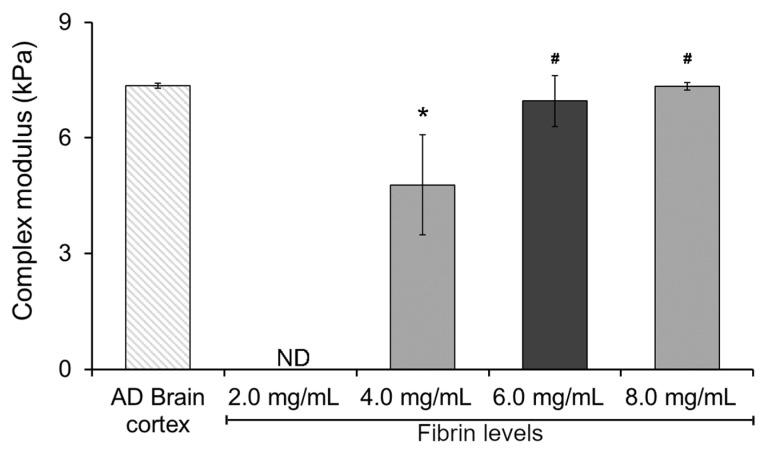
Multicomponent interpenetrating polymer network (mIPN) hydrogels are promising tissue-engineering scaffolds that could closely resemble key characteristics of native tissues. The mechanical and biochemical properties of mIPNs can be finely controlled to mimic key features of target cellular microenvironments, regulating cell-matrix interactions. In this work, we fabricated hydrogels made of collagen type I (Col I), fibrin, hyaluronic acid (HA), and poly (ethylene glycol) diacrylate (PEGDA) using a network-by-network fabrication approach. With these mIPNs, we aimed to develop a biomaterial platform that supports the in vitro culture of human astrocytes and potentially serves to assess the effects of the abnormal deposition of fibrin in cortex tissue and simulate key aspects in the progression of neuroinflammation typically found in human pathologies such as Alzheimer's disease (AD), Parkinson's disease (PD), and tissue trauma. Our resulting hydrogels closely resembled the complex modulus of AD human brain cortex tissue (~7.35 kPa), promoting cell spreading while allowing for the modulation of fibrin and hyaluronic acid levels. The individual networks and their microarchitecture were evaluated using confocal laser scanning microscopy (CLSM) and scanning electron microscopy (SEM). Human astrocytes were encapsulated in mIPNs, and negligible cytotoxicity was observed 24 h after the cell encapsulation.
多组分互穿聚合物网络(mIPN)水凝胶是很有前景的组织工程支架,能够非常接近天然组织的关键特性。mIPN的机械和生化特性可以得到精确控制,以模拟目标细胞微环境的关键特征,调节细胞与基质的相互作用。在这项工作中,我们采用逐个网络的制备方法,制备了由I型胶原蛋白(Col I)、纤维蛋白、透明质酸(HA)和聚乙二醇二丙烯酸酯(PEGDA)制成的水凝胶。利用这些mIPN,我们旨在开发一个生物材料平台,以支持人类星形胶质细胞的体外培养,并有可能用于评估纤维蛋白在皮质组织中异常沉积的影响,以及模拟在诸如阿尔茨海默病(AD)、帕金森病(PD)和组织创伤等人类疾病中常见的神经炎症进展的关键方面。我们制备的水凝胶与AD人类大脑皮质组织的复数模量(约7.35 kPa)非常相似,在促进细胞铺展的同时,还能调节纤维蛋白和透明质酸的水平。使用共聚焦激光扫描显微镜(CLSM)和扫描电子显微镜(SEM)对各个网络及其微观结构进行了评估。将人类星形胶质细胞封装在mIPN中,细胞封装24小时后观察到的细胞毒性可忽略不计。



 Zotero 插件