
负载5-氟尿嘧啶的叶酸靶向介孔二氧化硅纳米颗粒用于增强妇科癌症治疗的综合研究
A Comprehensive Study on Folate-Targeted Mesoporous Silica Nanoparticles Loaded with 5-Fluorouracil for the Enhanced Treatment of Gynecological Cancers.
作者信息
Almomen Aliyah, Alhowyan Adel
机构信息
Department of Pharmaceutical Chemistry, College of Pharmacy, King Saud University, P.O. Box 22452, Riyadh 11495, Saudi Arabia.
Department of Pharmaceutics, College of Pharmacy, King Saud University, Riyadh 11495, Saudi Arabia.
出版信息
J Funct Biomater. 2024 Mar 20;15(3):74. doi: 10.3390/jfb15030074.
BACKGROUND
Gynecological cancers are a significant public health concern, accounting for 40% of all cancer incidence and 30% of deaths in women. 5-Fluorouracil (5-FU) can be used with chemotherapy to improve treatment in advanced-stage gynecological cancer. Mesoporous silica nanoparticles (MSNs) can improve drug effectiveness and reduce toxicity. Folic acid can target folate receptors in epithelial malignancies like ovarian and cervical cancer.
METHODS
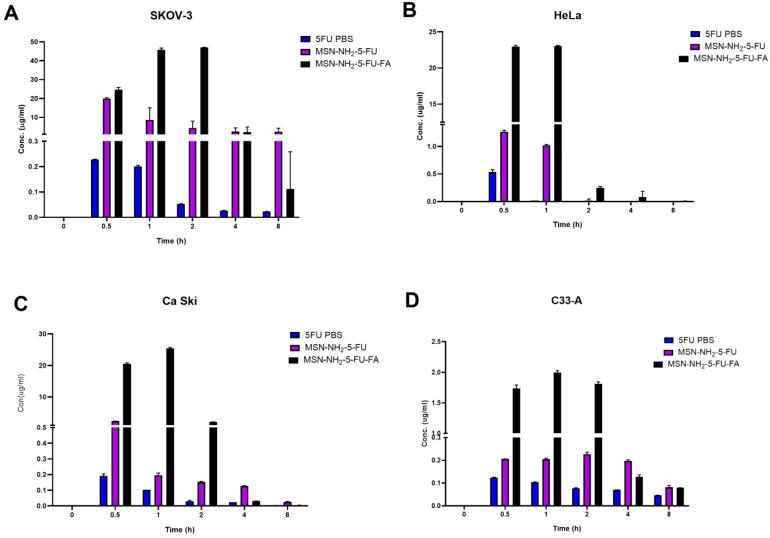
The mixture of MSN-NH2 was synthesized by dissolving N-lauroylsarcosine sodium in a water-ethanol mixture, adding APTES and TEOS, and heating at 80 °C for 18 h, before being fully characterized. The drug is loaded into a 5-FU solution and functionalized with folate. The drug release mechanism, as well as ex vivo intestinal permeation from MSN-NH2 formulations, was tested. The cell viability study of the nanoparticles was evaluated in various cancer cell lines, and the cellular uptake was measured indirectly using HPLC.
RESULTS
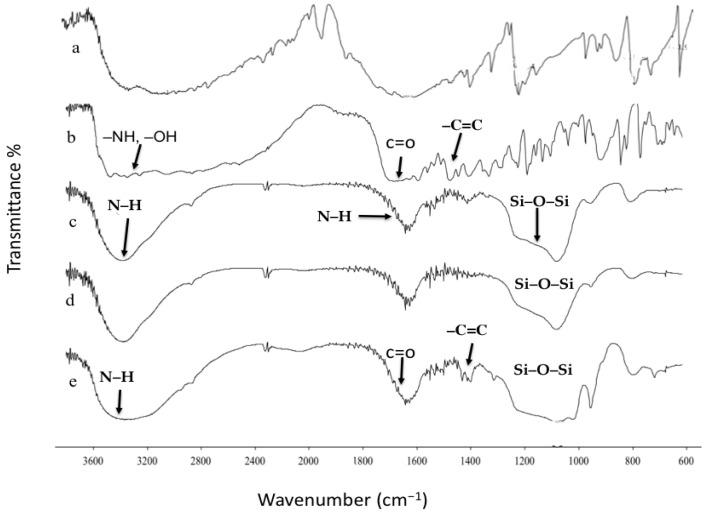
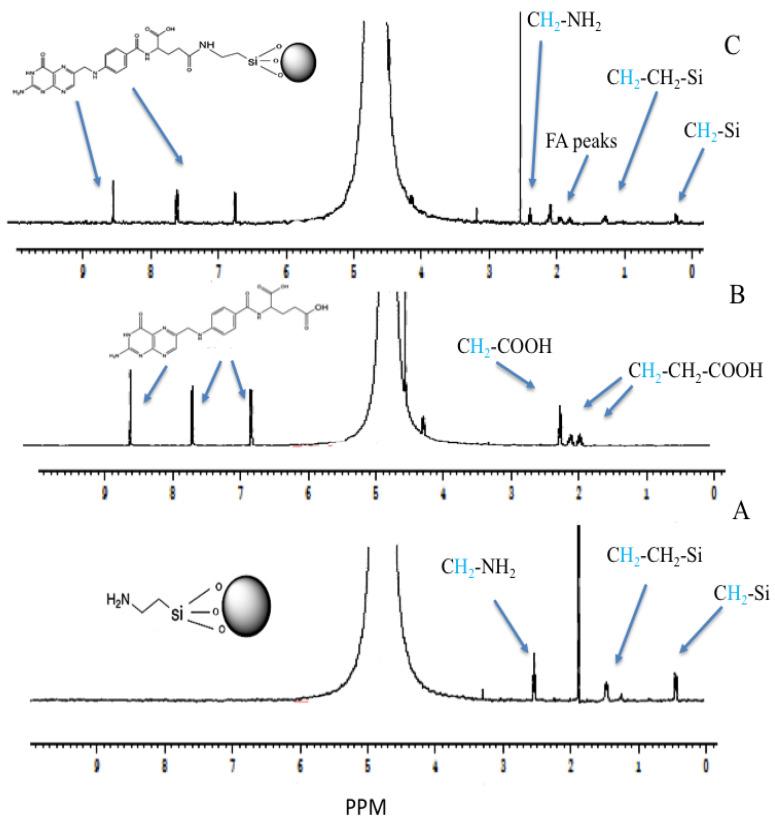
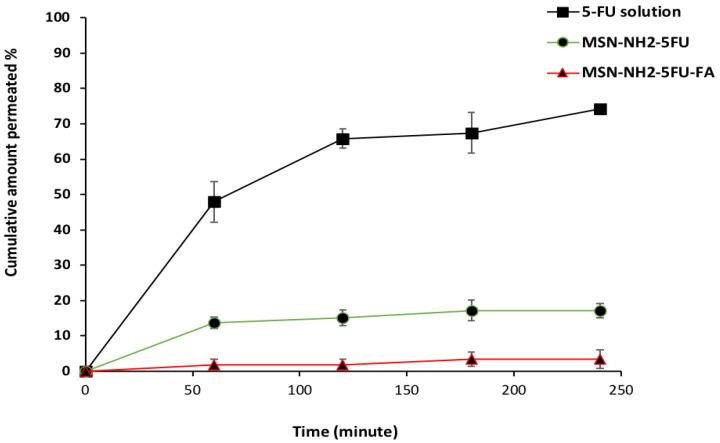
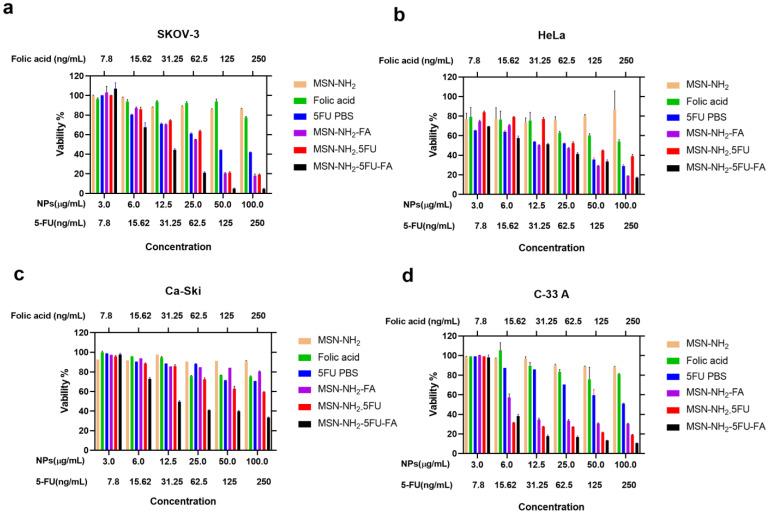
The study analyzed the amine content, propylamine loading, and drug loading capacity of MSN-NH2 nanoparticles. It found that the loading of propylamine was around 0.733 mmol/g, and the surface density was 0.81 molecules/nm. The study also showed that the surface decoration of MSN-NH2 with folic acid was successfully achieved. The release rate of 5-FU from MSN-NH2 was slow and controlled, with a slower rate at pH 5.5. The study found that the amin surface functionalization of MSN-NH2 nanoparticles can reduce potential toxicity in ovarian and cervical cancer cells.
CONCLUSIONS
Based on the results, the encapsulation of 5-FU and functionalization of MSN-NH2 with folic acid can serve as potential carriers for 5-FU in treating gynecological cancer.
背景
妇科癌症是一个重大的公共卫生问题,占女性所有癌症发病率的40%和死亡人数的30%。5-氟尿嘧啶(5-FU)可与化疗联合使用,以改善晚期妇科癌症的治疗效果。介孔二氧化硅纳米颗粒(MSN)可提高药物疗效并降低毒性。叶酸可靶向卵巢癌和宫颈癌等上皮恶性肿瘤中的叶酸受体。
方法
通过将月桂酰肌氨酸钠溶解在水-乙醇混合物中,加入3-氨丙基三乙氧基硅烷(APTES)和正硅酸乙酯(TEOS),并在80°C下加热18小时来合成MSN-NH2混合物,然后对其进行全面表征。将药物加载到5-FU溶液中并用叶酸进行功能化修饰。测试了药物释放机制以及MSN-NH2制剂的离体肠道渗透情况。在各种癌细胞系中评估了纳米颗粒的细胞活力研究,并使用高效液相色谱法间接测量细胞摄取量。
结果
该研究分析了MSN-NH2纳米颗粒的胺含量、丙胺负载量和药物负载能力。发现丙胺负载量约为0.733 mmol/g,表面密度为0.81分子/nm。该研究还表明,成功实现了用叶酸对MSN-NH2进行表面修饰。5-FU从MSN-NH2中的释放速率缓慢且可控,在pH 5.5时速率较慢。该研究发现,MSN-NH2纳米颗粒的氨基表面功能化可降低卵巢癌和宫颈癌细胞中的潜在毒性。
结论
基于这些结果,5-FU的包封以及用叶酸对MSN-NH2进行功能化修饰可作为5-FU治疗妇科癌症的潜在载体。


 Zotero 插件