
急性髓系白血病中的维奈托克耐药性
Venetoclax Resistance in Acute Myeloid Leukemia.
作者信息
Garciaz Sylvain, Hospital Marie-Anne, Collette Yves, Vey Norbert
机构信息
Aix-Marseille University, Inserm, CNRS, Institut Paoli-Calmettes, CRCM, 13009 Marseille, France.
出版信息
Cancers (Basel). 2024 Mar 8;16(6):1091. doi: 10.3390/cancers16061091.
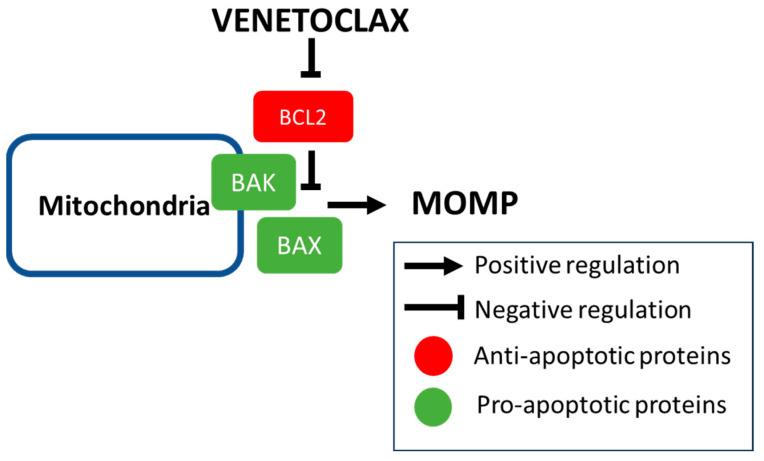
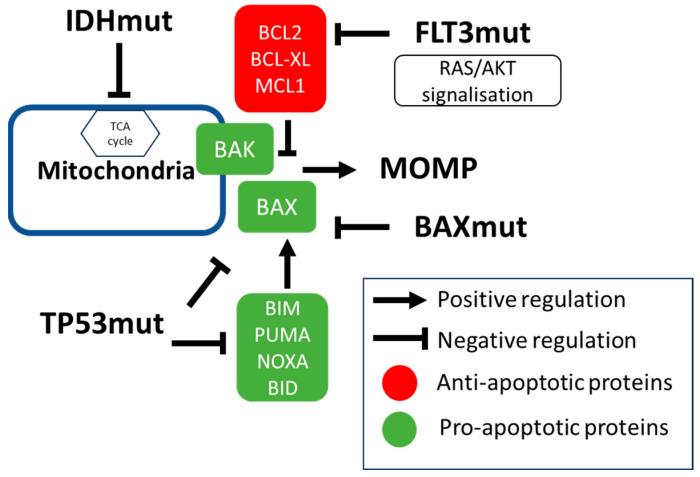
Venetoclax is a BH3-mimetics agent interacting with the anti-apoptotic protein BCL2, facilitating cytochrome c release from mitochondria, subsequent caspases activation, and cell death. Venetoclax combined with azacitidine (VEN-AZA) has become a new standard treatment for AML patients unfit for intensive chemotherapy. In the phase III VIALE-A study, VEN-AZA showed a 65% overall response rate and 14.7 months overall survival in comparison with 22% and 8 months in the azacitidine monotherapy control arm. Despite these promising results, relapses and primary resistance to venetoclax are frequent and remain an unmet clinical need. Clinical and preclinical studies have been conducted to identify factors driving resistance. Among them, the most documented are molecular alterations including , , , and the newly described mutations. Several non-genetic factors are also described such as metabolic plasticity, changes in anti-apoptotic protein expression, and dependencies, as well as monocytic differentiation status. Strategies to overcome venetoclax resistance are being developed in clinical trials, including triplet therapies with targeted agents targeting IDH, FLT3, as well as the recently developed menin inhibitors or immunotherapies such as antibody-drug conjugated or monoclonal antibodies. A better understanding of the molecular factors driving venetoclax resistance by single-cell analyses will help the discovery of new therapeutic strategies in the future.
维奈克拉是一种BH3模拟物,可与抗凋亡蛋白BCL2相互作用,促进细胞色素c从线粒体释放,随后激活半胱天冬酶并导致细胞死亡。维奈克拉联合阿扎胞苷(VEN-AZA)已成为不适合强化化疗的急性髓系白血病(AML)患者的新标准治疗方案。在III期VIALE-A研究中,VEN-AZA的总缓解率为65%,总生存期为14.7个月,相比之下,阿扎胞苷单药治疗对照组的总缓解率为22%,总生存期为8个月。尽管取得了这些令人鼓舞的结果,但维奈克拉的复发和原发性耐药仍很常见,仍是未满足的临床需求。已经开展了临床和临床前研究以确定导致耐药的因素。其中,记录最多的是分子改变,包括 、 、 以及新描述的 突变。还描述了一些非遗传因素,如代谢可塑性、抗凋亡蛋白表达和依赖性的变化以及单核细胞分化状态。临床试验正在开发克服维奈克拉耐药的策略,包括使用靶向异柠檬酸脱氢酶(IDH)、FMS样酪氨酸激酶3(FLT3)的靶向药物进行三联疗法,以及最近开发的Menin抑制剂或免疫疗法,如抗体药物偶联物或单克隆抗体。通过单细胞分析更好地了解驱动维奈克拉耐药的分子因素将有助于未来发现新的治疗策略。

 Zotero 插件