
以表没食子儿茶素没食子酸酯(EGCG)靶向癌症特征:机制基础和治疗靶点。
Targeting Cancer Hallmarks with Epigallocatechin Gallate (EGCG): Mechanistic Basis and Therapeutic Targets.
机构信息
Faculty of Allied Medical Sciences, Applied Science Private University, Amman 11931, Jordan.
Department of Clinical Pharmacy and Therapeutics, Applied Science Private University, Amman 11931, Jordan.
出版信息
Molecules. 2024 Mar 20;29(6):1373. doi: 10.3390/molecules29061373.
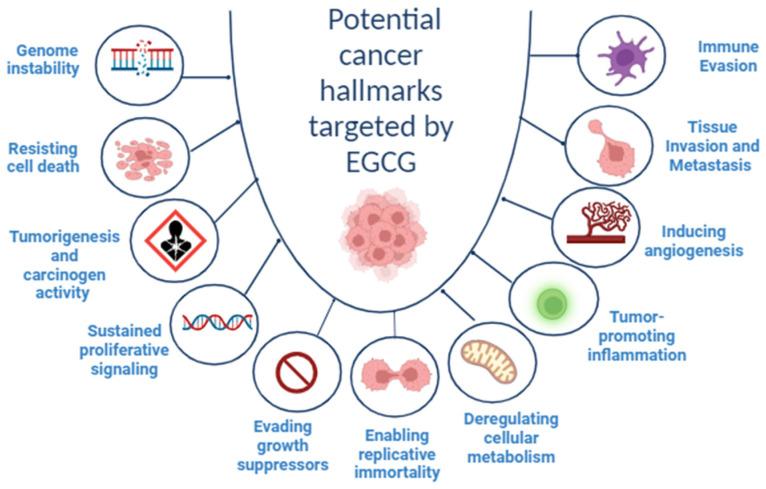
Epigallocatechin gallate (EGCG) is a catechin, which is a type of flavonoid found in high concentrations in green tea. EGCG has been studied extensively for its potential health benefits, particularly in cancer. EGCG has been found to exhibit anti-proliferative, anti-angiogenic, and pro-apoptotic effects in numerous cancer cell lines and animal models. EGCG has demonstrated the ability to interrupt various signaling pathways associated with cellular proliferation and division in different cancer types. EGCG anticancer activity is mediated by interfering with various cancer hallmarks. This article summarize and highlight the effects of EGCG on cancer hallmarks and focused on the impacts of EGCG on these cancer-related hallmarks. The studies discussed in this review enrich the understanding of EGCG's potential as a therapeutic tool against cancer, offering a substantial foundation for scientists and medical experts to advance scientific and clinical investigations regarding EGCG's possibility as a potential anticancer treatment.
没食子酸表没食子儿茶素酯(EGCG)是一种儿茶素,属于黄烷醇类,在绿茶中含量很高。EGCG 因其潜在的健康益处,尤其是在癌症方面,已被广泛研究。研究发现,EGCG 在多种癌细胞系和动物模型中表现出抗增殖、抗血管生成和促凋亡作用。EGCG 已证明能够中断与不同癌症类型中细胞增殖和分裂相关的各种信号通路。EGCG 的抗癌活性是通过干扰各种癌症标志物来介导的。本文总结并强调了 EGCG 对癌症标志物的影响,并重点关注了 EGCG 对这些与癌症相关标志物的影响。本综述中讨论的研究丰富了对 EGCG 作为抗癌治疗工具的潜力的理解,为科学家和医学专家提供了坚实的基础,以推进关于 EGCG 作为潜在抗癌治疗药物的可能性的科学和临床研究。


 Zotero 插件