
探索爱尔兰家庭护工的职业发展路径:对国际证据的系统综述
Exploring a career pathway for home support workers in Ireland: a systematic scoping review of the international evidence.
作者信息
Morrow Elizabeth, Kelly Carmel, Killeen Clodagh, Naessens Edward, Lynch Mary
机构信息
Faculty of Nursing and Midwifery, Royal College of Surgeons Ireland, Dublin, Ireland.
Leading Healthcare Providers Skillnet, Skillnet Ireland, Dublin, Ireland.
出版信息
Front Health Serv. 2024 Mar 13;4:1360920. doi: 10.3389/frhs.2024.1360920. eCollection 2024.
BACKGROUND
In prosperous nations like Ireland, home support workers (HSWs) play an increasingly vital role in providing person-centred care to ageing populations. However, challenges such as workforce shortages, role ambiguity, low pay, and limited career advancement, hinder workforce development and career building.
METHOD
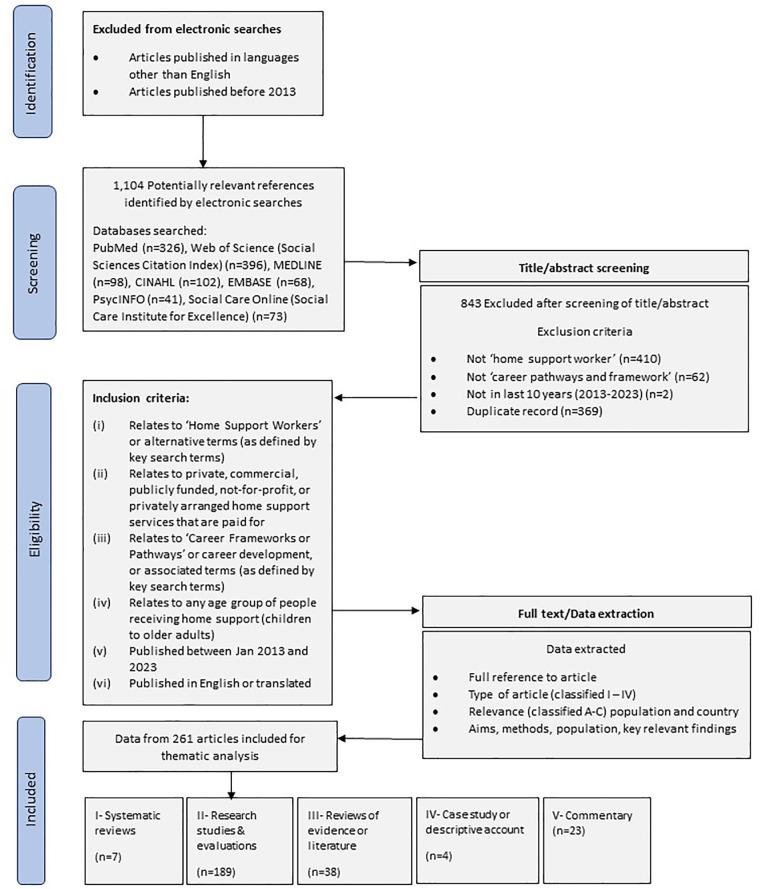
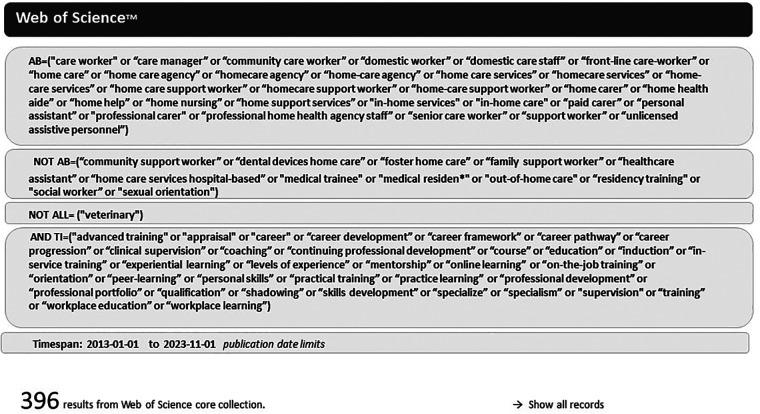
A scoping review using key terms for "HSWs" and "career pathways" was conducted following the Joanna Briggs Institute Methodology, examining electronic databases (Web of Science, PubMed, MEDLINE, EMBASE, CINAHL, PscyINFO, Social Care Online, Social Sciences Citation Index). Inclusion criteria were applied, and a thematic analysis followed and inductive-deductive approach.
RESULTS
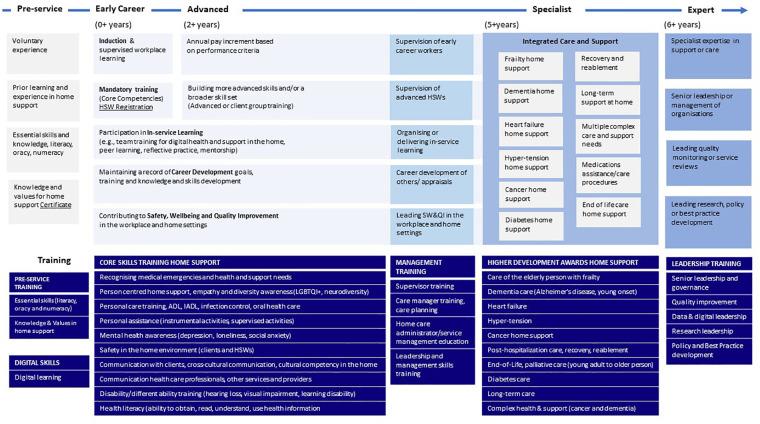
The review encompassed 261 relevant articles from different countries. Four key themes were identified: (1) Data-driven decision-making on the future workforce, (2) Attracting and developing a competent and motivated home support workforce, (3) Enhancing working lives and retention at every stage of career pathways, and (4) Crafting career pathways to improve quality and impact.
DISCUSSION
Leadership, collaboration, and data-driven decision-making across policy, research and practice are pivotal for expanding and enhancing home support. Emphasising a shift towards preventative self-management models, supported by digitally skilled and regulated HSWs, could enhance independence and quality of care. Clear career structures, professional development, and inclusive organisational environments are essential to attract, retain, and empower a competent and motivated workforce, fostering quality and impact.
CONCLUSION
This scoping review provides foundational evidence to establish career pathways for HSWs, identifying key areas for development such as data collection, care model transformation, career progression structures, and systems for safety and quality improvement.
背景
在爱尔兰等发达国家,家庭护理员在为老年人口提供以人为本的护理方面发挥着越来越重要的作用。然而,劳动力短缺、角色模糊、低薪以及职业发展受限等挑战阻碍了劳动力发展和职业建设。
方法
按照乔安娜·布里格斯研究所的方法,使用“家庭护理员”和“职业发展路径”的关键词进行了一项范围综述,对电子数据库(科学网、PubMed、MEDLINE、EMBASE、CINAHL、PsycINFO、社会护理在线、社会科学引文索引)进行了检索。应用了纳入标准,并采用归纳 - 演绎法进行了主题分析。
结果
该综述涵盖了来自不同国家的261篇相关文章。确定了四个关键主题:(1)关于未来劳动力的数据驱动决策,(2)吸引和培养有能力且积极主动的家庭护理劳动力,(3)在职业发展路径的每个阶段改善工作生活并提高留任率,(4)打造职业发展路径以提高质量和影响力。
讨论
政策、研究和实践中的领导力、协作以及数据驱动决策对于扩大和加强家庭护理至关重要。强调向预防性自我管理模式转变,由具备数字技能且经过规范管理的家庭护理员提供支持,可提高独立性和护理质量。清晰的职业结构、专业发展以及包容的组织环境对于吸引和留住有能力且积极主动的劳动力并赋予其权力至关重要,有助于提高质量和影响力。
结论
本范围综述为建立家庭护理员的职业发展路径提供了基础证据,确定了关键发展领域,如数据收集、护理模式转变、职业晋升结构以及安全和质量改进系统。
 Zotero 插件