
沙特阿拉伯比沙的妇产儿童医院中,尿路感染孕妇的耐药菌分离株的频率。
Frequency of drug-resistant bacterial isolates among pregnant women with UTI in maternity and children's hospital, Bisha, Saudi Arabia.
机构信息
Faculty of Applied Medical Sciences, University of Bisha, 255, Al Nakhil, 67714, Bisha, Saudi Arabia.
出版信息
Sci Rep. 2024 Mar 28;14(1):7397. doi: 10.1038/s41598-024-58275-5.
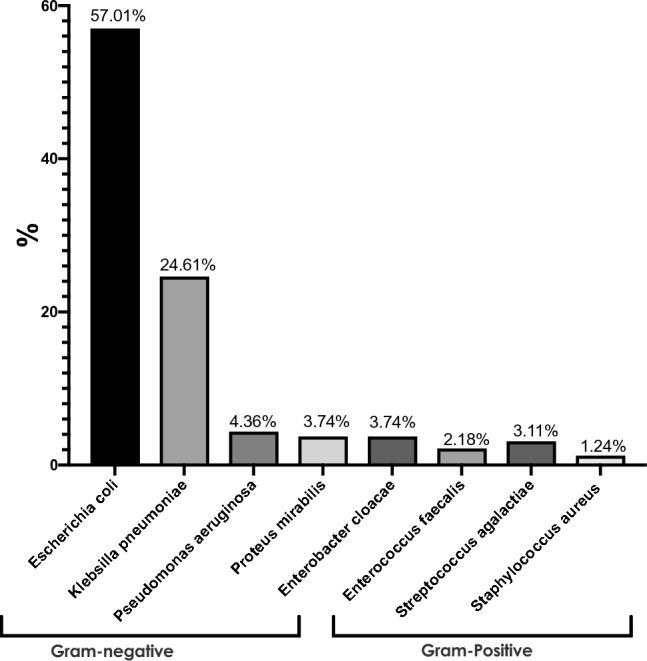
Urinary tract infections (UTIs) are one of the most prevalent bacterial infections affecting humans, with a higher incidence among women. Pregnant women are at an increased risk of developing UTIs, which can have detrimental consequences for both the mother and fetus. UTIs can be caused by various bacteria, and the prevalence of drug-resistant UTIs in maternity and children's hospitals is a cause for concern due to the potential for severe complications if left untreated. The primary objective of the current study was to determine the distribution of UTI-causing bacteria and investigate the antibiotic sensitivity patterns of isolated cultures obtained from pregnant women with UTIs at the Maternity and Children's Hospital, Bisha, Saudi Arabia. This cross-sectional study was conducted from October 2021 to October 2023, involving the analysis of urine samples collected from 321 participants who acquired UTIs during pregnancy. Using biochemical tests and standard cultures, the urine samples were examined for pathogenic bacteria and their anti-microbial sensitivity patterns. The study analyzed susceptibility results according to the Clinical Laboratory Standards Institute guidelines (M100, 28th Edition, 2018). Bacterial strains demonstrating resistance to three or more antibiotics were classified as multidrug-resistant (MDR). This study revealed the distribution of UTI-causing bacteria to be as follows: Escherichia coli, 57.01%; Klebsiella pneumoniae, 24.61%; Pseudomonas aeruginosa, 4.36%; Proteus mirabilis and Enterobacter cloacae, 3.74%; Streptococcus agalactiae, 3.11%; Enterococcus faecalis, 2.18%; and Staphylococcus aureus, 1.24%. Antimicrobial susceptibility testing varied among gram-positive and gram-negative bacteria. Gentamicin demonstrated the highest sensitivity among both gram-positive and gram-negative bacteria; piperacillin-tazobactam was the second most effective drug against gram-negative bacteria. The bacterial isolates showed varying susceptibility to different antibiotics, with Escherichia coli, Klebsiella pneumoniae, and Pseudomonas aeruginosa being mainly sensitive to gentamicin, piperacillin-tazobactam, and ciprofloxacin, respectively. The strategies for reducing the risk of UTIs need to be improved to limit the spread of MDR bacteria. These strategies may include promoting hygienic practices and administering appropriate antibiotics to prevent the emergence and spread of drug-resistant bacteria. Further research is required to monitor the trends in antibiotic resistance among UTI-causing bacteria and develop effective strategies for managing this public health menace.
尿路感染(UTI)是影响人类的最常见细菌感染之一,女性发病率更高。孕妇患 UTI 的风险增加,如果不治疗,可能会对母亲和胎儿产生不利影响。UTI 可由各种细菌引起,产妇和儿童医院耐抗生素 UTI 的流行令人担忧,因为如果不治疗,可能会导致严重的并发症。本研究的主要目的是确定引起 UTI 的细菌分布,并研究沙特阿拉伯比沙产妇和儿童医院 UTI 孕妇分离培养物的抗生素敏感性模式。这项横断面研究于 2021 年 10 月至 2023 年 10 月进行,涉及分析 321 名孕妇尿路感染时采集的尿液样本。使用生化试验和标准培养物,检查尿液样本中的致病细菌及其抗微生物敏感性模式。该研究根据临床实验室标准协会指南(M100,第 28 版,2018 年)分析了药敏结果。对三种或三种以上抗生素耐药的细菌菌株被归类为多药耐药(MDR)。本研究显示,引起 UTI 的细菌分布如下:大肠埃希菌,57.01%;肺炎克雷伯菌,24.61%;铜绿假单胞菌,4.36%;奇异变形杆菌和阴沟肠杆菌,3.74%;无乳链球菌,3.11%;粪肠球菌,2.18%;金黄色葡萄球菌,1.24%。革兰阳性和革兰阴性细菌的抗生素敏感性测试结果不同。庆大霉素对革兰阳性和革兰阴性细菌的敏感性最高;哌拉西林他唑巴坦是第二种对革兰阴性细菌最有效的药物。细菌分离株对不同抗生素的敏感性不同,大肠埃希菌、肺炎克雷伯菌和铜绿假单胞菌主要对庆大霉素、哌拉西林他唑巴坦和环丙沙星敏感。需要改进降低 UTI 风险的策略,以限制 MDR 细菌的传播。这些策略可能包括促进卫生习惯和适当使用抗生素,以预防耐药菌的出现和传播。需要进一步研究来监测引起 UTI 的细菌对抗生素耐药性的趋势,并制定有效策略来管理这一公共卫生威胁。
 Zotero 插件