
水体中有毒重金属离子的污染及其可持续的环保方法还原:等温线、热力学和动力学研究。
Toxic heavy metal ions contamination in water and their sustainable reduction by eco-friendly methods: isotherms, thermodynamics and kinetics study.
机构信息
Department of Biochemistry, ICMR-Rajendra Memorial Research Institute of Medical Sciences, Patna, 800007, India.
Department of Microbiology, ICMR-Rajendra Memorial Research Institute of Medical Sciences, Patna, 800007, India.
出版信息
Sci Rep. 2024 Mar 31;14(1):7595. doi: 10.1038/s41598-024-58061-3.
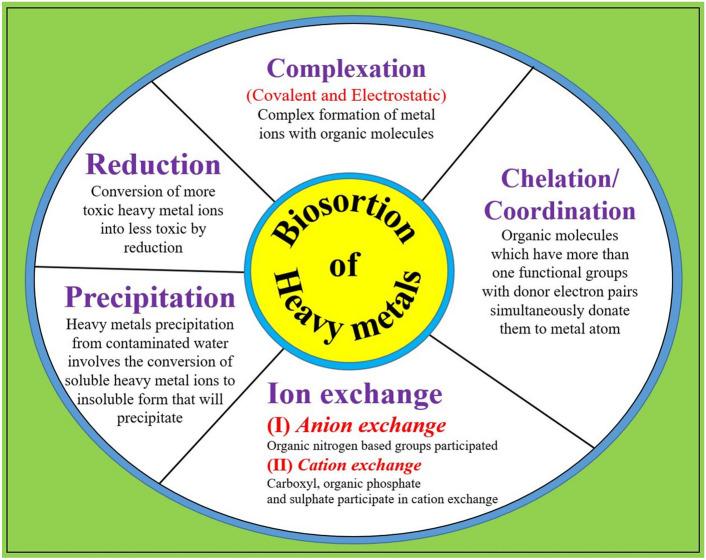
Heavy metal ions can be introduced into the water through several point and non-point sources including leather industry, coal mining, agriculture activity and domestic waste. Regrettably, these toxic heavy metals may pose a threat to both humans and animals, particularly when they infiltrate water and soil. Heavy metal poisoning can lead to many health complications, such as liver and renal dysfunction, dermatological difficulties, and potentially even malignancies. To mitigate the risk of heavy metal ion exposure to humans and animals, it is imperative to extract them from places that have been polluted. Several conventional methods such as ion exchange, reverse osmosis, ultrafiltration, membrane filtration and chemical precipitation have been used for the removal of heavy metal ions. However, these methods have high operation costs and generate secondary pollutants during water treatment. Biosorption is an alternative approach to eliminating heavy metals from water that involves employing eco-friendly and cost-effective biomass. This review is focused on the heavy metal ions contamination in the water, biosorption methods for heavy metal removal and mathematical modeling to explain the behaviour of heavy metal adsorption. This review can be helpful to the researchers to design wastewater treatment plants for sustainable wastewater treatment.
重金属离子可以通过多种点源和非点源进入水体,包括制革工业、煤矿开采、农业活动和生活污水。遗憾的是,这些有毒重金属可能对人类和动物构成威胁,尤其是当它们渗透到水和土壤中时。重金属中毒会导致许多健康并发症,如肝肾功能障碍、皮肤病,甚至可能导致恶性肿瘤。为了降低人类和动物接触重金属离子的风险,必须从受污染的地方提取它们。离子交换、反渗透、超滤、膜过滤和化学沉淀等几种传统方法已被用于去除重金属离子。然而,这些方法的运行成本较高,并且在水处理过程中会产生二次污染物。生物吸附是一种从水中去除重金属的替代方法,它涉及使用环保且具有成本效益的生物质。本文综述了水中重金属离子的污染、生物吸附去除重金属的方法以及解释重金属吸附行为的数学模型。这篇综述可以帮助研究人员设计可持续的废水处理厂来处理废水。
 Zotero 插件