
下一代化学发光探针在抗疟药物研发中的应用
Next Generation Chemiluminescent Probes for Antimalarial Drug Discovery.
机构信息
Department of Medical Parasitology and Infection Biology, Swiss Tropical and Public Health Institute, 4123 Allschwil, Switzerland.
University of Basel, 4001 Basel, Switzerland.
出版信息
ACS Infect Dis. 2024 Apr 12;10(4):1286-1297. doi: 10.1021/acsinfecdis.3c00707. Epub 2024 Apr 1.
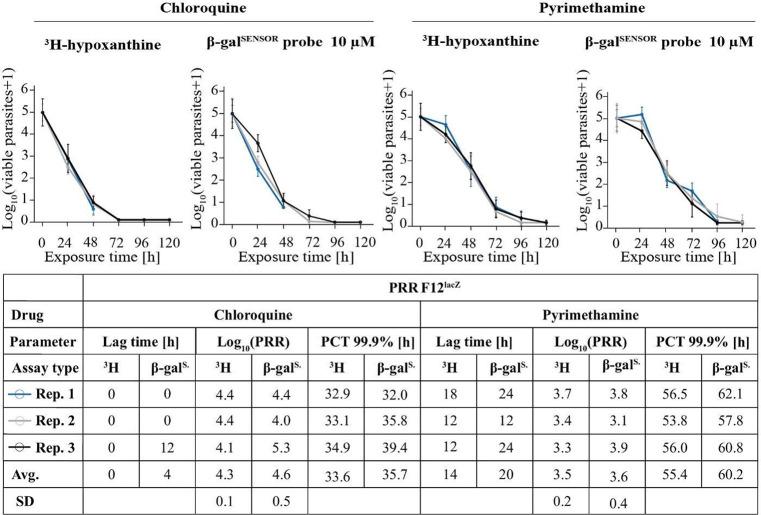
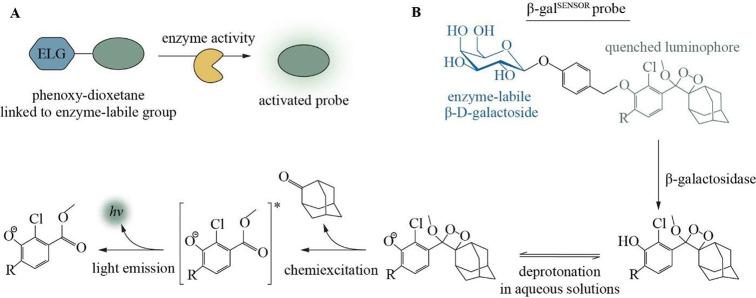
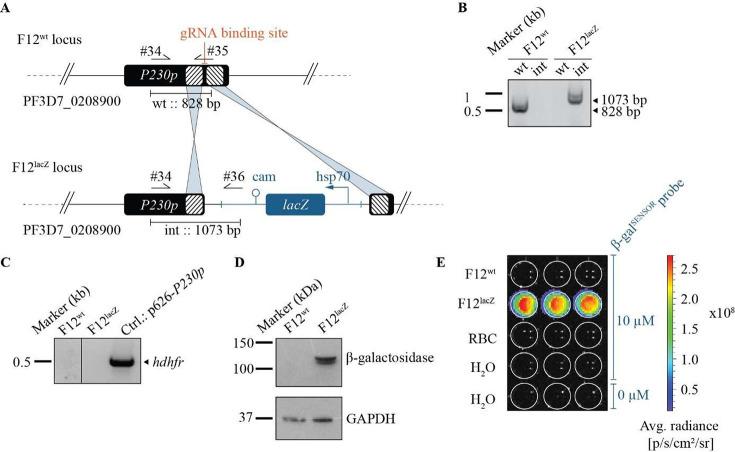
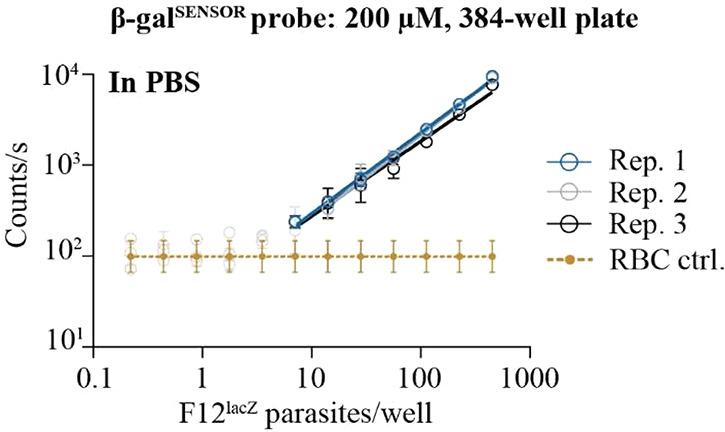
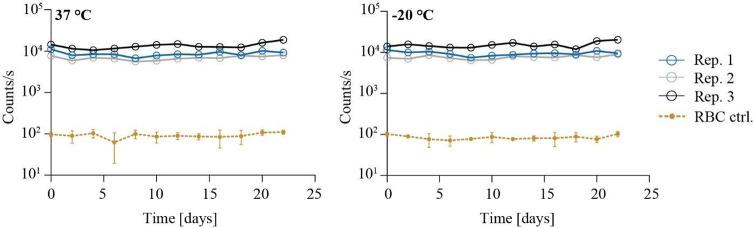
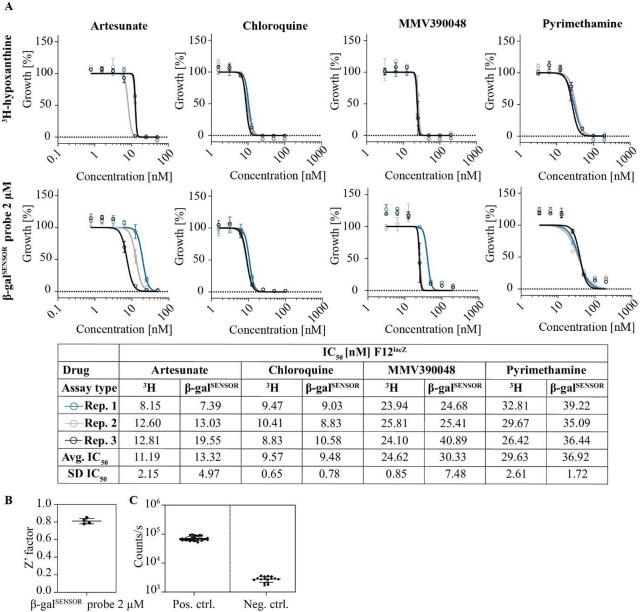
Malaria is caused by parasites of the genus and remains one of the most pressing human health problems. The spread of parasites resistant to or partially resistant to single or multiple drugs, including frontline antimalarial artemisinin and its derivatives, poses a serious threat to current and future malaria control efforts. drug assays are important for identifying new antimalarial compounds and monitoring drug resistance. Due to its robustness and ease of use, the [H]-hypoxanthine incorporation assay is still considered a gold standard and is widely applied, despite limited sensitivity and the dependence on radioactive material. Here, we present a first-of-its-kind chemiluminescence-based antimalarial drug screening assay. The effect of compounds on is monitored by using a dioxetane-based substrate (AquaSpark β-D-galactoside) that emits high-intensity luminescence upon removal of a protective group (β-D-galactoside) by a transgenic β-galactosidase reporter enzyme. This biosensor enables highly sensitive, robust, and cost-effective detection of asexual, intraerythrocytic parasites without the need for parasite enrichment, washing, or purification steps. We are convinced that the ultralow detection limit of less than 100 parasites of the presented biosensor system will become instrumental in malaria research, including but not limited to drug screening.
疟疾是由 属寄生虫引起的,仍然是最紧迫的人类健康问题之一。寄生虫对单一或多种药物(包括一线抗疟青蒿素及其衍生物)的耐药性或部分耐药性的传播,对当前和未来的疟疾控制工作构成了严重威胁。药物检测对于发现新的抗疟化合物和监测耐药性非常重要。尽管 [H]-次黄嘌呤掺入测定法的灵敏度有限且依赖放射性物质,但由于其稳健性和易用性,它仍然被认为是黄金标准,并得到了广泛应用。在这里,我们提出了一种首创的基于化学发光的抗疟药物筛选测定法。通过使用基于二氧杂环乙烷的底物(AquaSpark β-D-半乳糖苷)来监测化合物对 的影响,该底物在由转基因 β-半乳糖苷酶报告酶去除保护基团(β-D-半乳糖苷)时会发出高强度的荧光。这种生物传感器能够灵敏、稳健且经济高效地检测无性、红内期 寄生虫,而无需寄生虫富集、洗涤或纯化步骤。我们相信,所提出的生物传感器系统的超低检测限(低于 100 个寄生虫)将成为疟疾研究的有力工具,包括但不限于药物筛选。



 Zotero 插件