
非小细胞肺癌淋巴转移的研究进展。
Advances in lymphatic metastasis of non-small cell lung cancer.
机构信息
Cancer Medical Center, The Second Affiliated Hospital of Nanjing Medical University, Nanjing, 210011, China.
出版信息
Cell Commun Signal. 2024 Apr 2;22(1):201. doi: 10.1186/s12964-024-01574-1.
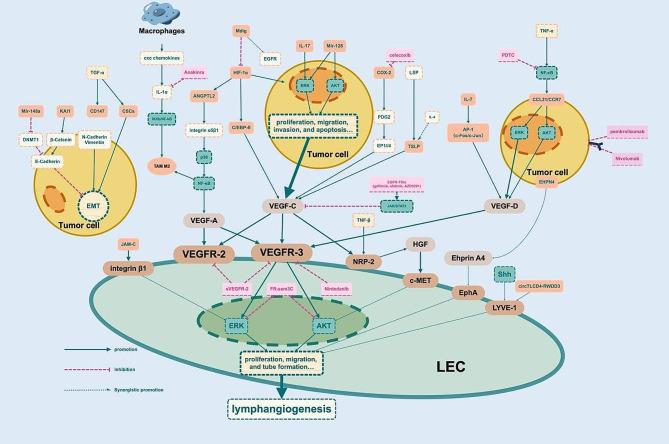
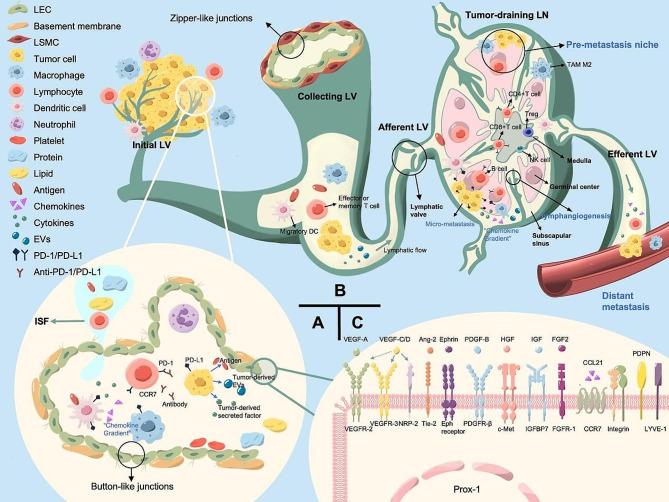
Lung cancer is a deeply malignant tumor with high incidence and mortality. Despite the rapid development of diagnosis and treatment technology, abundant patients with lung cancer are still inevitably faced with recurrence and metastasis, contributing to death. Lymphatic metastasis is the first step of distant metastasis and an important prognostic indicator of non-small cell lung cancer. Tumor-induced lymphangiogenesis is involved in the construction of the tumor microenvironment, except promoting malignant proliferation and metastasis of tumor cells, it also plays a crucial role in individual response to treatment, especially immunotherapy. Thus, this article reviews the current research status of lymphatic metastasis in non-small cell lung cancer, in order to provide some insights for the basic research and clinical and translational application in this field.
肺癌是一种恶性程度极高的肿瘤,具有较高的发病率和死亡率。尽管诊断和治疗技术发展迅速,但大量肺癌患者仍不可避免地面临复发和转移,导致死亡。淋巴转移是远处转移的第一步,也是非小细胞肺癌的重要预后指标。肿瘤诱导的淋巴管生成参与肿瘤微环境的构建,除了促进肿瘤细胞的恶性增殖和转移外,它还在个体对治疗的反应中起着至关重要的作用,特别是免疫治疗。因此,本文综述了非小细胞肺癌淋巴转移的研究现状,以期为该领域的基础研究和临床转化应用提供一些思路。
 Zotero 插件