
外源性抗坏血酸作为一种有效的抗氧化剂、渗透保护剂和脂质过氧化调节剂,在豌豆中对盐胁迫有影响。
Exogenous ascorbic acid as a potent regulator of antioxidants, osmo-protectants, and lipid peroxidation in pea under salt stress.
机构信息
Department of Botany, The Islamia University of Bahawalpur, Bahawalpur, 63100, Pakistan.
Department of Botany, University of Agriculture, Faisalabad, 38040, Pakistan.
出版信息
BMC Plant Biol. 2024 Apr 5;24(1):247. doi: 10.1186/s12870-024-04947-3.
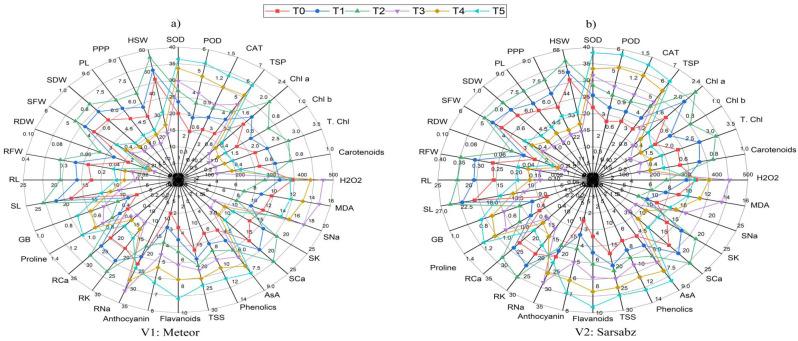
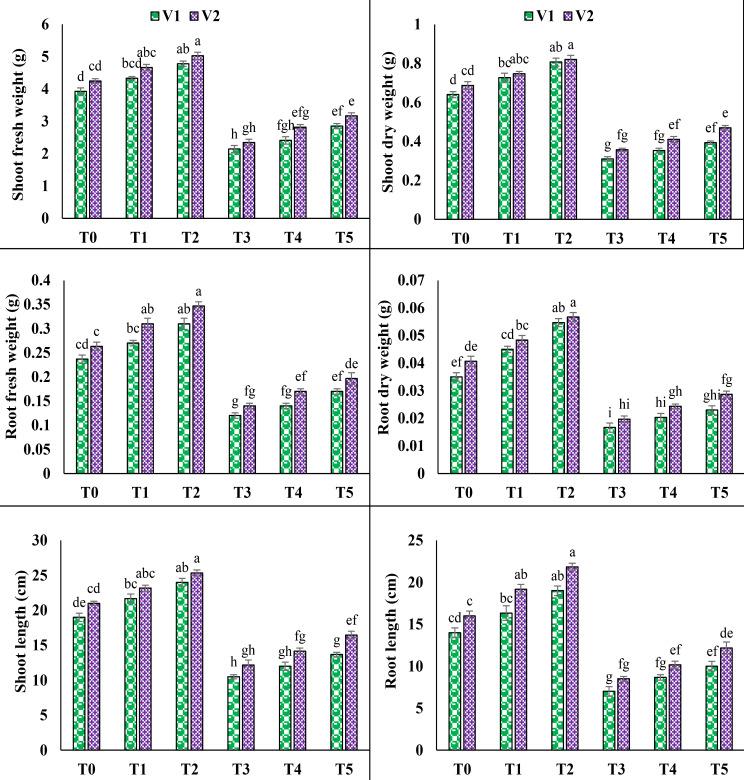
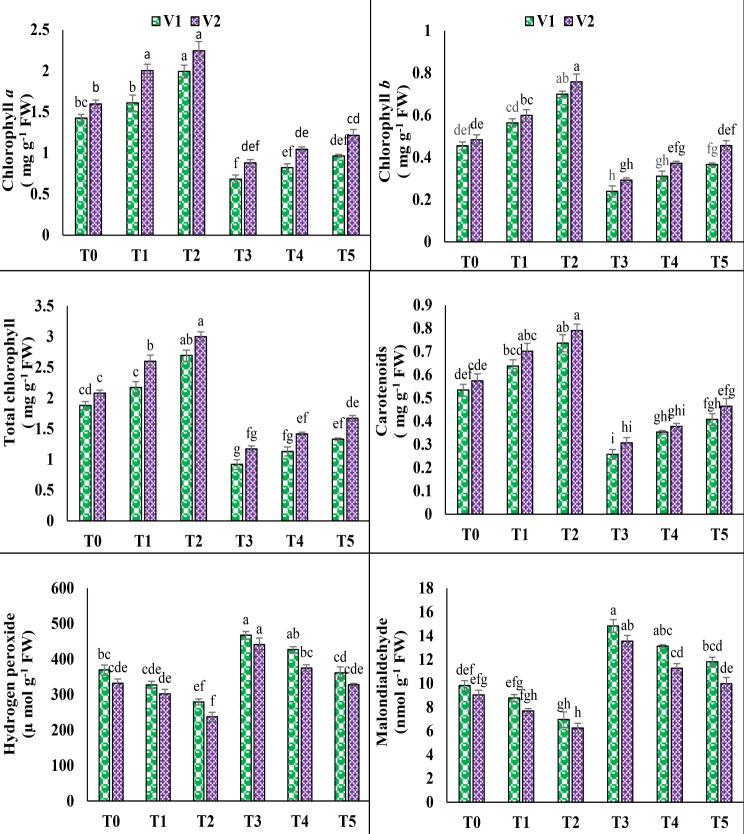
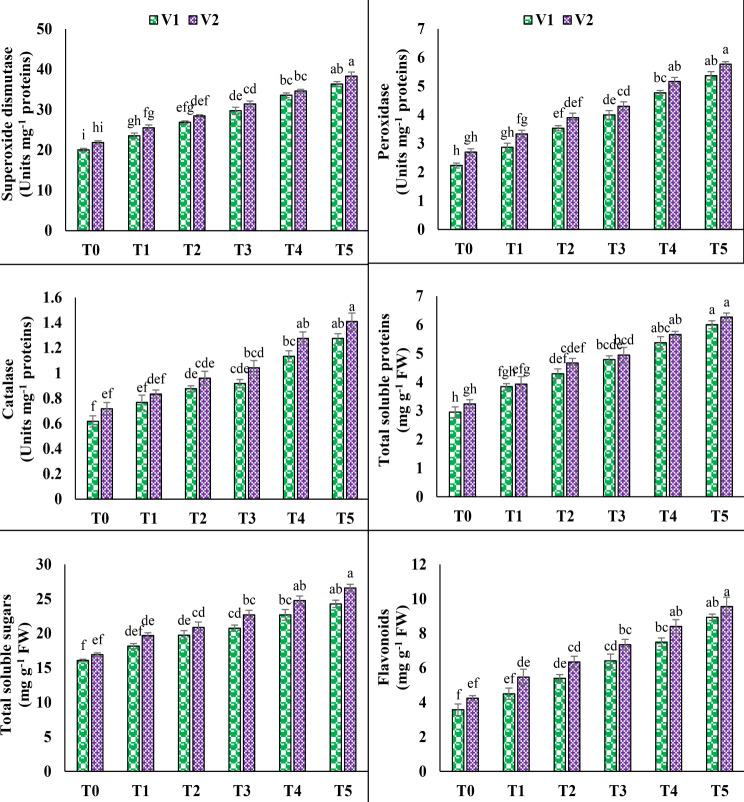
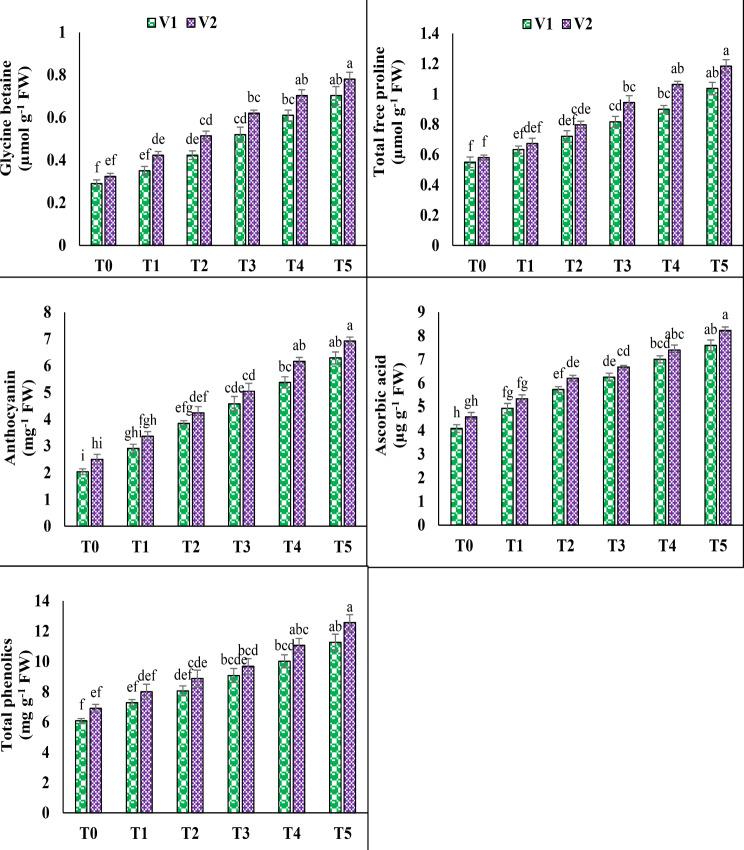
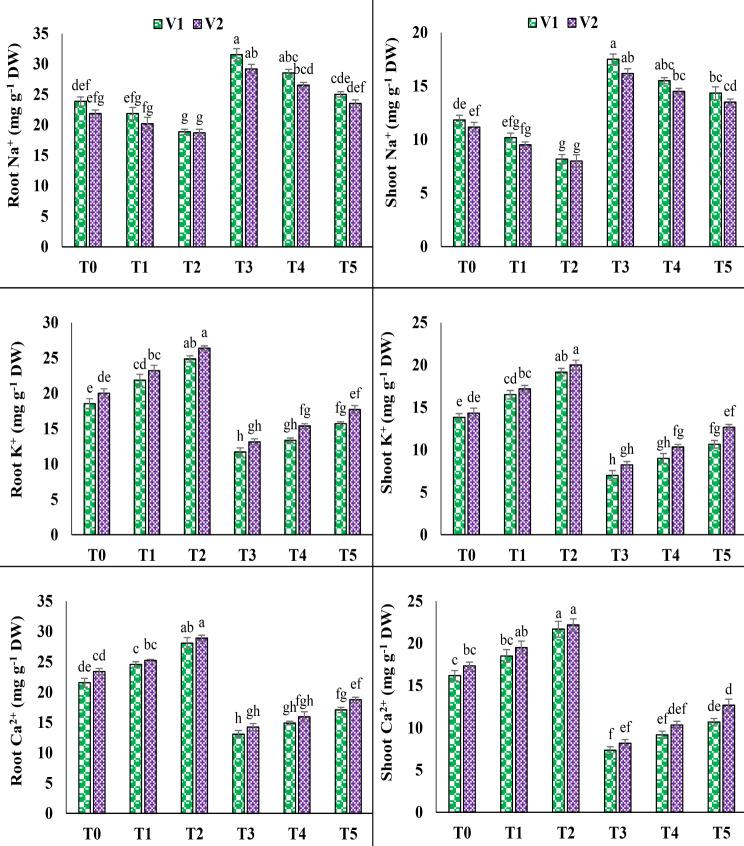
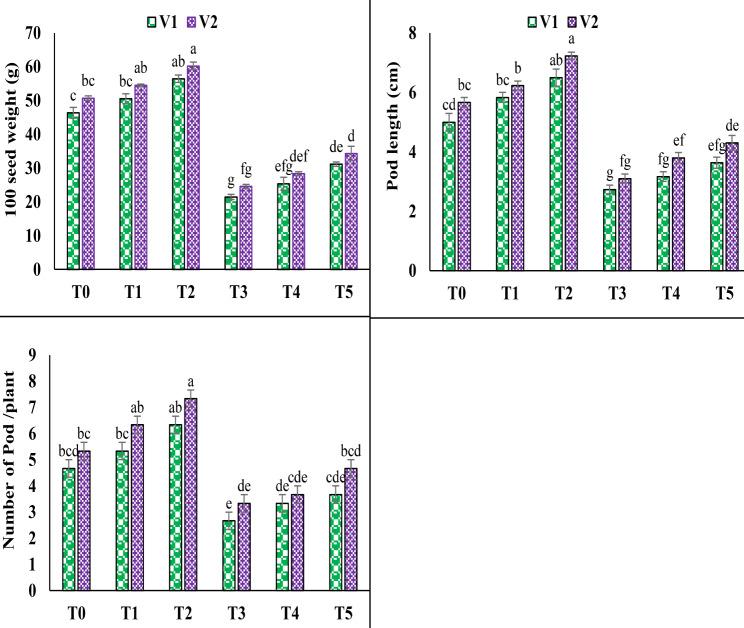
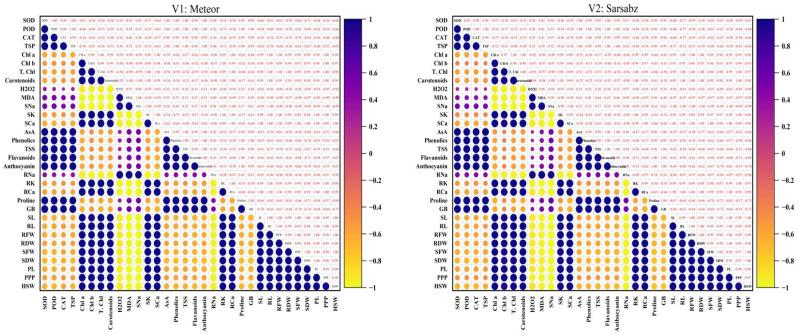
Pea (Pisum sativum L.), a globally cultivated leguminous crop valued for its nutritional and economic significance, faces a critical challenge of soil salinity, which significantly hampers crop growth and production worldwide. A pot experiment was carried out in the Botanical Garden, The Islamia University of Bahawalpur to alleviate the negative impacts of sodium chloride (NaCl) on pea through foliar application of ascorbic acid (AsA). Two pea varieties Meteor (V1) and Sarsabz (V2) were tested against salinity, i.e. 0 mM NaCl (Control) and 100 mM NaCl. Three levels of ascorbic acid 0 (Control), 5 and 10 mM were applied through foliar spray. The experimental design was completely randomized (CRD) with three replicates. Salt stress resulted in the suppression of growth, photosynthetic activity, and yield attributes in pea plants. However, the application of AsA treatments effectively alleviated these inhibitory effects. Under stress conditions, the application of AsA treatment led to a substantial increase in chlorophyll a (41.1%), chl. b (56.1%), total chl. contents (44.6%) and carotenoids (58.4%). Under salt stress, there was an increase in Na accumulation, lipid peroxidation, and the generation of reactive oxygen species (ROS). However, the application of AsA increased the contents of proline (26.9%), endogenous AsA (23.1%), total soluble sugars (17.1%), total phenolics (29.7%), and enzymatic antioxidants i.e. SOD (22.3%), POD (34.1%) and CAT (39%) in both varieties under stress. Salinity reduced the yield attributes while foliarly applied AsA increased the pod length (38.7%), number of pods per plant (40%) and 100 seed weight (45.2%). To sum up, the application of AsA alleviated salt-induced damage in pea plants by enhancing photosynthetic pigments, both enzymatic and non-enzymatic activities, maintaining ion homeostasis, and reducing excessive ROS accumulation through the limitation of lipid peroxidation. Overall, V2 (Sarsabz) performed better as compared to the V1 (Meteor).
豌豆(Pisum sativum L.)是一种全球性种植的豆科作物,以其营养价值和经济意义而备受重视,但它面临着土壤盐度的严峻挑战,这在全球范围内严重影响了作物的生长和产量。为了减轻氯化钠(NaCl)对豌豆的负面影响,在巴哈瓦尔布尔伊斯兰大学植物园进行了一项叶面喷施抗坏血酸(AsA)的豌豆盆栽实验。选用了两个豌豆品种 Meteor(V1)和 Sarsabz(V2)来对抗盐胁迫,处理方式为 0 mM NaCl(对照)和 100 mM NaCl。通过叶面喷施分别施加 0(对照)、5 和 10 mM 三种不同浓度的抗坏血酸。实验采用完全随机设计(CRD),每个处理重复 3 次。盐胁迫导致豌豆植株的生长、光合作用和产量性状受到抑制。然而,AsA 处理的应用有效地缓解了这些抑制作用。在胁迫条件下,AsA 处理导致叶绿素 a(41.1%)、叶绿素 b(56.1%)、总叶绿素含量(44.6%)和类胡萝卜素(58.4%)显著增加。在盐胁迫下,Na 积累、脂质过氧化和活性氧(ROS)的产生增加。然而,AsA 的应用增加了脯氨酸(26.9%)、内源性 AsA(23.1%)、总可溶性糖(17.1%)、总酚(29.7%)和酶抗氧化剂 SOD(22.3%)、POD(34.1%)和 CAT(39%)的含量,这两种品种在胁迫下都有提高。盐胁迫降低了产量性状,而叶面喷施 AsA 则增加了荚长(38.7%)、单株荚数(40%)和百粒重(45.2%)。总之,AsA 的应用通过增强光合作用色素、酶和非酶活性、维持离子平衡以及通过限制脂质过氧化来减少过量 ROS 积累,缓解了盐胁迫对豌豆植株的伤害。总体而言,V2(Sarsabz)比 V1(Meteor)表现更好。
 Zotero 插件