
花生(Arachis hypogaea L.)产量和品质性状的全基因组关联研究和分子标记开发。
Genome-wide association study and development of molecular markers for yield and quality traits in peanut (Arachis hypogaea L.).
机构信息
Peanut Institute, Kaifeng Academy of Agricultural and Forestry Sciences, Kaifeng, 475004, China.
Shennong Laboratory, Henan Provincial Key Laboratory for Oil Crops Improvement, Henan Academy of Crop Molecular Breeding, Henan Academy of Agricultural Sciences, Zhengzhou, 450002, China.
出版信息
BMC Plant Biol. 2024 Apr 5;24(1):244. doi: 10.1186/s12870-024-04937-5.
BACKGROUND
This study aims to decipher the genetic basis governing yield components and quality attributes of peanuts, a critical aspect for advancing molecular breeding techniques. Integrating genotype re-sequencing and phenotypic evaluations of seven yield components and two grain quality traits across four distinct environments allowed for the execution of a genome-wide association study (GWAS).
RESULTS
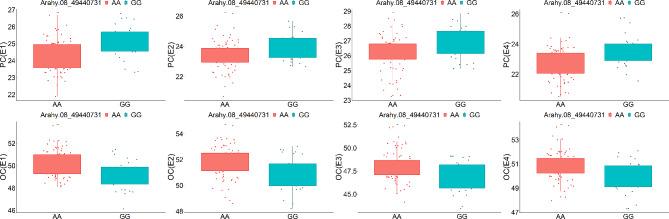
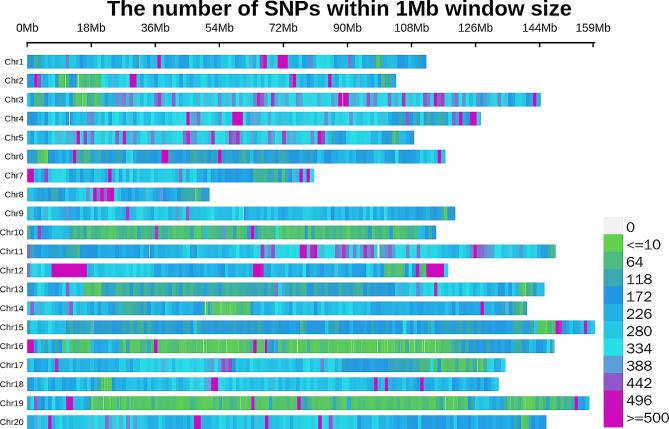
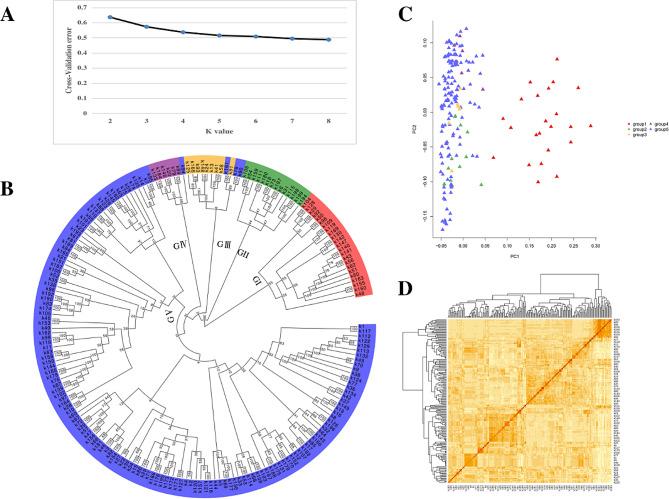
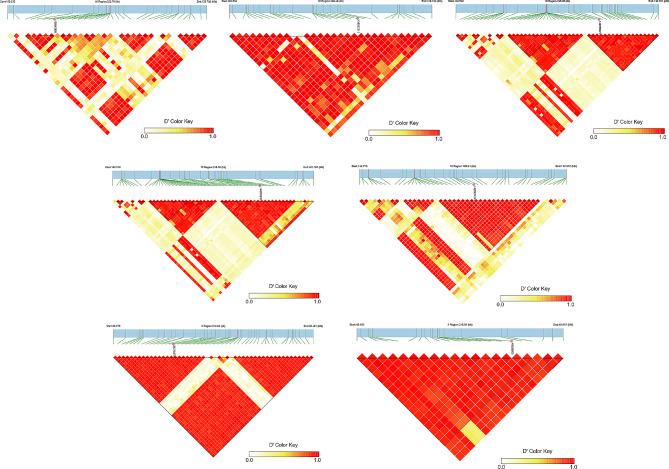
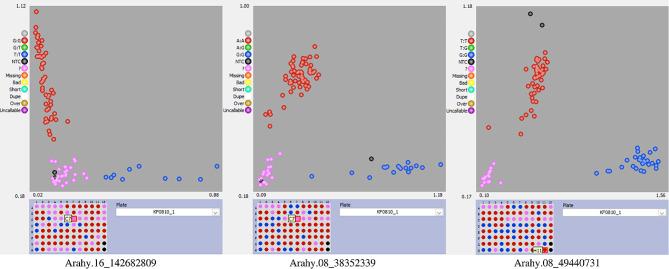
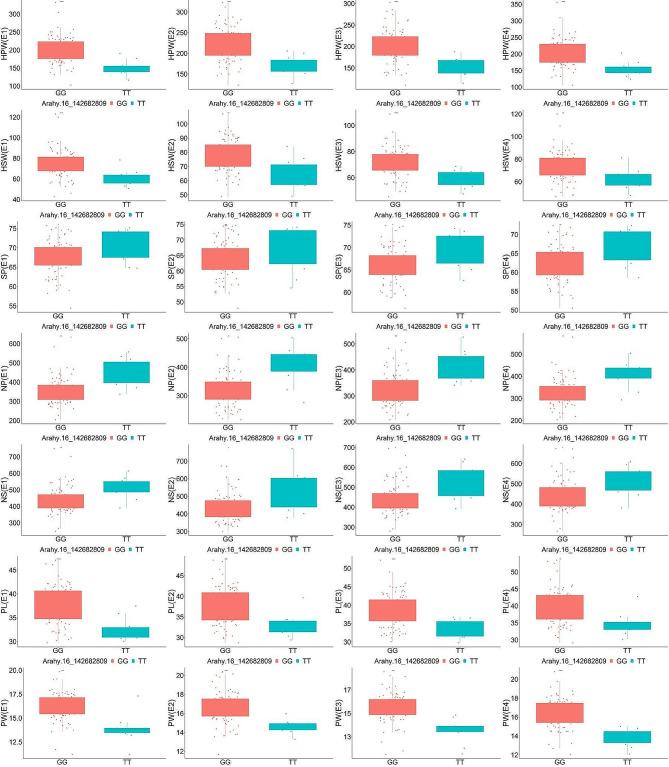
The nine phenotypic traits were all continuous and followed a normal distribution. The broad heritability ranged from 88.09 to 98.08%, and the genotype-environment interaction effects were all significant. There was a highly significant negative correlation between protein content (PC) and oil content (OC). The 10× genome re-sequencing of 199 peanut accessions yielded a total of 631,988 high-quality single nucleotide polymorphisms (SNPs), with 374 significant SNP loci identified in association with the nine traits of interest. Notably, 66 of these pertinent SNPs were detected in multiple environments, and 48 of them were linked to multiple traits of interest. Five loci situated on chromosome 16 (Chr16) exhibited pleiotropic effects on yield traits, accounting for 17.64-32.61% of the observed phenotypic variation. Two loci on Chr08 were found to be strongly associated with protein and oil contents, accounting for 12.86% and 14.06% of their respective phenotypic variations, respectively. Linkage disequilibrium (LD) block analysis of these seven loci unraveled five nonsynonymous variants, leading to the identification of one yield-related candidate gene and two quality-related candidate genes. The correlation between phenotypic variation and SNP loci in these candidate genes was validated by Kompetitive allele-specific PCR (KASP) marker analysis.
CONCLUSIONS
Overall, molecular markers were developed for genetic loci associated with yield and quality traits through a GWAS investigation of 199 peanut accessions across four distinct environments. These molecular tools can aid in the development of desirable peanut germplasm with an equilibrium of yield and quality through marker-assisted breeding.
背景
本研究旨在解析影响花生育种产量和品质的遗传基础,这对于推进分子育种技术至关重要。本研究通过整合基因型重测序和在四个不同环境下对七个产量性状和两个籽粒品质性状的表型评估,开展了全基因组关联研究(GWAS)。
结果
九个表型性状均为连续变量,呈正态分布。广义遗传力在 88.09%至 98.08%之间,基因型-环境互作效应均显著。蛋白含量(PC)和油含量(OC)呈显著负相关。对 199 份花生种质资源进行 10×基因组重测序,共获得 631988 个高质量单核苷酸多态性(SNP),其中 374 个 SNP 与 9 个感兴趣的性状显著相关。值得注意的是,其中 66 个相关 SNP 在多个环境中被检测到,48 个 SNP 与多个感兴趣的性状相关。16 号染色体(Chr16)上的 5 个位点对产量性状表现出多效性,占观测表型变异的 17.64%至 32.61%。8 号染色体上的 2 个位点与蛋白和油含量紧密相关,分别占其表型变异的 12.86%和 14.06%。对这七个位点的连锁不平衡(LD)块分析揭示了五个非同义变异,导致一个与产量相关的候选基因和两个与品质相关的候选基因的鉴定。通过 Kompetitive allele-specific PCR(KASP)标记分析,验证了候选基因中表型变异与 SNP 位点的相关性。
结论
总之,本研究通过对 199 份花生种质资源在四个不同环境下的全基因组关联研究,开发了与产量和品质性状相关的遗传位点的分子标记。这些分子工具可通过标记辅助选择育种,用于培育产量和品质均衡的理想花生种质资源。



 Zotero 插件