
MCT 诱导心衰大鼠过度脂肪消耗与 BMAL1/REV-ERBα 昼夜节律环破坏有关。
Excessive fat expenditure in MCT-induced heart failure rats is associated with BMAL1/REV-ERBα circadian rhythmic loop disruption.
机构信息
First Clinical Medical College, Shandong University of Traditional Chinese Medicine, Jinan, 250014, Shandong, China.
Department of Cardiology, Shandong University of Traditional Chinese Medicine Affiliated Hospital, No. 16369 Jingshi Road, Lixia District, Jinan, 250014, Shandong, China.
出版信息
Sci Rep. 2024 Apr 7;14(1):8128. doi: 10.1038/s41598-024-58577-8.
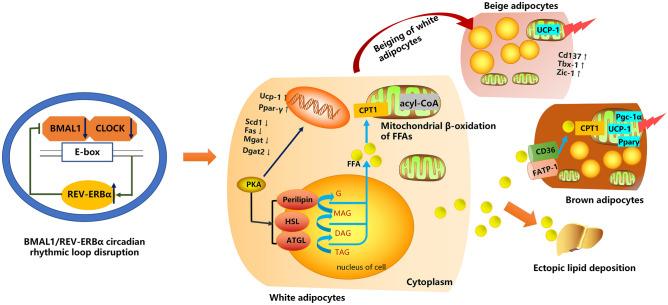
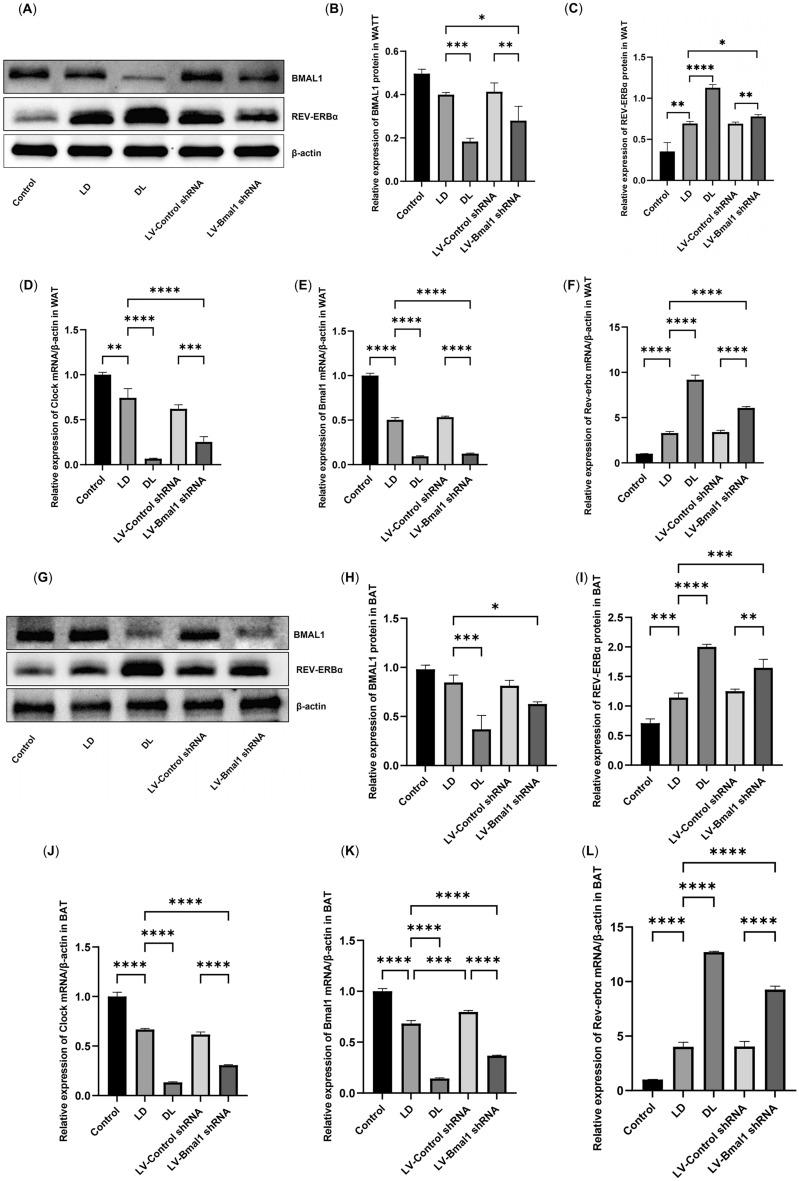
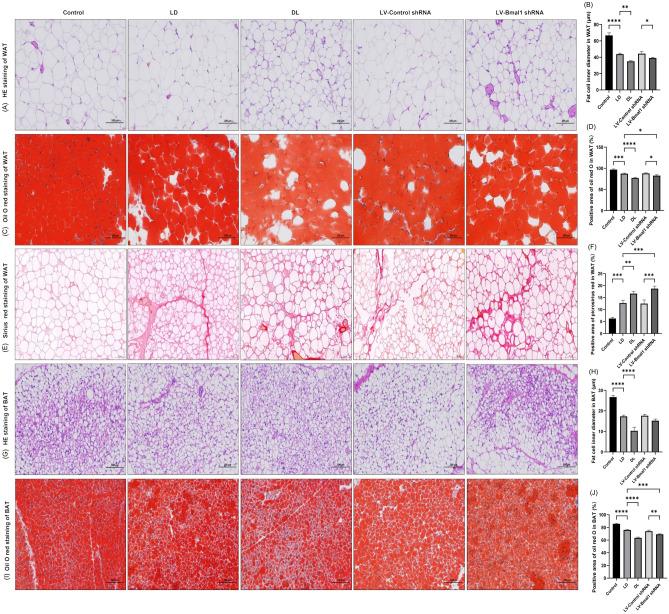
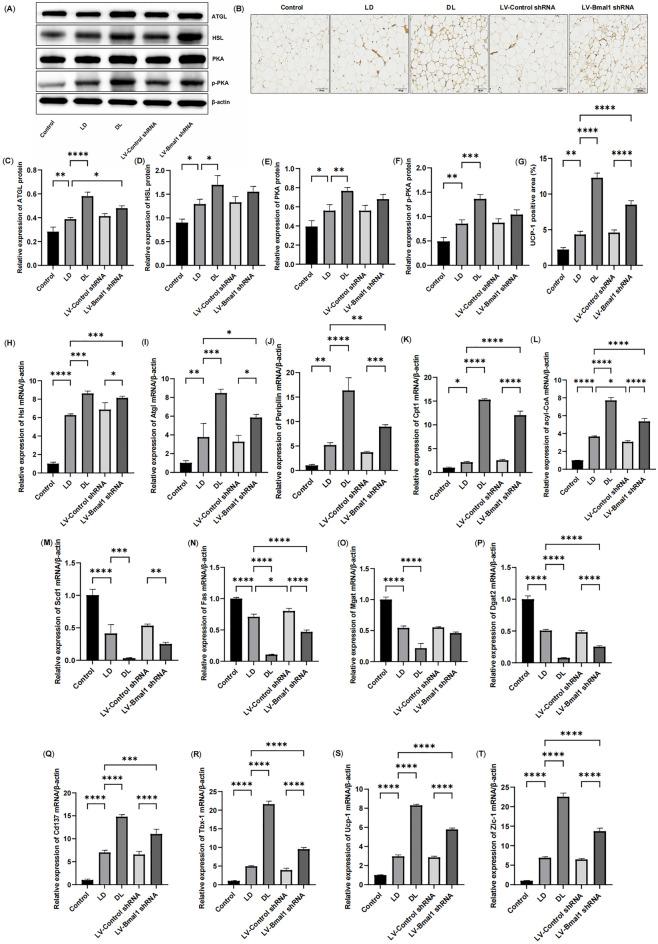
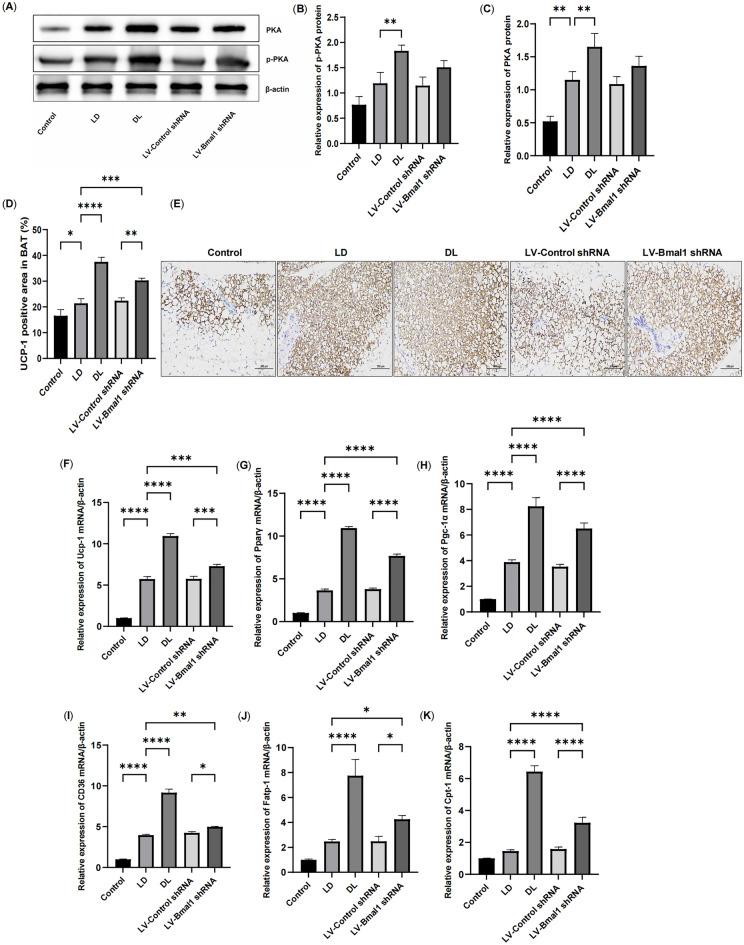
Fat loss predicts adverse outcomes in advanced heart failure (HF). Disrupted circadian clocks are a primary cause of lipid metabolic issues, but it's unclear if this disruption affects fat expenditure in HF. To address this issue, we investigated the effects of disruption of the BMAL1/REV-ERBα circadian rhythmic loop on adipose tissue metabolism in HF.50 Wistar rats were initially divided into control (n = 10) and model (n = 40) groups. The model rats were induced with HF via monocrotaline (MCT) injections, while the control group received equivalent solvent injections. After establishing the HF model, the model group was further subdivided into four groups: normal rhythm (LD), inverted rhythm (DL), lentivirus vector carrying Bmal1 short hairpin RNA (LV-Bmal1 shRNA), and empty lentivirus vector control (LV-Control shRNA) groups, each with 10 rats. The DL subgroup was exposed to a reversed light-dark cycle of 8 h: 16 h (dark: light), while the rest adhered to normal light-dark conditions (light: dark 12 h: 12 h). Histological analyses were conducted using H&E, Oil Red O, and Picrosirius red stains to examine adipose and liver tissues. Immunohistochemical staining, RT-qPCR, and Western blotting were performed to detect markers of lipolysis, lipogenesis, and beiging of white adipose tissue (WAT), while thermogenesis indicators were detected in brown adipose tissue (BAT). The LD group rats exhibited decreased levels of BMAL1 protein, increased levels of REV-ERBα protein, and disrupted circadian circuits in adipose tissue compared to controls. Additionally, HF rats showed reduced adipose mass and increased ectopic lipid deposition, along with smaller adipocytes containing lower lipid content and fibrotic adipose tissue. In the LD group WAT, expression of ATGL, HSL, PKA, and p-PKA proteins increased, alongside elevated mRNA levels of lipase genes (Hsl, Atgl, Peripilin) and FFA β-oxidation genes (Cpt1, acyl-CoA). Conversely, lipogenic gene expression (Scd1, Fas, Mgat, Dgat2) decreased, while beige adipocyte markers (Cd137, Tbx-1, Ucp-1, Zic-1) and UCP-1 protein expression increased. In BAT, HF rats exhibited elevated levels of PKA, p-PKA, and UCP-1 proteins, along with increased expression of thermogenic genes (Ucp-1, Pparγ, Pgc-1α) and lipid transportation genes (Cd36, Fatp-1, Cpt-1). Plasma NT-proBNP levels were higher in LD rats, accompanied by elevated NE and IL-6 levels in adipose tissue. Remarkably, morphologically, the adipocytes in the DL and LV-Bmal1 shRNA groups showed reduced size and lower lipid content, while lipid deposition in the liver was more pronounced in these groups compared to the LD group. At the gene/protein level, the BMAL1/REV-ERBα circadian loop exhibited severe disruption in LV-Bmal1 shRNA rats compared to LD rats. Additionally, there was increased expression of lipase genes, FFA β oxidation genes, and beige adipocyte markers in WAT, as well as higher expression of thermogenic genes and lipid transportation genes in BAT. Furthermore, plasma NT-proBNP levels and adipose tissue levels of NE and IL-6 were elevated in LV-Bmal1 shRNA rats compared with LD rats. The present study demonstrates that disruption of the BMAL1/REV-ERBα circadian rhythmic loop is associated with fat expenditure in HF. This result suggests that restoring circadian rhythms in adipose tissue may help counteract disorders of adipose metabolism and reduce fat loss in HF.
脂肪减少预测心力衰竭(HF)的不良结局。昼夜节律紊乱是脂质代谢问题的主要原因,但尚不清楚这种紊乱是否会影响 HF 中的脂肪消耗。为了解决这个问题,我们研究了破坏 BMAL1/REV-ERBα昼夜节律环对 HF 中脂肪组织代谢的影响。50 只 Wistar 大鼠最初分为对照组(n=10)和模型组(n=40)。通过给予 MCT 注射诱导 HF 模型,而对照组给予等效溶剂注射。建立 HF 模型后,模型组进一步分为四组:正常节律(LD)、反转节律(DL)、携带 Bmal1 短发夹 RNA 的慢病毒载体(LV-Bmal1 shRNA)和空载慢病毒载体对照(LV-Control shRNA)组,每组 10 只大鼠。DL 亚组暴露于 8:16 的反转明暗周期(黑暗:明亮),而其余组保持正常明暗条件(明暗 12:12 小时:小时)。使用 H&E、油红 O 和苦味酸红染色进行组织学分析,以检查脂肪和肝脏组织。免疫组织化学染色、RT-qPCR 和 Western blot 用于检测脂肪组织的脂肪分解、脂肪生成和米色化的标志物,而棕色脂肪组织(BAT)中的产热指标则进行检测。与对照组相比,LD 组大鼠的 BMAL1 蛋白水平降低,REV-ERBα 蛋白水平升高,脂肪组织中的昼夜节律环路被破坏。此外,HF 大鼠的脂肪质量减少,异位脂质沉积增加,脂肪细胞变小,脂质含量降低,纤维性脂肪组织增加。在 LD 组 WAT 中,ATGL、HSL、PKA 和 p-PKA 蛋白表达增加,同时脂肪酶基因(Hsl、Atgl、Peripilin)和 FFA β氧化基因(Cpt1、酰基辅酶 A)的 mRNA 水平升高。相反,脂肪生成基因表达(Scd1、Fas、Mgat、Dgat2)降低,而米色脂肪细胞标志物(Cd137、Tbx-1、Ucp-1、Zic-1)和 UCP-1 蛋白表达增加。在 BAT 中,HF 大鼠的 PKA、p-PKA 和 UCP-1 蛋白水平升高,同时产热基因(Ucp-1、Pparγ、Pgc-1α)和脂质转运基因(Cd36、Fatp-1、Cpt-1)的表达增加。LD 大鼠的血浆 NT-proBNP 水平升高,同时脂肪组织中的 NE 和 IL-6 水平升高。值得注意的是,形态学上,DL 和 LV-Bmal1 shRNA 组的脂肪细胞体积减小,脂质含量降低,而与 LD 组相比,这些组的肝脏脂质沉积更为明显。在基因/蛋白水平上,LV-Bmal1 shRNA 大鼠的 BMAL1/REV-ERBα 昼夜节律环与 LD 大鼠相比严重受损。此外,WAT 中脂肪酶基因、FFA β氧化基因和米色脂肪细胞标志物的表达增加,BAT 中产热基因和脂质转运基因的表达增加。此外,与 LD 大鼠相比,LV-Bmal1 shRNA 大鼠的血浆 NT-proBNP 水平和脂肪组织中 NE 和 IL-6 的水平升高。本研究表明,破坏 BMAL1/REV-ERBα 昼夜节律环与 HF 中的脂肪消耗有关。这一结果表明,恢复脂肪组织的昼夜节律可能有助于对抗脂肪代谢紊乱,减少 HF 中的脂肪损失。


 Zotero 插件