
代糖对致龋菌临床效果的系统评价和荟萃分析
Clinical Effects of Sugar Substitutes on Cariogenic Bacteria: A Systematic Review and Meta-Analysis.
机构信息
Faculty of Dentistry, The University of Hong Kong, Hong Kong SAR, China.
Faculty of Dentistry, The University of Hong Kong, Hong Kong SAR, China; College of Dentistry, The Ohio State University, Columbus, Ohio, USA.
出版信息
Int Dent J. 2024 Oct;74(5):987-998. doi: 10.1016/j.identj.2024.02.008. Epub 2024 Apr 10.
BACKGROUND
The use of sugar substitutes in food products has recently increased. Limited information regarding the role of various sugar substitutes in caries prevention was found. This systematic review and meta-analysis was conducted to investigate the effects of sugar substitute consumption on reducing cariogenic bacteria in dental plaque and saliva.
METHODS
We systematically searched PubMed, EMBASE, and Web of Science (inception to July 2023) for prospective controlled trials published in English and investigated the effects of sugar substitute consumption on cariogenic bacteria in dental plaque and saliva. The primary outcome was the changes in cariogenic bacteria. Two independent reviewers screened the papers. Quality was assessed using the Cochrane risk-of-bias tools.
RESULTS
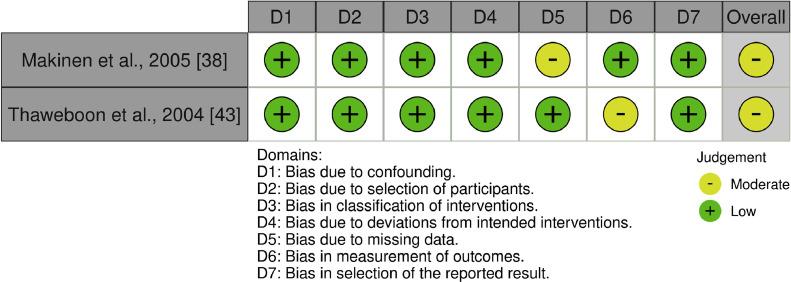
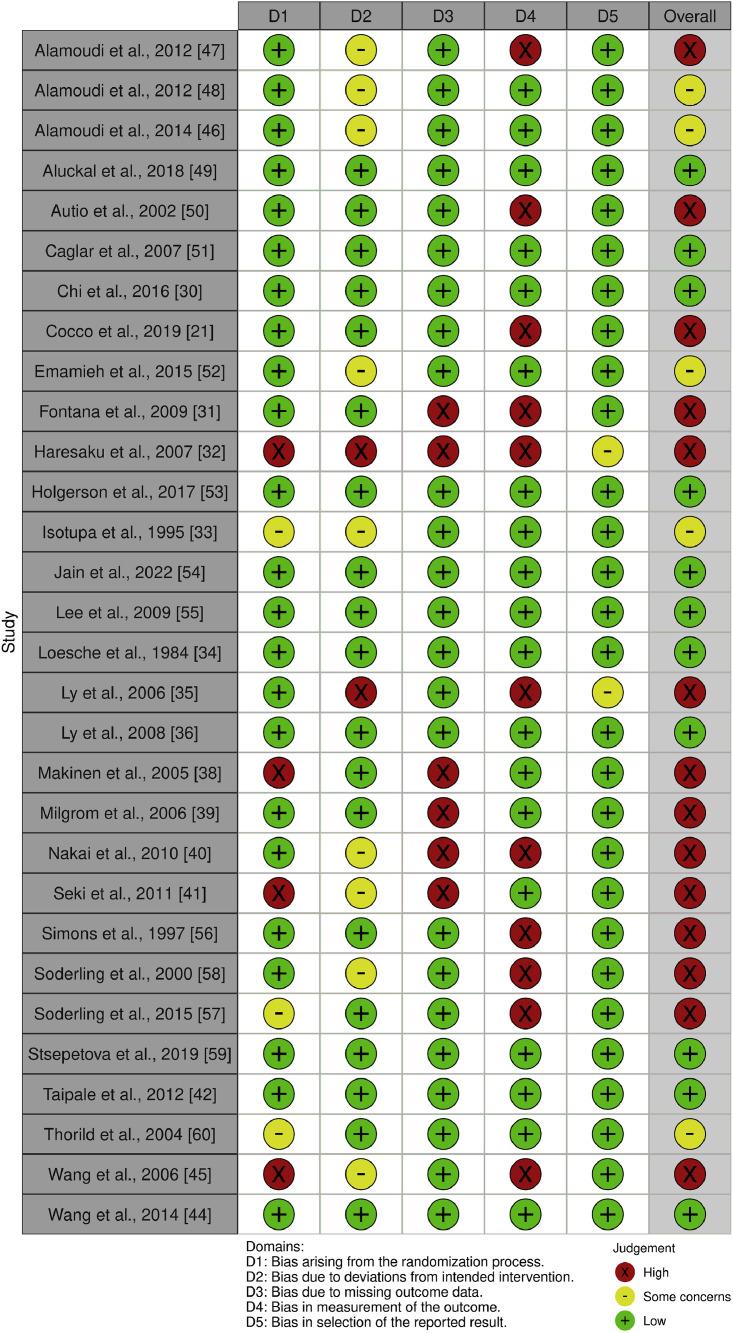
From 977 studies identified, 32 trials were included. Almost half (14/32, 44%) of the included studies had a high risk of bias. Almost all (31/32, 96.88%) were investigations of xylitol and other sugar alcohols (low-intensity sweeteners), such as sorbitol, erythritol, and maltitol. Only one trial investigated stevia, a high-intensity sweetener, whereas no studies on other high-intensity sweeteners, such as sucralose, saccharin, or aspartame, were found. Almost all studies (30/32, 93.75%) showed the consumption of low-intensity sweeteners led to a significant reduction of different types of cariogenic bacteria. The results of the meta-analysis showed that consumption of low-intensity sweeteners led to a significant reduction of cariogenic bacteria in both dental plaque and saliva compared to no treatment.
CONCLUSION
The consumption of low-intensity sweeteners helps reduce cariogenic bacteria in dental plaque and saliva. There is limited clinical evidence regarding the role of high-intensity sweeteners in reducing cariogenic bacteria.
背景
食品中糖替代品的使用最近有所增加。关于各种糖替代品在预防龋齿方面的作用,我们发现的信息有限。本系统评价和荟萃分析旨在调查糖替代品的消耗对减少牙菌斑和唾液中致龋细菌的影响。
方法
我们系统地检索了 PubMed、EMBASE 和 Web of Science(从创建到 2023 年 7 月),以查找以英文发表的前瞻性对照试验,并研究了糖替代品消耗对牙菌斑和唾液中致龋细菌的影响。主要结果是致龋细菌的变化。两位独立的审查员筛选了这些论文。使用 Cochrane 偏倚风险工具评估质量。
结果
从 977 项确定的研究中,有 32 项试验被纳入。几乎一半(14/32,44%)的纳入研究存在高偏倚风险。几乎所有(31/32,96.88%)都是对木糖醇和其他糖醇(低强度甜味剂)的研究,如山梨糖醇、赤藓糖醇和麦芽糖醇。只有一项试验研究了甜菊糖,一种高强度甜味剂,而没有发现其他高强度甜味剂(如三氯蔗糖、糖精或阿斯巴甜)的研究。几乎所有的研究(30/32,93.75%)都表明,低强度甜味剂的消耗导致不同类型的致龋细菌显著减少。荟萃分析的结果表明,与不治疗相比,低强度甜味剂的消耗导致牙菌斑和唾液中的致龋细菌显著减少。
结论
低强度甜味剂的消耗有助于减少牙菌斑和唾液中的致龋细菌。高强度甜味剂在减少致龋细菌方面的临床证据有限。





 Zotero 插件