
基因表达综合数据库(GEO)数据集挖掘分析揭示了小鼠体内新的毒力基因调控网络和诊断靶点。
GEO dataset mining analysis reveals novel virulence gene regulatory networks and diagnostic targets in mice.
作者信息
Xu Guangyu, Yang Yue, Lin Yan, Bai Yu
机构信息
College of Pharmacy, Beihua University, Jilin, China.
School of Basic Medical Sciences, Beihua University, Jilin, China.
出版信息
Front Mol Biosci. 2024 Mar 28;11:1381334. doi: 10.3389/fmolb.2024.1381334. eCollection 2024.
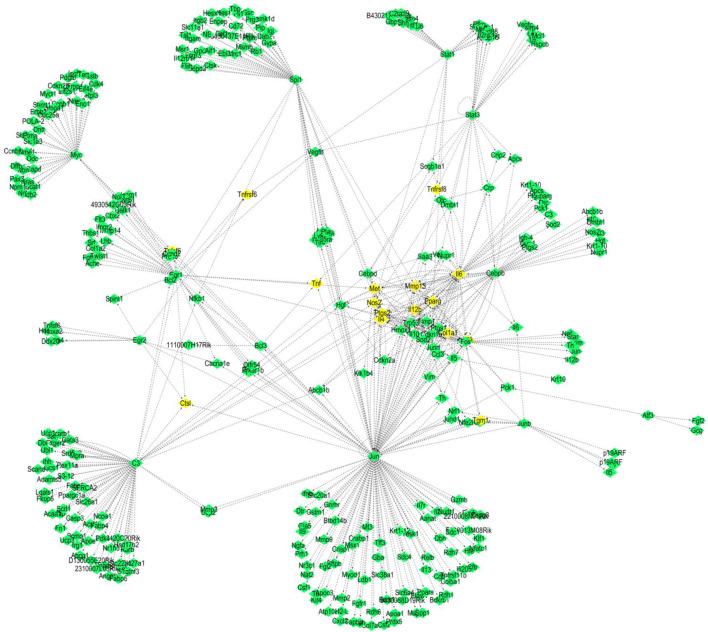
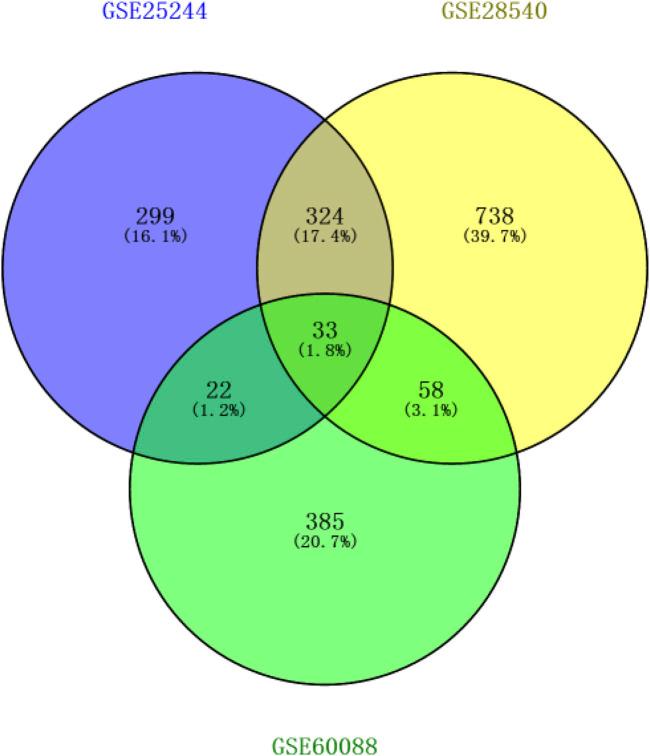
infection is a serious, worldwide health concern, particularly in many communities and hospitals. Understanding the pathogenetic regulatory network will provide significant insights into diagnostic target screening to improve clinical treatment of diseases caused by . We screened differentially expressed genes between normal mice and -infected mice. We used the Gene Expression Omnibus (GEO) DataSets database for functional analysis (GO-analysis) and the DAVID and KEGG databases for signaling pathway analyses. We next integrated the gene and pathway analyses with Transcriptional Regulatory Element Database (TRED) to build an antimicrobial resistance gene regulatory network of . We performed association analysis of network genes and diseases using DAVID online annotation tools. We identified a total of 437 virulence genes and 15 transcription factors (TFs), as well as 444 corresponding target genes, in the TF regulatory network. We screened seven key network nodes (, , , , , , and ), four key transcription factors (, , , and ) and an important signaling pathway (TNF). We hypothesized that the cytokine activity and growth factor activity of are combinatorically cross-regulated by , , , , T, , and genes, the TFs , , , and , as well as the immune response, cellular response to lipopolysaccharide, and inflammatory response. Our study provides information and reference values for the molecular understanding of the pathogenetic gene regulatory network.
感染是一个严重的全球性健康问题,在许多社区和医院尤其如此。了解致病调控网络将为诊断靶点筛选提供重要见解,以改善由[病原体名称]引起的疾病的临床治疗。我们筛选了正常小鼠和[病原体名称]感染小鼠之间的差异表达基因。我们使用基因表达综合数据库(GEO)进行功能分析(基因本体分析),并使用DAVID和KEGG数据库进行信号通路分析。接下来,我们将基因和通路分析与转录调控元件数据库(TRED)整合,构建[病原体名称]的抗菌抗性基因调控网络。我们使用DAVID在线注释工具对网络基因和疾病进行关联分析。在[病原体名称]转录因子调控网络中,我们共鉴定出437个毒力基因、15个转录因子(TFs)以及444个相应的靶基因。我们筛选出7个关键网络节点([节点名称1]、[节点名称2]、[节点名称3]、[节点名称4]、[节点名称5]、[节点名称6]和[节点名称7])、4个关键转录因子([转录因子名称1]、[转录因子名称2]、[转录因子名称3]和[转录因子名称4])以及一条重要的信号通路(肿瘤坏死因子,TNF)。我们假设[病原体名称]的细胞因子活性和生长因子活性受到[基因名称1]、[基因名称2]、[基因名称3]、[基因名称4]、[基因名称5]、[基因名称6]和[基因名称7]基因、转录因子[转录因子名称1]、[转录因子名称2]、[转录因子名称3]和[转录因子名称4]以及免疫反应、细胞对脂多糖的反应和炎症反应的组合交叉调控。我们的研究为从分子层面理解[病原体名称]致病基因调控网络提供了信息和参考价值。
 Zotero 插件