
一种基于激光合成的Pd/LIG纳米复合材料修饰丝网印刷电极的一次性电化学传感器用于检测HO。 (注:原文中“Non-Disposable”应为“Disposable”,否则语义不通,以上是按照修正后翻译的。)
A Non-Disposable Electrochemical Sensor Based on Laser-Synthesized Pd/LIG Nanocomposite-Modified Screen-Printed Electrodes for the Detection of HO.
作者信息
Song Ruijie, Zhang Jianwei, Yang Ge, Wu Yu, Yu Jun, Zhu Huichao
机构信息
Department of the School of Medicine, Dalian University of Technology, Dalian 116024, China.
Department of the School of Control Science and Engineering, Dalian University of Technology, Dalian 116024, China.
出版信息
Sensors (Basel). 2024 Mar 22;24(7):2043. doi: 10.3390/s24072043.
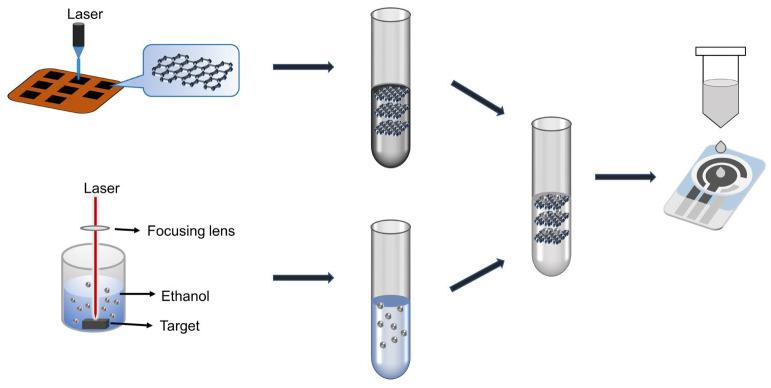
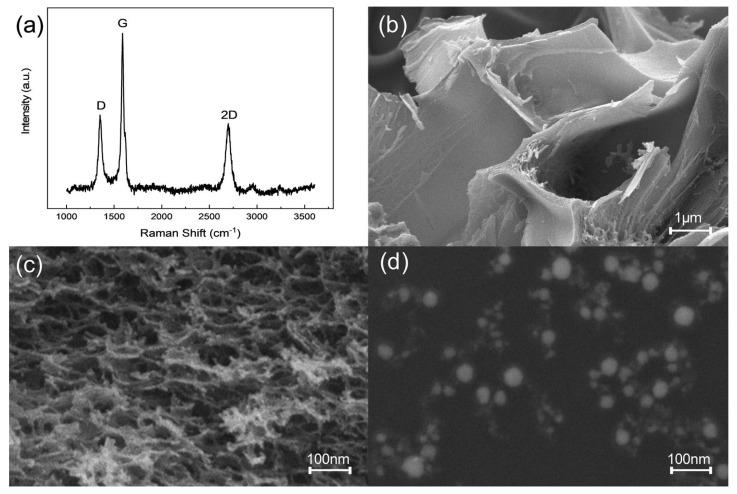
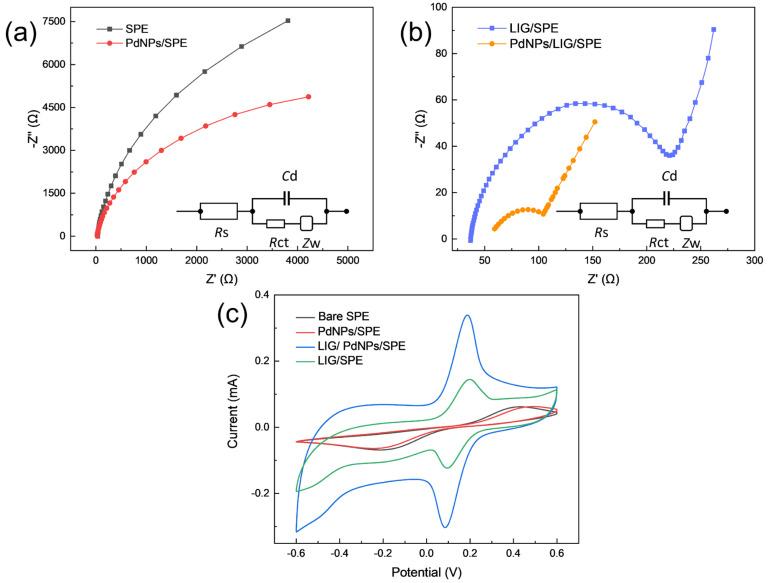
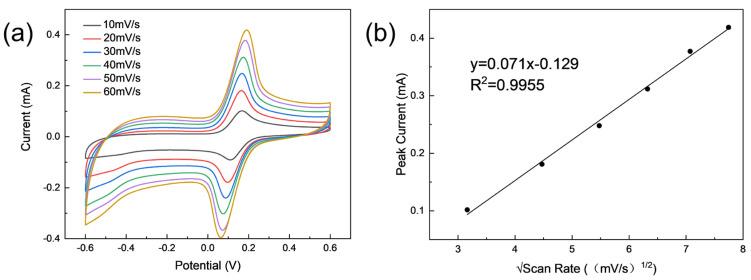
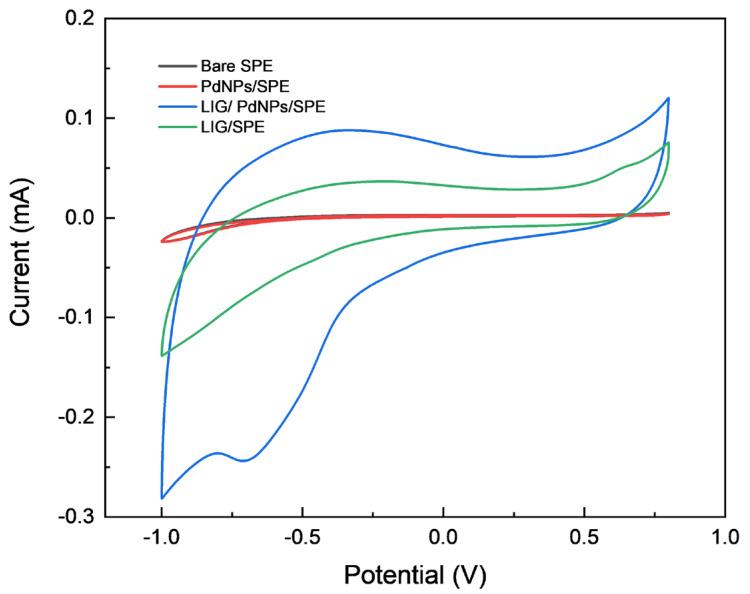
There have been many studies on the significant correlation between the hydrogen peroxide content of different tissues or cells in the human body and the risk of disease, so the preparation of biosensors for detecting hydrogen peroxide concentration has been a hot topic for researchers. In this paper, palladium nanoparticles (PdNPs) and laser-induced graphene (LIG) were prepared by liquid-phase pulsed laser ablation and laser-induced technology, respectively. The complexes were prepared by stirring and used for the modification of screen-printed electrodes to develop a non-enzymatic hydrogen peroxide biosensor that is low cost and mass preparable. The PdNPs prepared with anhydrous ethanol as a solvent have a uniform particle size distribution. The LIG prepared by laser direct writing has good electrical conductivity, and its loose porous structure provides more adsorption sites. The electrochemical properties of the modified electrode were characterized by cyclic voltammetry, chronoamperometry, and electrochemical impedance spectroscopy. Compared with bare screen-printed electrodes, the modified electrodes are more sensitive for the detection of hydrogen peroxide. The sensor has a linear response range of 5 µM-0.9 mM and 0.9 mM-5 mM. The limit of detection is 0.37 µM. The above conclusions indicate that the hydrogen peroxide electrochemical biosensor prepared in this paper has great advantages and potential in electrochemical catalysis.
关于人体不同组织或细胞中过氧化氢含量与疾病风险之间的显著相关性已有许多研究,因此制备用于检测过氧化氢浓度的生物传感器一直是研究人员的热门话题。本文分别通过液相脉冲激光烧蚀法和激光诱导技术制备了钯纳米颗粒(PdNPs)和激光诱导石墨烯(LIG)。通过搅拌制备复合物,并将其用于丝网印刷电极的修饰,以开发一种低成本且可大规模制备的非酶过氧化氢生物传感器。以无水乙醇为溶剂制备的PdNPs粒径分布均匀。通过激光直写制备的LIG具有良好的导电性,其疏松多孔结构提供了更多的吸附位点。采用循环伏安法、计时电流法和电化学阻抗谱对修饰电极的电化学性能进行了表征。与裸丝网印刷电极相比,修饰电极对过氧化氢的检测更灵敏。该传感器的线性响应范围为5 μM - 0.9 mM和0.9 mM - 5 mM。检测限为0.37 μM。上述结论表明,本文制备的过氧化氢电化学生物传感器在电化学催化方面具有很大的优势和潜力。



 Zotero 插件