
精准肿瘤学时代乳腺癌相关差异的生物学基础。
Biological Basis of Breast Cancer-Related Disparities in Precision Oncology Era.
机构信息
Laboratory of Animal Histology, Faculty of Biology, "Alexandru Ioan Cuza" University of Iași, Carol I bvd. 20A, 700505 Iasi, Romania.
Biochemistry & Proteomics Laboratories, Department of Chemistry and Biochemistry, Clarkson University, Potsdam, NY 13699-5810, USA.
出版信息
Int J Mol Sci. 2024 Apr 8;25(7):4113. doi: 10.3390/ijms25074113.
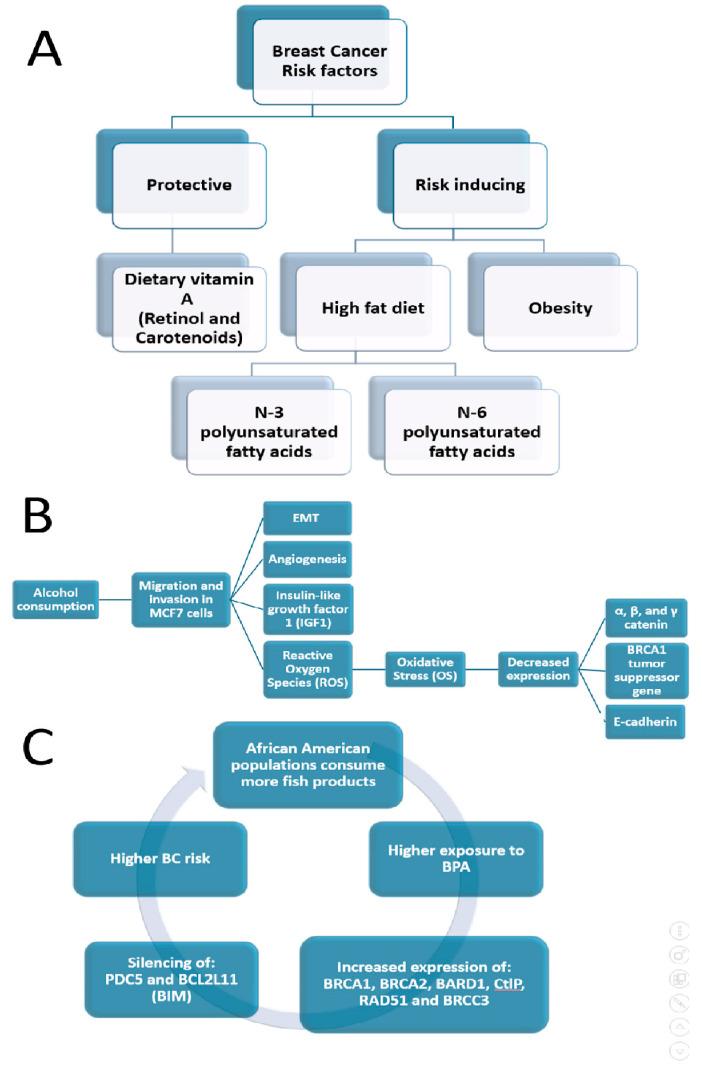
Precision oncology is based on deep knowledge of the molecular profile of tumors, allowing for more accurate and personalized therapy for specific groups of patients who are different in disease susceptibility as well as treatment response. Thus, onco-breastomics is able to discover novel biomarkers that have been found to have racial and ethnic differences, among other types of disparities such as chronological or biological age-, sex/gender- or environmental-related ones. Usually, evidence suggests that breast cancer (BC) disparities are due to ethnicity, aging rate, socioeconomic position, environmental or chemical exposures, psycho-social stressors, comorbidities, Western lifestyle, poverty and rurality, or organizational and health care system factors or access. The aim of this review was to deepen the understanding of BC-related disparities, mainly from a biomedical perspective, which includes genomic-based differences, disparities in breast tumor biology and developmental biology, differences in breast tumors' immune and metabolic landscapes, ecological factors involved in these disparities as well as microbiomics- and metagenomics-based disparities in BC. We can conclude that onco-breastomics, in principle, based on genomics, proteomics, epigenomics, hormonomics, metabolomics and exposomics data, is able to characterize the multiple biological processes and molecular pathways involved in BC disparities, clarifying the differences in incidence, mortality and treatment response for different groups of BC patients.
精准肿瘤学基于对肿瘤分子谱的深入了解,能够为具有不同疾病易感性和治疗反应的特定患者群体提供更准确和个性化的治疗。因此,肿瘤组学生物标志物能够发现具有种族和民族差异的新型生物标志物,以及其他类型的差异,如年龄、性别/性别或与环境相关的差异。通常,有证据表明,乳腺癌(BC)的差异归因于种族、衰老速度、社会经济地位、环境或化学暴露、心理社会压力源、合并症、西方生活方式、贫困和农村地区,或组织和医疗保健系统因素或获得途径。本综述的目的是加深对 BC 相关差异的理解,主要从生物医学角度出发,其中包括基于基因组的差异、乳腺肿瘤生物学和发育生物学的差异、乳腺肿瘤免疫和代谢景观的差异、涉及这些差异的生态因素以及基于微生物组学和宏基因组学的 BC 差异。我们可以得出结论,基于基因组学、蛋白质组学、表观基因组学、激素组学、代谢组学和暴露组学数据的肿瘤组学生物标志物,能够描述参与 BC 差异的多个生物学过程和分子途径,阐明不同 BC 患者群体在发病率、死亡率和治疗反应方面的差异。

 Zotero 插件