
自身免疫性疾病与B细胞急性淋巴细胞白血病之间的共享遗传结构:来自大规模全基因组跨性状分析的见解
Shared genetic architecture between autoimmune disorders and B-cell acute lymphoblastic leukemia: insights from large-scale genome-wide cross-trait analysis.
作者信息
Yu Xinghao, Chen Yiyin, Chen Jia, Fan Yi, Lu Huimin, Wu Depei, Xu Yang
机构信息
National Clinical Research Center for Hematologic Diseases, Jiangsu Institute of Hematology, The First Affiliated Hospital of Soochow University, Suzhou, China.
Collaborative Innovation Center of Hematology, Institute of Blood and Marrow Transplantation, Soochow University, Suzhou, China.
出版信息
BMC Med. 2024 Apr 15;22(1):161. doi: 10.1186/s12916-024-03385-0.
BACKGROUND
To study the shared genetic structure between autoimmune diseases and B-cell acute lymphoblastic leukemia (B-ALL) and identify the shared risk loci and genes and genetic mechanisms involved.
METHODS
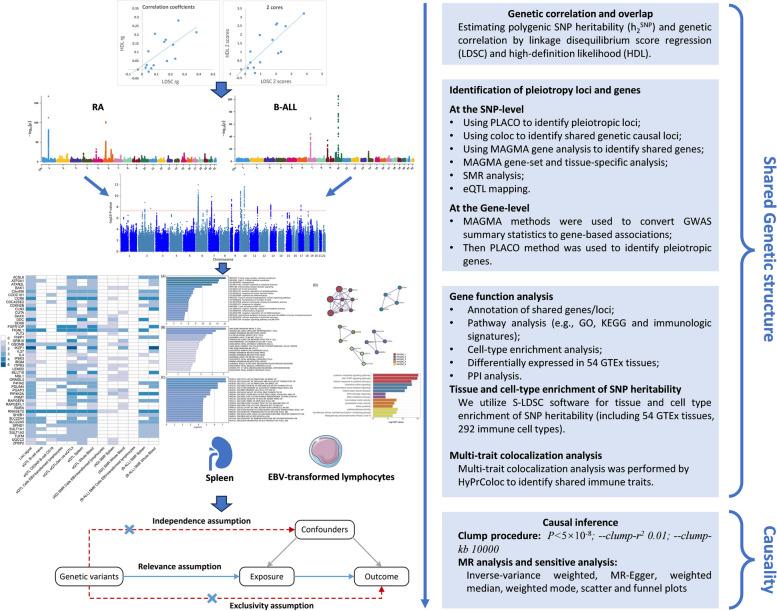
Based on large-scale genome-wide association study (GWAS) summary-level data sets, we observed genetic overlaps between autoimmune diseases and B-ALL, and cross-trait pleiotropic analysis was performed to detect shared pleiotropic loci and genes. A series of functional annotation and tissue-specific analysis were performed to determine the influence of pleiotropic genes. The heritability enrichment analysis was used to detect crucial immune cells and tissues. Finally, bidirectional Mendelian randomization (MR) methods were utilized to investigate the casual associations.
RESULTS
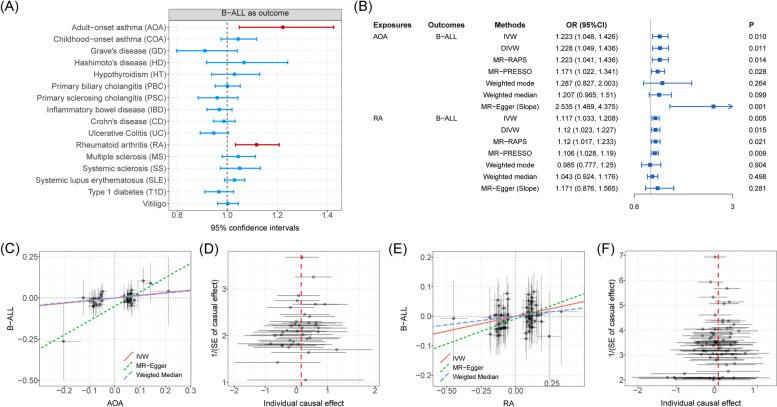
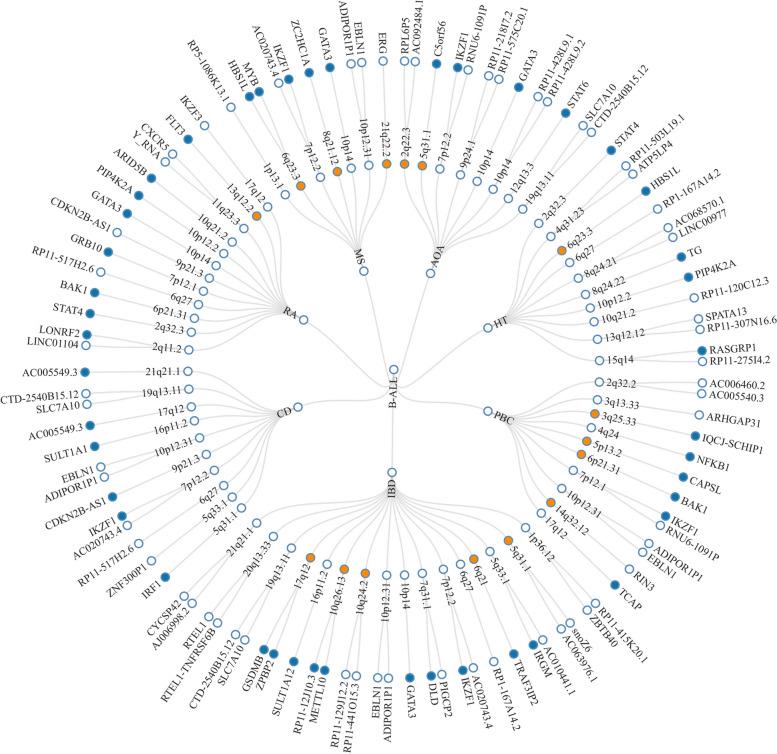
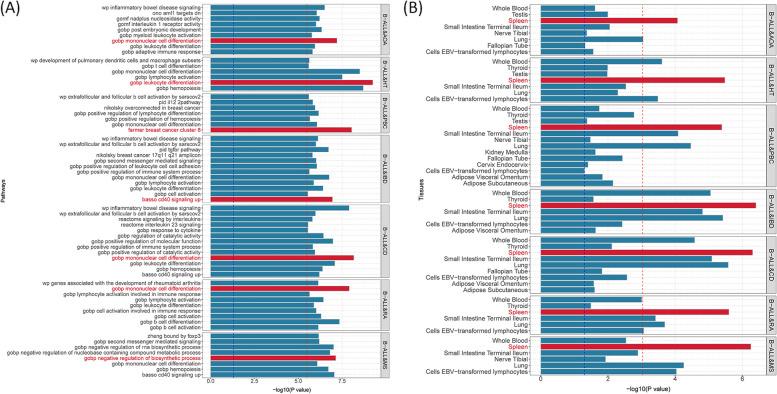
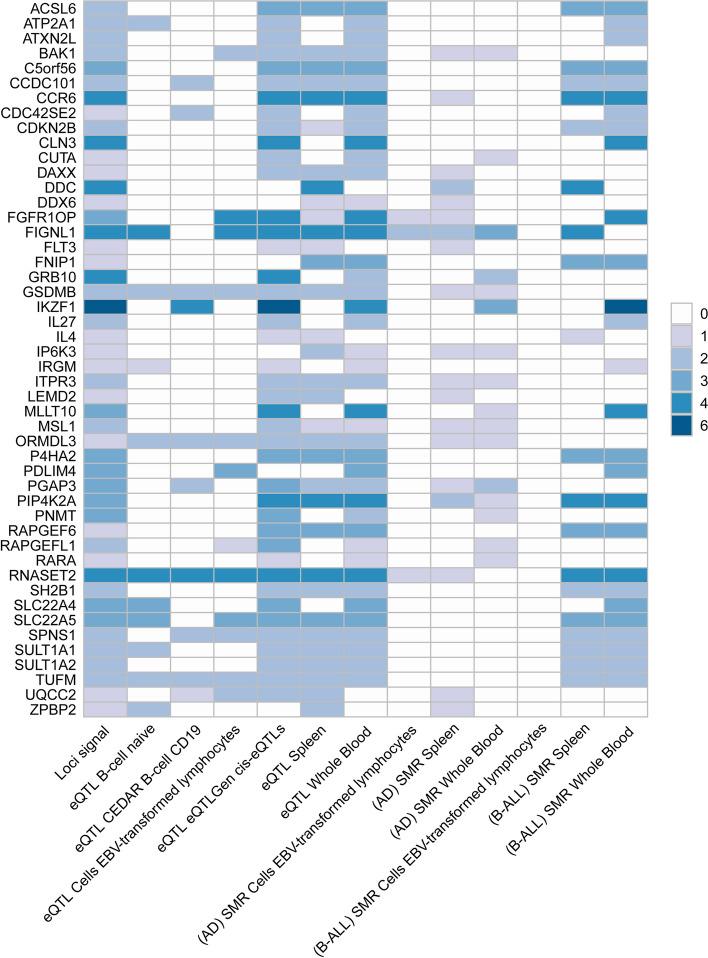
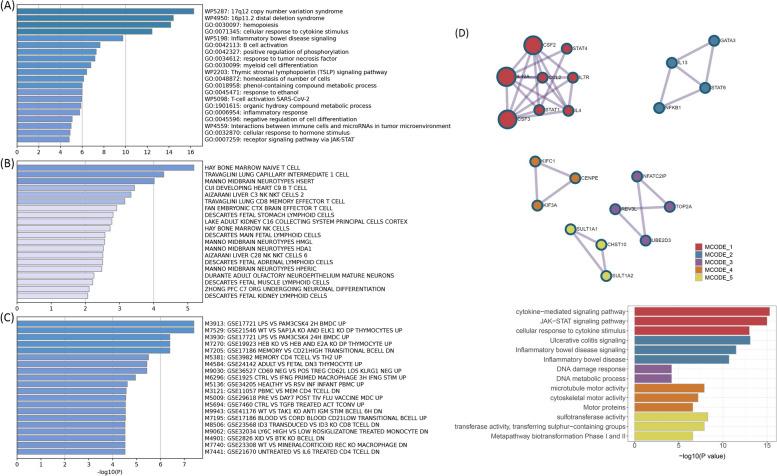
Our research highlighted shared genetic mechanisms between seven autoimmune disorders and B-ALL. A total of 73 pleiotropic loci were identified at the genome-wide significance level (P < 5 × 10), 16 of which had strong evidence of colocalization. We demonstrated that several loci have been previously reported (e.g., 17q21) and discovered some novel loci (e.g., 10p12, 5p13). Further gene-level identified 194 unique pleiotropic genes, for example IKZF1, GATA3, IKZF3, GSDMB, and ORMDL3. Pathway analysis determined the key role of cellular response to cytokine stimulus, B cell activation, and JAK-STAT signaling pathways. SNP-level and gene-level tissue enrichment suggested that crucial role pleiotropic mechanisms involved in the spleen, whole blood, and EBV-transformed lymphocytes. Also, hyprcoloc and stratified LD score regression analyses revealed that B cells at different developmental stages may be involved in mechanisms shared between two different diseases. Finally, two-sample MR analysis determined causal effects of asthma and rheumatoid arthritis on B-ALL.
CONCLUSIONS
Our research proved shared genetic architecture between autoimmune disorders and B-ALL and shed light on the potential mechanism that might involve in.
背景
研究自身免疫性疾病与B细胞急性淋巴细胞白血病(B-ALL)之间的共同遗传结构,确定共同的风险位点、基因及相关遗传机制。
方法
基于大规模全基因组关联研究(GWAS)汇总水平数据集,观察自身免疫性疾病与B-ALL之间的遗传重叠,并进行跨性状多效性分析以检测共同的多效性位点和基因。进行一系列功能注释和组织特异性分析以确定多效性基因的影响。采用遗传力富集分析来检测关键免疫细胞和组织。最后,利用双向孟德尔随机化(MR)方法研究因果关联。
结果
我们的研究突出了七种自身免疫性疾病与B-ALL之间的共同遗传机制。在全基因组显著性水平(P < 5×10)下共鉴定出73个多效性位点,其中16个有强烈的共定位证据。我们证明了一些位点先前已有报道(如17q21),并发现了一些新位点(如10p12、5p13)。进一步的基因水平分析确定了194个独特的多效性基因,例如IKZF1、GATA3、IKZF3、GSDMB和ORMDL3。通路分析确定了细胞对细胞因子刺激的反应、B细胞活化和JAK-STAT信号通路的关键作用。SNP水平和基因水平的组织富集表明,多效性机制在脾脏、全血和EB病毒转化的淋巴细胞中起关键作用。此外,超 coloc 和分层 LD 评分回归分析表明,不同发育阶段的B细胞可能参与两种不同疾病之间共有的机制。最后,两样本MR分析确定了哮喘和类风湿关节炎对B-ALL的因果效应。
结论
我们的研究证明了自身免疫性疾病与B-ALL之间存在共同的遗传结构,并揭示了可能涉及的潜在机制。
 Zotero 插件