
睡眠剥夺:阿尔茨海默病发病机制和进展的一个风险因素。
Sleep deprivation: A risk factor for the pathogenesis and progression of Alzheimer's disease.
作者信息
Han Zhengyun, Yang Xingmao, Huang Shuiqing
机构信息
Science and Technology Innovation Center, Guangzhou University of Chinese Medicine, Guangzhou, China.
Ji'nan Zhangqiu District Hospital of Traditional Chinese Medicine, Ji'nan, 250200, China.
出版信息
Heliyon. 2024 Apr 5;10(7):e28819. doi: 10.1016/j.heliyon.2024.e28819. eCollection 2024 Apr 15.
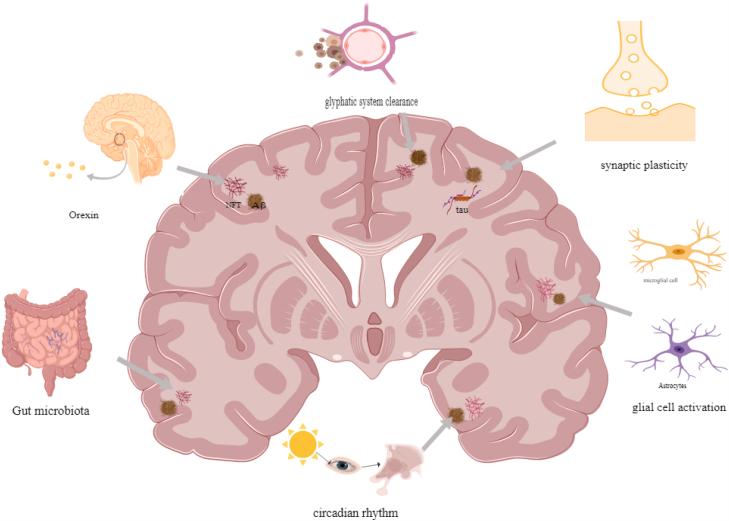
Sleep deprivation refers to an intentional or unintentional reduction in sleep time, resulting in insufficient sleep. It is often caused by sleep disorders, work demands (e.g., night shifts), and study pressure. Sleep deprivation promotes Aβ deposition and tau hyperphosphorylation, which is a risk factor for the pathogenesis and progression of Alzheimer's disease (AD). Recent research has demonstrated the potential involvement of sleep deprivation in both the pathogenesis and progression of AD through glial cell activation, the glial lymphatic system, orexin system, circadian rhythm system, inflammation, and the gut microbiota. Thus, investigating the molecular mechanisms underlying the association between sleep deprivation and AD is crucial, which may contribute to the development of preventive and therapeutic strategies for AD. This review aims to analyze the impact of sleep deprivation on AD, exploring the underlying pathological mechanisms that link sleep deprivation to the initiation and progression of AD, which offers a theoretical foundation for the development of drugs aimed at preventing and treating AD.
睡眠剥夺是指睡眠时间有意或无意地减少,导致睡眠不足。它通常由睡眠障碍、工作需求(如夜班)和学习压力引起。睡眠剥夺会促进β淀粉样蛋白沉积和tau蛋白过度磷酸化,这是阿尔茨海默病(AD)发病机制和病情进展的一个危险因素。最近的研究表明,睡眠剥夺可能通过胶质细胞激活、胶质淋巴系统、食欲素系统、昼夜节律系统、炎症和肠道微生物群参与AD的发病机制和病情进展。因此,研究睡眠剥夺与AD之间关联的分子机制至关重要,这可能有助于开发AD的预防和治疗策略。本综述旨在分析睡眠剥夺对AD的影响,探讨将睡眠剥夺与AD的发生和进展联系起来的潜在病理机制,为开发旨在预防和治疗AD的药物提供理论基础。

 Zotero 插件