
当 DNA 损伤反应遇到先天免疫和适应性免疫。
When DNA-damage responses meet innate and adaptive immunity.
机构信息
College of Life Science, Hebei University, Baoding, 071002, China.
Institute of Life Science and Green Development, Hebei University, Baoding, 071002, China.
出版信息
Cell Mol Life Sci. 2024 Apr 17;81(1):185. doi: 10.1007/s00018-024-05214-2.
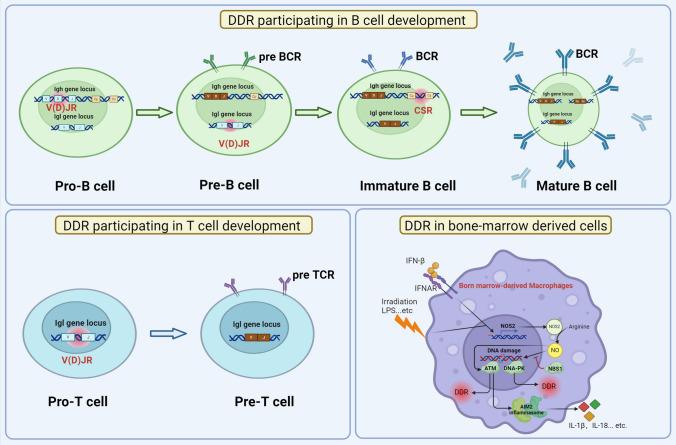
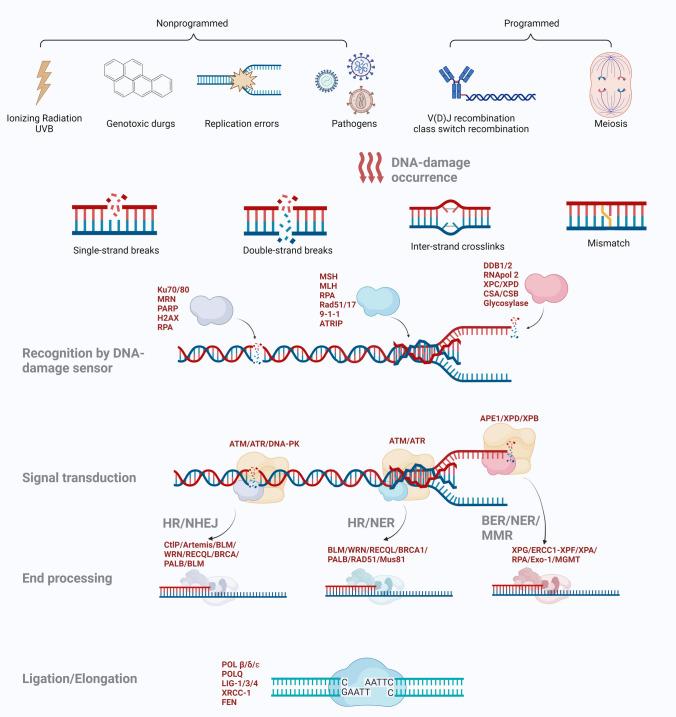
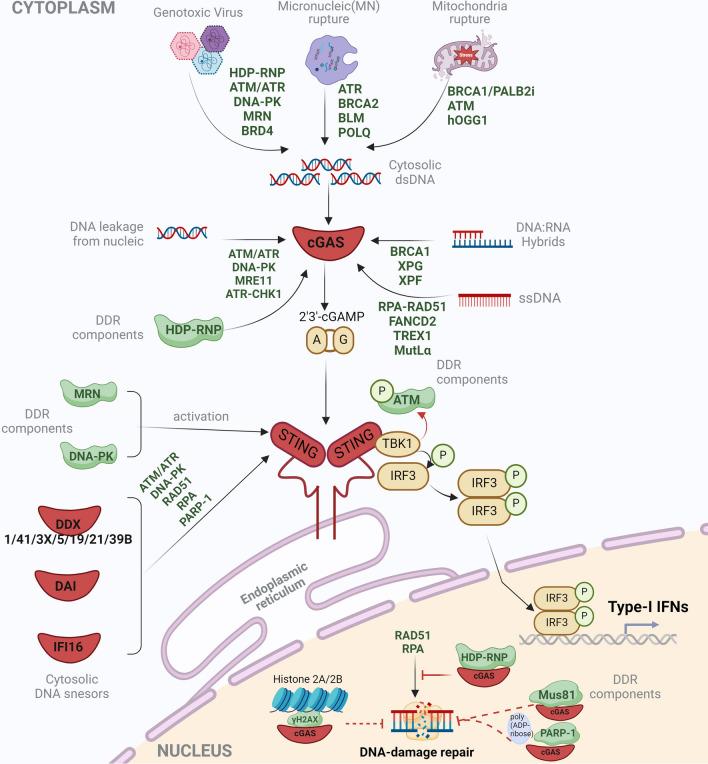
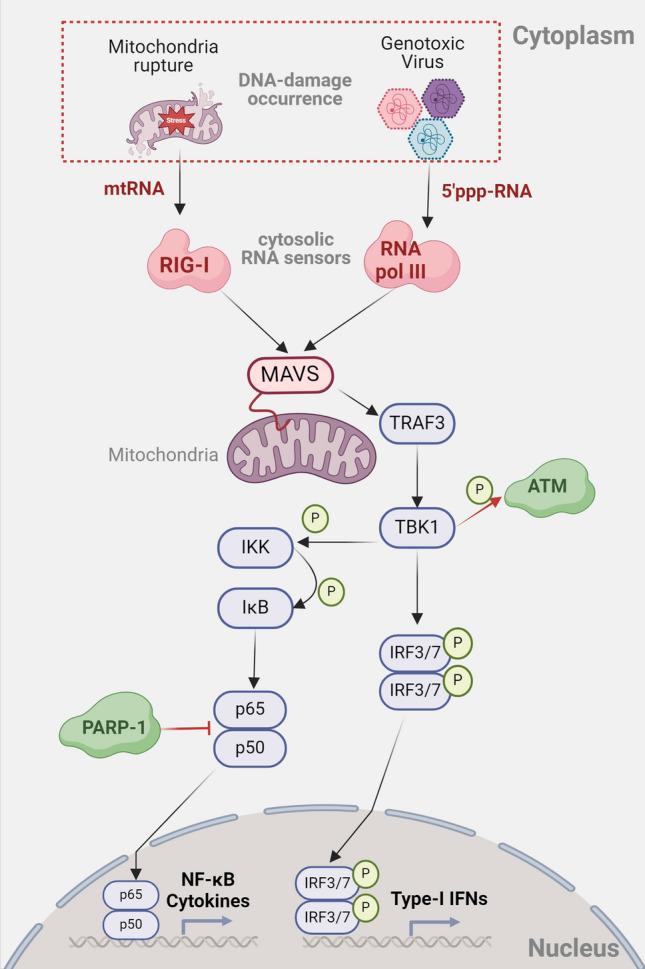
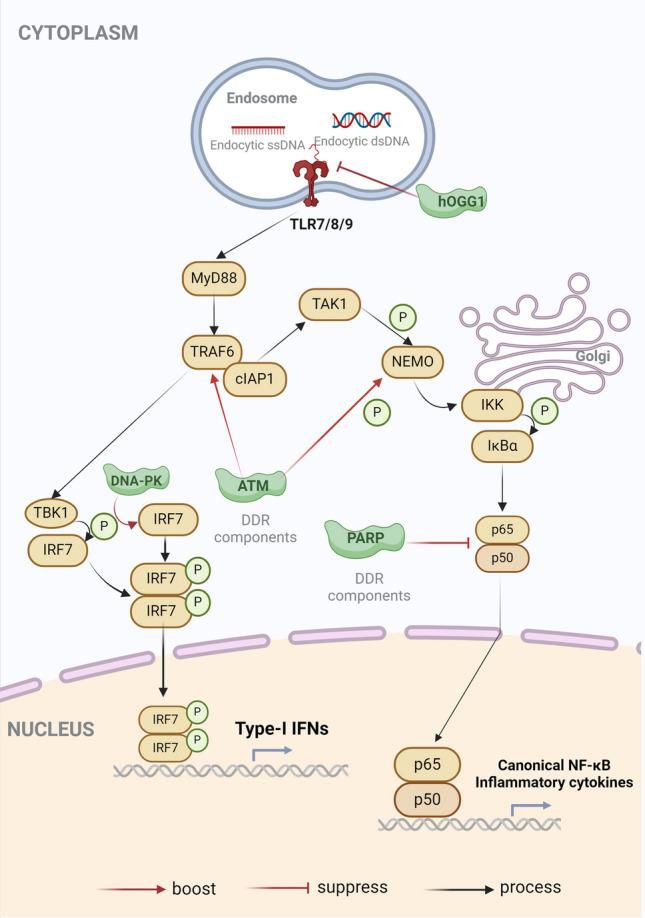
When cells proliferate, stress on DNA replication or exposure to endogenous or external insults frequently results in DNA damage. DNA-Damage Response (DDR) networks are complex signaling pathways used by multicellular organisms to prevent DNA damage. Depending on the type of broken DNA, the various pathways, Base-Excision Repair (BER), Nucleotide Excision Repair (NER), Mismatch Repair (MMR), Homologous Recombination (HR), Non-Homologous End-Joining (NHEJ), Interstrand Crosslink (ICL) repair, and other direct repair pathways, can be activated separately or in combination to repair DNA damage. To preserve homeostasis, innate and adaptive immune responses are effective defenses against endogenous mutation or invasion by external pathogens. It is interesting to note that new research keeps showing how closely DDR components and the immune system are related. DDR and immunological response are linked by immune effectors such as the cyclic GMP-AMP synthase (cGAS)-Stimulator of Interferon Genes (STING) pathway. These effectors act as sensors of DNA damage-caused immune response. Furthermore, DDR components themselves function in immune responses to trigger the generation of inflammatory cytokines in a cascade or even trigger programmed cell death. Defective DDR components are known to disrupt genomic stability and compromise immunological responses, aggravating immune imbalance and leading to serious diseases such as cancer and autoimmune disorders. This study examines the most recent developments in the interaction between DDR elements and immunological responses. The DDR network's immune modulators' dual roles may offer new perspectives on treating infectious disorders linked to DNA damage, including cancer, and on the development of target immunotherapy.
当细胞增殖时,DNA 复制的压力或暴露于内源性或外源性损伤经常导致 DNA 损伤。DNA 损伤反应 (DDR) 网络是多细胞生物用来预防 DNA 损伤的复杂信号通路。根据断裂 DNA 的类型,各种途径,碱基切除修复 (BER)、核苷酸切除修复 (NER)、错配修复 (MMR)、同源重组 (HR)、非同源末端连接 (NHEJ)、链间交联 (ICL) 修复和其他直接修复途径,可以单独或组合激活以修复 DNA 损伤。为了维持体内平衡,先天和适应性免疫反应是对抗内源性突变或外部病原体入侵的有效防御。有趣的是,新的研究不断表明 DDR 成分和免疫系统之间的密切关系。DDR 和免疫反应通过免疫效应器如环鸟苷酸-腺苷酸合酶 (cGAS)-干扰素基因刺激物 (STING) 途径联系在一起。这些效应器作为 DNA 损伤引起的免疫反应的传感器。此外,DDR 成分本身在免疫反应中发挥作用,引发炎症细胞因子的级联产生,甚至引发程序性细胞死亡。已知 DDR 成分缺陷会破坏基因组稳定性并损害免疫反应,加剧免疫失衡,导致严重疾病,如癌症和自身免疫性疾病。本研究考察了 DDR 元件与免疫反应之间相互作用的最新进展。DDR 网络的免疫调节剂的双重作用可能为治疗与 DNA 损伤相关的感染性疾病,包括癌症,以及开发靶向免疫疗法提供新的视角。

 Zotero 插件