
脑-肺相互作用中的氧化应激:细胞和分子层面的视角
Oxidative stress in the brain-lung crosstalk: cellular and molecular perspectives.
作者信息
Kong Jianda, Fan Rao, Zhang Yuanqi, Jia Zixuan, Zhang Jing, Pan Huixin, Wang Qinglu
机构信息
College of Sports Science, Qufu Normal University, Jining, China.
College of Sport and Health, Shandong Sport University, Jinan, China.
出版信息
Front Aging Neurosci. 2024 Apr 3;16:1389454. doi: 10.3389/fnagi.2024.1389454. eCollection 2024.
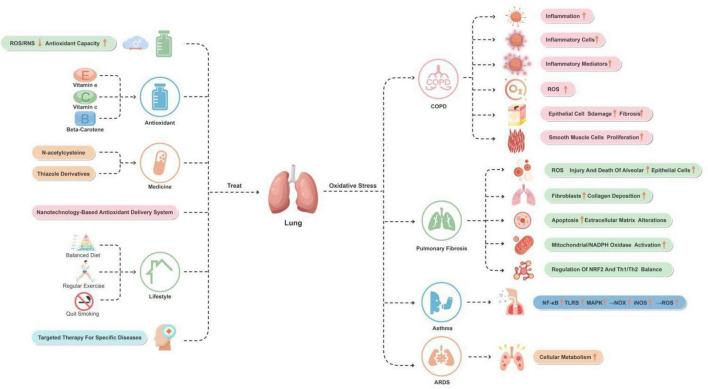
Oxidative stress is caused by an imbalance between the production of reactive oxygen species (ROS) and the body's ability to counteract their harmful effects, playing a key role in the pathogenesis of brain and lung-related diseases. This review comprehensively examines the intricate mechanisms by which oxidative stress influences cellular and molecular pathways, contributing to neurodegenerative, cardiovascular, and respiratory disorders. Emphasizing the detrimental effects on both brain and lung health, we discuss innovative diagnostic biomarkers, such as 8-hydroxy-2'-deoxyguanosine (8-OHdG), and the potential of antioxidant therapies. For these topics, we provide insights into future research directions in the field of oxidative stress treatment, including the development of personalized treatment approaches, the discovery and validation of novel biomarkers, and the development of new drug delivery systems. This review not only provides a new perspective on understanding the role of oxidative stress in brain and lung-related diseases but also offers new insights for future clinical treatments.
氧化应激是由活性氧(ROS)的产生与机体对抗其有害影响的能力之间的失衡所引起的,在脑和肺相关疾病的发病机制中起关键作用。本综述全面研究了氧化应激影响细胞和分子途径的复杂机制,这些机制导致神经退行性疾病、心血管疾病和呼吸系统疾病。我们强调氧化应激对脑和肺健康的有害影响,讨论了创新的诊断生物标志物,如8-羟基-2'-脱氧鸟苷(8-OHdG),以及抗氧化疗法的潜力。对于这些主题,我们深入探讨了氧化应激治疗领域未来的研究方向,包括个性化治疗方法的开发、新型生物标志物的发现与验证以及新药物递送系统的开发。本综述不仅为理解氧化应激在脑和肺相关疾病中的作用提供了新视角,也为未来的临床治疗提供了新见解。

 Zotero 插件