
世界经济增长乏力背景下的健康经济学。
Health Economics in a World of Uneconomic Growth.
机构信息
Henry Baldwin Professorial Research Fellow in Health System Sustainability, Menzies Institute for Medical Research, University of Tasmania, Hobart, Tasmania, Australia.
School of Social and Political Sciences, University of Glasgow, Glasgow, United Kingdom.
出版信息
Appl Health Econ Health Policy. 2024 Jul;22(4):427-433. doi: 10.1007/s40258-024-00883-3. Epub 2024 Apr 18.
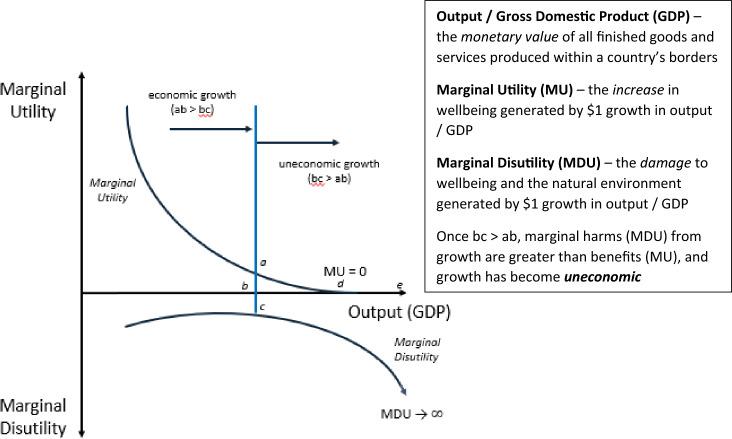
Multiple, accelerating and interacting ecological crises are increasingly understood as constituting a major threat to human health and well-being. Unconstrained economic growth is strongly implicated in these growing crises, and it has been argued that this growth has now become "uneconomic growth", which is a situation where the size of the economy is still expanding, but this expansion is causing more harm than benefit. This article summarises the multiple pathways by which uneconomic growth can be expected to harm human health. It describes how health care systems-especially through overuse, low value and poor quality care-can themselves drive uneconomic growth. Health economists need to understand not only the consequences of environmental impacts on health care, but also the significance of uneconomic growth, and pay closer attention to the growing body of work by heterodox economists, especially in the fields of ecological and feminist economics. This will involve paying closer heed to the existence and consequences of diminishing marginal returns to health care consumption at high levels; the central importance of inequalities and injustice in health; and the need to remedy health economists' currently limited ability to deal effectively with low value care, overdiagnosis and overtreatment.
多种相互作用、不断加速的生态危机,正日益被视为对人类健康和福祉的重大威胁。无约束的经济增长与这些日益加剧的危机密切相关,有人认为,这种增长现在已成为“非经济增长”,即经济规模仍在扩大,但这种扩张弊大于利。本文总结了非经济增长可能损害人类健康的多种途径。本文描述了医疗保健系统(尤其是通过过度使用、低价值和低质量的护理)如何自身推动非经济增长。卫生经济学家不仅需要了解环境对医疗保健的影响后果,还需要关注非经济增长的重要性,并更加关注非主流经济学家日益增多的工作,特别是在生态经济学和女性主义经济学领域。这将需要更加关注在高消费水平下医疗保健消费边际收益递减的存在和后果;不平等和不公正在健康方面的核心重要性;以及需要补救卫生经济学家目前在有效应对低价值护理、过度诊断和过度治疗方面的能力有限。
 Zotero 插件