
碘化碳氢化合物对副溶血性弧菌和金黄色葡萄球菌的抗菌及抗生物膜活性
Antibacterial and antibiofilm activities of iodinated hydrocarbons against Vibrio parahaemolyticus and Staphylococcus aureus.
作者信息
Faleye Oluwatosin Oluwaseun, Faleye Olajide Sunday, Lee Jin-Hyung, Lee Jintae
机构信息
School of Chemical Engineering, Yeungnam University, 280 Daehak-Ro, Gyeongsan, 38541, Republic of Korea.
出版信息
Sci Rep. 2024 Apr 22;14(1):9160. doi: 10.1038/s41598-024-55479-7.
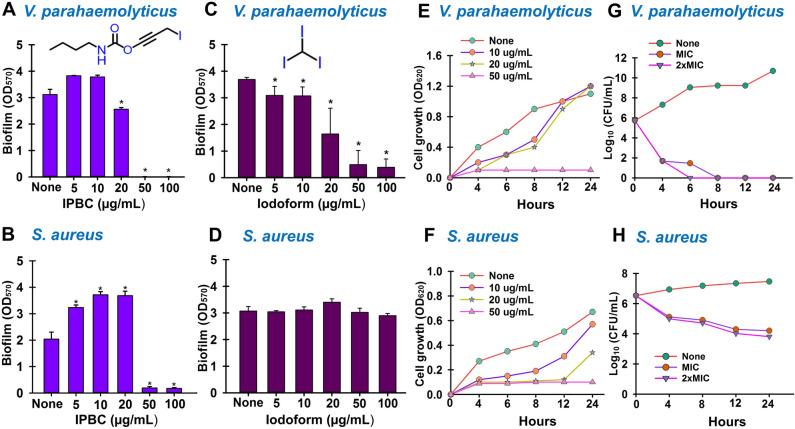
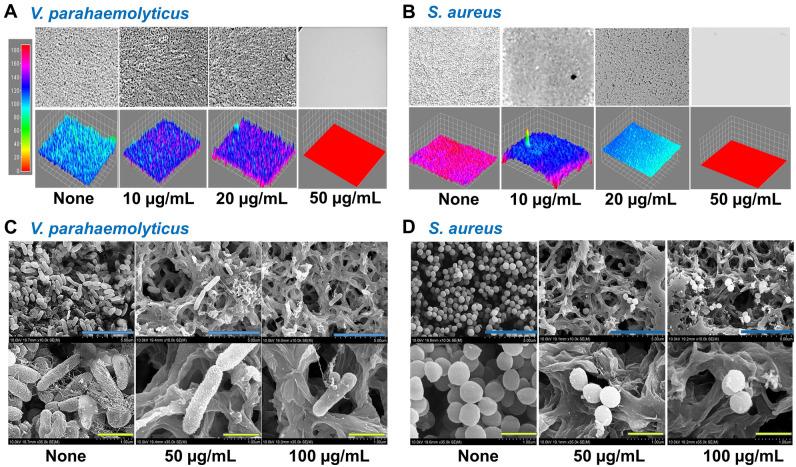
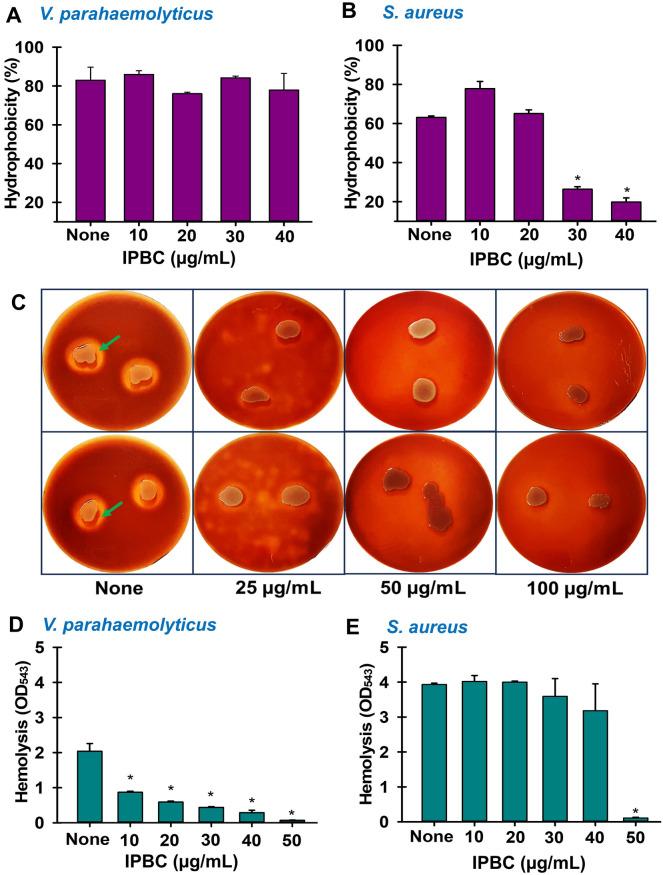
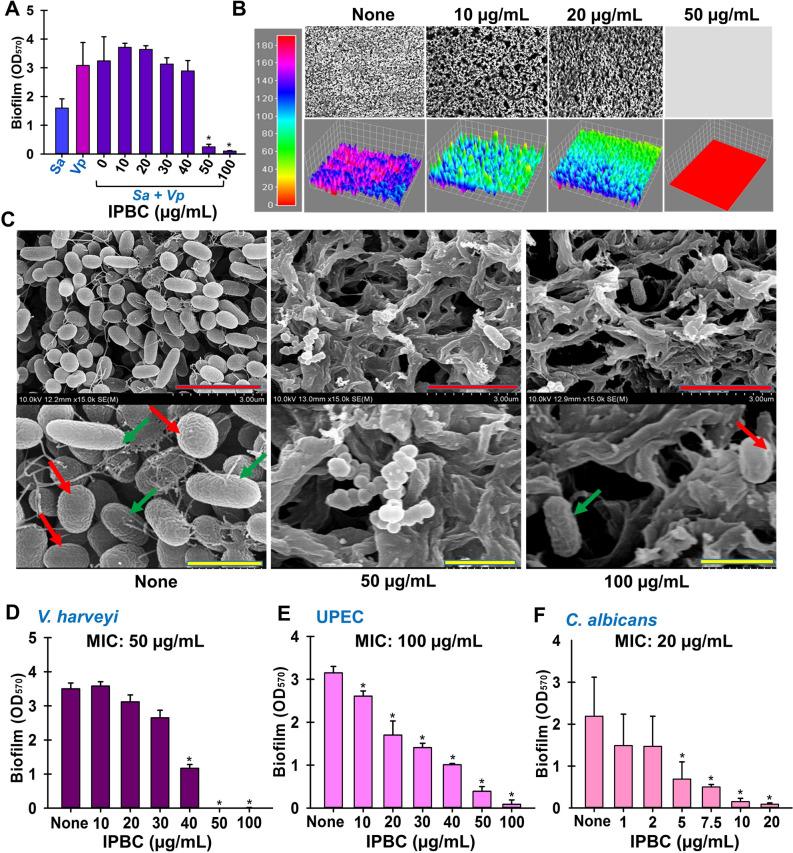
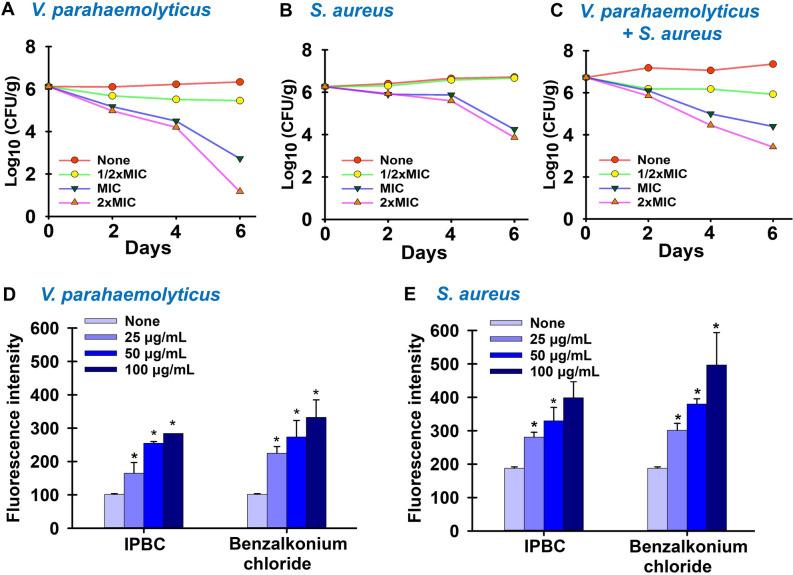
Food-related illnesses have become a growing public concern due to their considerable socioeconomic and medical impacts. Vibrio parahaemolyticus and Staphylococcus aureus have been implicated as causative organisms of food-related infections and poisoning, and both can form biofilms which confer antibiotic resistance. Hence, the need for continuous search for compounds with antibiofilm and antivirulence properties. In this study, 22 iodinated hydrocarbons were screened for their antibiofilm activity, and of these, iodopropynyl butylcarbamate (IPBC) was found to effectively control biofilm formation of both pathogens with a MIC of 50 µg/mL which was bactericidal to V. parahaemolyticus and S. aureus. Microscopic studies confirmed IPBC inhibits biofilm formation of both bacteria and also disrupted their mixed biofilm formation. Furthermore, IPBC suppressed virulence activities such as motility and hemolytic activity of V. parahaemolyticus and the cell surface hydrophobicity of S. aureus. It exhibited a preservative potential against both pathogens in a shrimp model. IPBC disrupted the cell membrane of S. aureus and V. parahaemolyticus and differentially affected gene expressions related to biofilm formation and virulence. Additionally, it displayed broad-spectrum antibiofilm activities against other clinically relevant pathogens. These findings indicate IPBC offers a potential means of controlling infections mediated by Vibrio and Staphylococcus biofilms.
由于与食物相关的疾病具有重大的社会经济和医学影响,它们已成为日益受到公众关注的问题。副溶血性弧菌和金黄色葡萄球菌被认为是与食物相关的感染和中毒的致病生物,并且两者都能形成具有抗生素抗性的生物膜。因此,需要持续寻找具有抗生物膜和抗毒力特性的化合物。在本研究中,对22种碘化烃进行了抗生物膜活性筛选,其中碘丙炔醇丁基氨甲酸酯(IPBC)被发现能有效控制这两种病原体的生物膜形成,其最低抑菌浓度(MIC)为50μg/mL,对副溶血性弧菌和金黄色葡萄球菌具有杀菌作用。显微镜研究证实,IPBC可抑制这两种细菌的生物膜形成,并破坏它们的混合生物膜形成。此外,IPBC还抑制了副溶血性弧菌的运动性和溶血活性以及金黄色葡萄球菌的细胞表面疏水性等毒力活性。在虾模型中,它对这两种病原体均表现出防腐潜力。IPBC破坏了金黄色葡萄球菌和副溶血性弧菌的细胞膜,并对与生物膜形成和毒力相关的基因表达产生不同影响。此外,它对其他临床相关病原体也表现出广谱抗生物膜活性。这些发现表明,IPBC为控制由弧菌和葡萄球菌生物膜介导的感染提供了一种潜在手段。


 Zotero 插件